
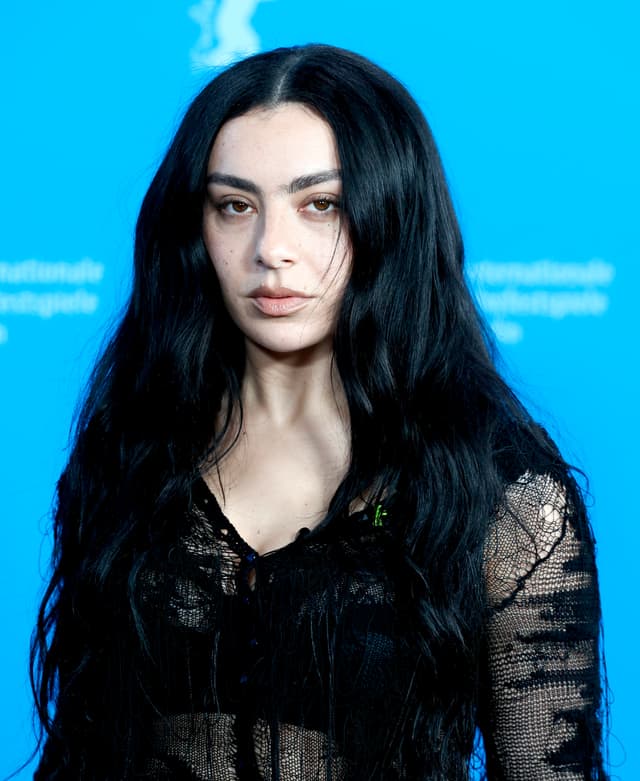
From MySpace Electro to Pop's Experimental Edge
Charli xcx arrived in the late 2000s as a teenage provocateur uploading raw electro tracks to MySpace, and over the following fifteen years she carved out one of pop's most consistently adventurous careers. Born Charlotte Emma Aitchison in Cambridge, England, she built a reputation as a songwriter-performer who refused to settle into commercial comfort, instead chasing the bleeding edge of pop production while maintaining radio presence. Her trajectory mirrors a broader shift in how pop stardom operates: the traditional major-label escalator replaced by strategic independence, viral moments, and a willingness to alienate casual listeners in pursuit of something more compelling.
Her early commercial wins—"Boom Clap," the monster hit "Fancy" with Iggy Azalea, "I Love It" for Icona Pop—positioned her as a reliable hitmaker, but those successes became almost incidental to her actual project. What distinguishes Charli is her relentless pursuit of friction, incorporating abrasive textures, experimental structures, and a rotating cast of underground producers into what could have been a straightforward pop career. By the 2020s, she had become both a pop star and a tastemaker, someone whose album cycles introduced mainstream audiences to sounds that felt alien on first listen but inevitable in retrospect.
She operates at the intersection of commercial viability and genuine experimentation, a space few artists manage to occupy for long. Her influence isn't just sonic—it's cultural, redefining what pop stardom can look like when an artist prioritizes creative evolution over safe repetition.
Maximalist Production and the Aesthetics of Excess
Charli's sound is defined by maximalism: hyper-compressed synths, pitch-shifted vocals, distorted bass hits, and song structures that feel like they're constantly on the verge of collapse. She gravitates toward producers who treat pop music as a site of sonic experimentation—A. G. Cook, SOPHIE, Danny L Harle, Easyfun—and the result is music that sounds expensive and chaotic simultaneously. Her vocal delivery shifts depending on the collaborator: sultry and restrained on smoother cuts, processed into alien registers on more aggressive tracks, always aware of her voice as another texture rather than the sole focal point.
The PC Music association, which began around 2016, gave her a sonic vocabulary that mainstream pop still hadn't fully absorbed. Songs featured sugar-rush melodies undercut by digital distortion, emotionally direct lyrics wrapped in layers of artifice, and production that refused to settle into predictable verse-chorus-verse patterns. She treated pop as a genre capable of containing contradictions: emotionally raw but heavily processed, accessible but disorienting, nostalgic for 2000s club culture but futuristic in execution.
What keeps her work from feeling like pure provocation is the songwriting underneath. Even at her most experimental, the melodic hooks remain strong, the emotional content recognizable. She writes about desire, insecurity, heartbreak, and hedonism with directness that cuts through the production gloss. The maximalism isn't decorative—it's expressive, translating the overstimulation of modern life into sound.
The Long Arc from "Boom Clap" to BRAT
Charli's commercial breakthrough came sideways. She wrote "I Love It" for Icona Pop in 2012, a bratty kiss-off anthem that became unavoidable, then followed it with her own charting single "Boom Clap" in 2014, featured in The Fault in Our Stars. That same year, her feature on Iggy Azalea's "Fancy" hit number one in multiple countries, positioning her as a pop force. Her debut album True Romance (2013) had already hinted at darker, moodier territory, but the mainstream knew her primarily as a hook machine.
The tension between commercial expectation and creative ambition defined the next phase. Sucker (2014) leaned into pop-punk energy and radio-ready production, but it felt like a detour rather than a destination. By 2016, she was pivoting hard toward the PC Music sphere, working extensively with A. G. Cook and SOPHIE. The unreleased XCX World sessions from this period leaked online, revealing a version of Charli fully committed to hyperpop textures years before the term gained wider traction. Though the official album never materialized, the aesthetic carried forward.
Pop 2 (2017), released as a mixtape, became a creative turning point. It was aggressively experimental, featuring a constellation of collaborators—Carly Rae Jepsen, Tove Lo, MØ, Kim Petras, SOPHIE, Hannah Diamond—and production that sounded like pop music refracted through a broken mirror. Tracks like "Tears" and "Backseat" felt emotionally direct despite their sonic abrasiveness. Critics praised it; casual fans were often baffled. Charli had chosen her lane.
Charli (2019) refined the approach, balancing experimental impulses with clearer pop structures. It felt like a thesis statement: this is what pop can be when you refuse to play it safe. Collaborations with Lizzo, Haim, Sky Ferreira, and Troye Sivan demonstrated her ability to pull others into her vision without diluting it. The album didn't produce massive hits, but it solidified her as a critical darling and an artist other musicians wanted to work with.
Then came Crash (2022), a deliberate pivot toward sleeker, more conventional pop production. It was her most commercially successful album in years, debuting at number one in the UK, but it felt like a strategic experiment—what happens if she plays the mainstream game on her own terms? The production was polished, the songs undeniably catchy, but longtime fans sensed ambivalence in the project itself.
BRAT (2024) arrived as a course correction and creative peak. The album doubled down on rawness, club energy, and emotional vulnerability, sounding like Charli had stopped second-guessing her instincts. It received widespread acclaim, with critics noting its cohesion, its unfiltered emotional core, and its refusal to chase trends she'd already moved past. The production felt lived-in rather than theoretical, and the songwriting balanced introspection with dancefloor catharsis. It was proof that her experimental phase hadn't been a detour—it was the foundation for everything that followed.
Redefining Pop Stardom for the Hyperpop Era
Charli xcx's influence extends beyond her discography into how a generation of artists approaches pop music itself. She demonstrated that commercial viability and sonic experimentation aren't mutually exclusive, that you can chase underground sounds without abandoning melody, and that pop stardom doesn't require abandoning creative control. Artists like Rina Sawayama, Slayyyter, Kim Petras, and countless others in the hyperpop and digicore scenes cite her as a blueprint—not just sonically, but as proof that an unconventional pop career is sustainable.
Her willingness to platform emerging producers and collaborators reshaped pop's production landscape. By bringing A. G. Cook, SOPHIE, Danny L Harle, and other PC Music affiliates into mainstream visibility, she accelerated the genre's evolution. The maximalist, hyper-digital sound that felt alien in 2017 now defines a significant portion of forward-thinking pop. Her collaborative approach—treating albums as collective projects rather than solo showcases—also influenced how younger artists structure their work.
Culturally, she represents a specific kind of 2010s-2020s pop figure: terminally online, self-aware, unafraid of niche appeal, and comfortable straddling underground credibility and mainstream presence. She's a pop star for people who are suspicious of pop stardom, which is precisely why her influence runs deep. Whether the broader industry catches up to her vision or she remains a cult figure with occasional chart presence, her career has already redefined what pop can be when an artist refuses to stay still.