
How Lana Del Rey Reimagined Nostalgia as Modern Pop Mythology
When Lana Del Rey arrived in 2011 with "Video Games," she didn't just debut a song — she unveiled an entire aesthetic universe. Born Elizabeth Woolridge Grant in New York City, Del Rey spent her early twenties performing in Brooklyn clubs under various stage names before the viral success of that melancholic piano ballad forced the industry to reckon with something it hadn't seen before: a pop star who trafficked in sadness as glamour, who made longing feel cinematic rather than pitiful. Her breakthrough album Born to Die became one of the decade's most divisive records, praised for its lush orchestral production and criticized for what detractors called artifice. The controversy missed the point entirely.
Del Rey's genius lay in understanding that authenticity in pop doesn't require confessional rawness. Instead, she constructed a persona that blurred autobiography with American mythology, mixing references to Hollywood's golden age, 1960s youth culture, and contemporary celebrity obsession into something that felt both timeless and utterly of-the-moment. Her music became a mirror for listeners navigating their own romanticization of the past, their own complicated relationships with beauty, destruction, and desire. She didn't just make sad girl music — she made sadness an aesthetic choice, a valid emotional landscape worth exploring in slow motion.
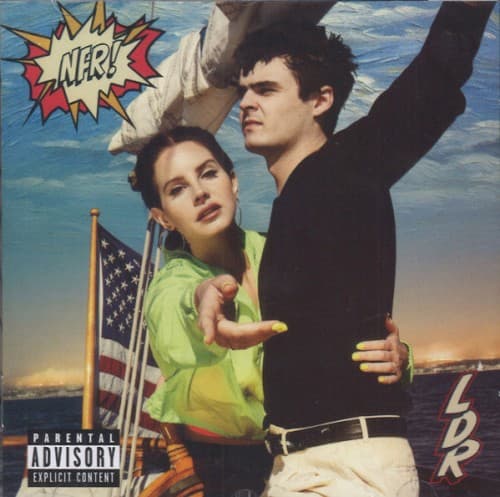
What began as a polarizing debut has evolved into one of contemporary pop's most consistent and artistically ambitious catalogs. Del Rey spent the 2010s refining her sound, stripping away the bombast of her early work for something more intimate and literary, culminating in Norman Foster the People! (often abbreviated NFR!), the 2019 album that finally earned her near-unanimous critical respect. That trajectory — from viral phenomenon to legitimate artist — mirrors the broader cultural shift in how we understand performance, identity, and sincerity in the social media age.
The Sonic Architecture of Melancholic Americana
Del Rey's musical approach rests on a foundation of contradiction. Her voice sits in a dusky alto range, often delivered in a near-whisper that forces listeners to lean in, creating intimacy even on stadium-sized productions. She stretches vowels into luxurious sprawls, turning single syllables into emotional events. That vocal style — criticized early on as affected — became her signature, instantly recognizable and endlessly imitated. When she sings about blue jeans and white t-shirts, red dresses and heavy metal, the specificity of her imagery transforms mundane Americana into something mythic.
Musically, her work has traversed multiple territories while maintaining a consistent emotional temperature. Born to Die and its expanded edition Paradise leaned into baroque pop and trip hop, with producer Emile Haynie crafting symphonic arrangements that recalled both Phil Spector's wall of sound and contemporary hip-hop's cinematic scope. Ultraviolence shifted toward raw, guitar-driven psychedelia, working with Black Keys guitarist Dan Auerbach to achieve a hazier, less polished sound. Honeymoon stretched songs past the six-minute mark, embracing jazz-influenced arrangements and a pace so languid it bordered on narcotic.
By the time she reached NFR!, Del Rey had absorbed everything from folk singer-songwriter traditions to trap production techniques, settling into a sound both expansive and personal. Jack Antonoff's production on that album favored live instrumentation and breathing room, letting Del Rey's increasingly confident songwriting take center stage. She'd learned that power doesn't always require orchestral crescendos — sometimes it emerges from restraint, from knowing when to let a piano line carry the weight. Her sonic palette draws from dream pop, chamber pop, and alternative traditions, but the final product always sounds distinctly, unmistakably hers.
Lana Del Rey's Imprint on Alternative Pop's Emotional Landscape
Del Rey's influence permeates contemporary pop in ways both obvious and subtle. The wave of female artists embracing melancholy as a valid artistic stance — Billie Eilish's hushed vocals and dark imagery, Lorde's introspective pop, even Taylor Swift's somber folklore and evermore eras — all owe something to the permission structure Del Rey created. She proved that pop success didn't require upbeat anthems or aspirational messaging, that sadness could be commercially viable if presented with enough cinematic grandeur. The aesthetic she pioneered — vintage Americana filtered through modern irony, beauty intertwined with decay — has become a recognizable visual and sonic language.
Beyond direct musical descendants, she altered the conversation around authenticity and performance in pop music. Her early career controversy centered on accusations of inauthenticity, yet her continued success demonstrated that audiences care less about biographical truth than emotional resonance. The persona is the art. In an era of social media oversharing, Del Rey's approach — creating mystery, maintaining aesthetic control, revealing personal details only through carefully constructed songs — offered an alternative model. She showed that you could be intensely personal without being confessional, that artifice and honesty aren't mutually exclusive.
Her catalog has aged remarkably well, with albums once dismissed as indulgent now recognized as forward-thinking. The baroque production that seemed excessive on Born to Die anticipated pop's swing toward maximalism. Her willingness to address uncomfortable topics — power imbalances in relationships, the allure of danger, ambivalent feminism — opened space for more complex female narratives in pop. She never positioned herself as a role model, which paradoxically made her more relatable to listeners navigating their own contradictions. Lana Del Rey didn't just create a distinctive sound — she expanded the emotional and thematic territory pop music could occupy, proving that sadness, nostalgia, and complexity could be just as powerful as joy.