The Architect of Modern Pop Spectacle
When Beyoncé Knowles-Carter dropped the self-titled visual album unannounced at midnight in December 2013, she didn't just change her career trajectory — she rewrote the industry playbook on artist autonomy and album releases. That moment crystallized what had been building since her Destiny's Child days: an artist who understands pop music as a multisensory experience requiring absolute creative control. Born in Houston in 1981, she spent her formative years absorbing gospel traditions at St. John's United Methodist Church while her father Matthew managed her early girl group ambitions with military precision.
What separates Beyoncé from her contemporaries isn't technical ability alone, though her four-octave range and melismatic control remain formidable. It's the totality of vision — the understanding that every sonic choice, every visual element, every public appearance contributes to a larger artistic statement. She emerged from Destiny's Child's commercial juggernaut in 2003 already possessing something rare: mainstream appeal married to artistic credibility. Where other child stars stumbled navigating that transition, she established herself as pop's most meticulous architect.
Her influence extends beyond sales figures and awards, though both are staggering. Beyoncé fundamentally altered expectations for what pop stardom could demand and deliver. She proved artists could reject traditional promotion cycles, challenge streaming platforms, and maintain complete creative control while achieving unprecedented commercial success. Three decades into her career, she remains the standard against which vocal performance, visual artistry, and cultural impact are measured.
Vocal Architecture and Sonic Evolution Across Eras
Beyoncé's voice operates as both instrument and weapon — a technical marvel deployed with surgical precision. Her belting register carries the force of gospel conviction, capable of filling arenas without amplification, yet she wields restraint with equal mastery. Listen to "Listen" from Dreamgirls and hear how she navigates from whispered intimacy to full-throated declaration within a single phrase, maintaining perfect pitch placement throughout. That control stems from childhood training and relentless practice, but also from understanding exactly what each song demands emotionally.
Her sonic identity has shifted dramatically across eras while maintaining core elements. The early solo work leaned heavily on Neptunes and Rich Harrison's mid-2000s production aesthetic — horn stabs, go-go breaks, live instrumentation grounding radio-ready hooks. "Crazy in Love" remains the template: aggressive horn loops, a Chaka Khan sample chopped to stutter, and Beyoncé's voice cutting through with absolute authority. By "4" in 2011, she'd embraced throwback soul production, working with The-Dream and Kanye West to craft a more vulnerable, ballad-heavy statement that deliberately resisted contemporary trends.
The 2013 self-titled album marked her full transformation into auteur. Production credits expanded to include Boots, Detail, Timbaland, and Hit-Boy, creating a darker, more experimental soundscape. Songs like "Haunted" employed industrial textures and distorted vocals — risks unthinkable for an artist of her commercial stature. "Lemonade" pushed further, incorporating Southern Gothic imagery and genre-hopping from trap to country to Caribbean influences. By "RENAISSANCE," she'd come full circle to pure dance euphoria, channeling house, disco, and ballroom traditions through collaborators like The-Dream, Tricky Stewart, and No I.D., creating what felt simultaneously like tribute and reinvention. Her voice floated over pulsing 808s and classic Roland drum machines, proving she could command club spaces as naturally as stadium stages.
From Girl Group Graduate to Visual Album Pioneer
Destiny's Child provided the blueprint for everything that followed. Between 1997 and 2005, the group moved 60 million records while Beyoncé honed skills that transcended singing — choreography precision, media training, understanding what camera angles and styling choices communicated power. The group's success created unique pressure: she needed a solo debut that justified leaving a platinum-selling act. "Dangerously in Love" in 2003 answered emphatically, with "Crazy in Love" and "Baby Boy" establishing her as a solo force while maintaining Destiny's Child's commercial momentum through their final album.
Her second and third albums navigated the difficult middle period most pop stars face. "B'Day" arrived rushed in 2006, recorded in three weeks following her Dreamgirls role, yet spawned "Irreplaceable" and "Beautiful Liar." The speed worked in her favor — the album sounds urgent, raw for someone known for polish. "I Am... Sasha Fierce" in 2008 attempted conceptual division between ballad singer and uptempo performer, a split that felt forced in execution but delivered massive singles. "Halo" and "Single Ladies" came from these sessions, the latter becoming a cultural phenomenon exceeding the song itself. The hand choreography, the leotard, the SNL skit — evidence that Beyoncé understood virality before social media fully enabled it.
Then came the pivot. "4" in 2011 sold less than predecessors but represented artistic growth — she prioritized vocal showcases and mature themes over certain radio dominance. Critics praised it; casual fans were confused. That commercial disappointment paradoxically liberated her. The 2013 self-titled album arrived without warning, no singles, no promotion, just fourteen songs and seventeen videos dropped simultaneously. It moved 828,000 copies in three days and fundamentally changed release strategies industry-wide. "Lemonade" in 2016 pushed the visual album concept further, arriving as an HBO event with poetry, political imagery, and her most personal songwriting. These weren't just albums but cultural moments demanding immediate attention and long-term analysis.
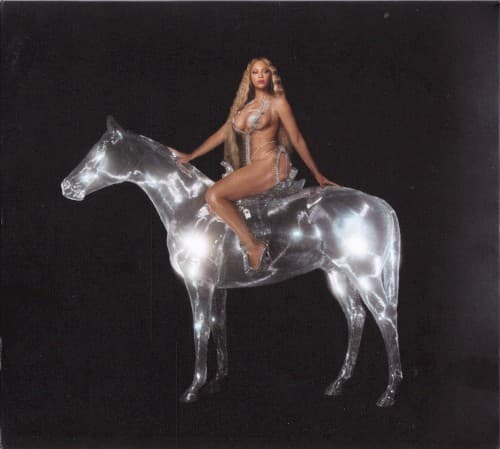
"RENAISSANCE" in 2022 marked another reinvention — a pure dance record honoring Black queer ballroom culture and house music's pioneers. She worked with Honey Dijon, Nile Rodgers, Skrillex, and A.G. Cook across its sixteen tracks, creating a joyful, escapist statement that still carried thematic weight about liberation and self-expression. The album avoided visual accompaniment initially, forcing attention purely on sonic craft. It debuted at number one, her seventh consecutive solo album to do so, proof that artistic experimentation and commercial dominance need not conflict.
Her Coachella 2018 performance, later documented as "Homecoming," demonstrated career-spanning synthesis — a HBCU-inspired spectacle featuring over 200 performers that became its own album and Netflix film. She transformed a predominantly white music festival into a celebration of Black collegiate tradition, education, and musical excellence. The performance wasn't just technically flawless; it carried political and cultural weight that redefined what festival headliners could accomplish.
Cultural Force and the Redefinition of Pop Stardom
Beyoncé's influence operates on multiple planes simultaneously. Vocally, she set standards for melismatic control and belting power that shaped a generation of singers — for better and worse, as countless imitators learned technique without taste. Her visual innovations changed how albums are consumed and promoted. Before December 2013, surprise releases were career risks; after Beyoncé, they became strategic plays attempted by everyone from Drake to Taylor Swift. She proved artists could bypass traditional gatekeepers and still achieve cultural saturation.
Her impact on Black women's representation in pop culture cannot be overstated. "Lemonade" created space for Black female anger, joy, grief, and sexuality to coexist in mainstream art without apology or dilution. She referenced everything from Yoruba spirituality to New Orleans second lines, asserting that Blackness contains multitudes. The film featured poetry from Warsan Shire and appearances from Serena Williams and Zendaya, creating a lineage of Black female excellence. This wasn't crossover in the traditional sense — it was centering Blackness and forcing mainstream culture to meet her there.
The Beyhive phenomenon represents modern fandom's intensity and organization. Her supporters function as built-in promotion, archivists, and defenders, mobilizing instantly around releases or perceived slights. This relationship feels symbiotic — she provides excellence; they provide devotion and cultural amplification. It's changed how artists engage fans and how labels calculate promotional budgets. When everything is content and every fan a potential marketer, Beyoncé's ability to inspire that level of investment becomes its own form of power. Three decades in, she remains both blueprint and outlier — an artist who achieved everything pop offers while continually redefining what pop can be.