From Basildon to Global Electronic Dominance
When three electronics enthusiasts from Basildon, Essex started programming Moog synthesizers in a cramped rehearsal space in 1980, they couldn't have anticipated reshaping pop music's relationship with darkness. Depeche Mode emerged from the same British synth-pop movement that produced Soft Cell and The Human League, but where their peers often embraced new wave's playful side, this quartet—originally Dave Gahan, Martin Gore, Andy Fletcher, and Vince Clarke—heard something grimmer in those oscillators and sequencers. Their early singles like "Just Can't Get Enough" suggested bubblegum accessibility, yet even then, an undercurrent of melancholy ran beneath the bright programming.
Clarke's 1981 departure after Speak & Spell could have ended the project. Instead, it liberated Gore's songwriting and pushed the group toward territories few pop acts dared explore: sadomasochism, religious doubt, political despair, and existential emptiness, all delivered through increasingly sophisticated electronic production. By the late 1980s, they'd transformed from chart-friendly synthesizer poppers into something closer to industrial provocateurs, bridging the gap between Top 40 and underground club culture. Their influence now extends across electronic music, alternative rock, and modern pop production—artists from Nine Inch Nails to Billie Eilish owe debts to the sonic templates Depeche Mode established across four decades.
The Architecture of Darkness: Depeche Mode's Sonic Blueprint
What makes Depeche Mode immediately recognizable isn't just Dave Gahan's baritone—though his voice, deepening and roughening across the decades, became one of rock's most distinctive instruments—but the relationship between melodic accessibility and textural abrasion. Their productions layer pristine synth melodies over industrial clangs, sampled found sounds, and distorted noise. Listen to "Personal Jesus" and notice how a blues-rock riff gets reimagined through sampling and sequencing, or how "Enjoy the Silence" wraps a nursery-rhyme melody in lush string pads and crisp percussion. They make darkness hummable.
Martin Gore's songwriting operates in emotional extremes—whispered vulnerability or shouted desperation, rarely anything between—while the production creates space for those extremes to resonate. The band rarely uses traditional verse-chorus-verse structures without twisting them. Songs build through repetition and layering rather than dramatic key changes. A Depeche Mode track often starts sparse—a single synth line, a drum machine pattern—then accumulates elements until the arrangement feels overwhelming, claustrophobic. This approach influenced everyone from electronic body music pioneers to contemporary hyperpop producers.
Their vocal production deserves particular attention. Gahan's voice gets processed through every available effect—echo, distortion, pitch-shifting—yet remains deeply human and vulnerable. Gore's backing vocals provide ethereal counterpoint, often buried in reverb or harmonized into ghostly choirs. The contrast between Gahan's earthbound intensity and Gore's spectral harmonies creates the band's emotional core, a push-pull between physical presence and disembodied yearning.
Four Decades of Evolution: Depeche Mode's Discography Journey
The Vince Clarke era—essentially just Speak & Spell and a handful of singles—established the template: accessible melodies, crisp Moog basslines, lyrics that hinted at deeper concerns beneath pop surfaces. Clarke's departure to form Yazoo, then Erasure, forced Gore into the primary songwriter role. A Broken Frame (1982) and Construction Time Again (1983) show a band finding its identity, experimenting with sampling industrial sounds and political commentary. The latter album's use of found percussion—hammers on metal, construction site recordings—pointed toward the textural complexity that would define their mature work.
Some Great Reward (1984) marked their commercial breakthrough outside the UK, particularly in Germany and other European markets where electronic music faced less radio resistance. "People Are People" gave them an unlikely American hit, though its anti-prejudice message felt almost too direct for a band that preferred emotional ambiguity. Black Celebration (1986) and Music for the Masses (1987) refined their darkwave aesthetic, the latter's title proving prophetic as they sold out the Rose Bowl in 1988, captured in the documentary 101. These albums showcased producer Daniel Miller's ability to balance commercial appeal with experimental edge.
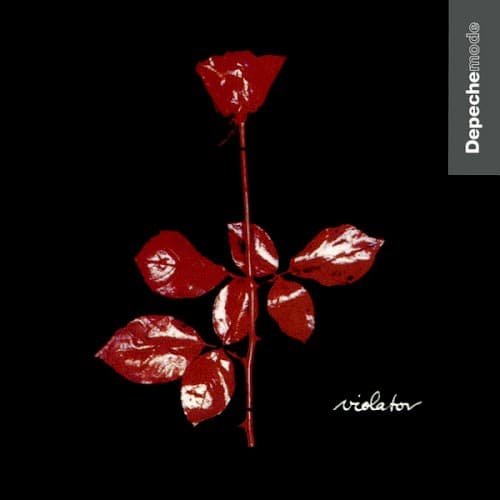
Then came Violator in 1990, the album that consolidated every lesson learned across the previous decade. Working with producers Flood and François Kevorkian, they achieved a sonic richness that earlier albums only suggested. "Personal Jesus" opened with that now-iconic guitar sample, while "Enjoy the Silence" became their biggest global hit, a perfect marriage of Gore's vulnerable lyric about words destroying relationships and Gahan's increasingly confident delivery. "Policy of Truth" and "World in My Eyes" demonstrated their range—the former a taut electro-funk workout, the latter a swooning invitation into sensory overload. The album went triple platinum in the US, proving electronic music could achieve rock-level commercial success without compromising artistic vision.
Songs of Faith and Devotion (1993) pushed further into rock territory, incorporating live drums and guitar, entering the Billboard 200 at number one. But personal turmoil shadowed this success—Gahan's heroin addiction, Fletcher's depression, Gore's alcohol dependence. The group nearly collapsed, taking a hiatus after the Devotional tour. They returned with Ultra (1997), recorded without touring drummer Alan Wilder who'd quit during the break, the album's title ironically understated given the stripped-back, melancholic production. "Barrel of a Gun" and "It's No Good" sounded like survival reports from the edge of dissolution.
Later albums—Exciter (2001), Playing the Angel (2005), Sounds of the Universe (2009), Delta Machine (2013), Spirit (2017)—showed a band no longer chasing commercial peaks but refining their aesthetic. They experimented with different producers: Mark Bell from Björk's circle, Ben Hillier, James Ford from Simian Mobile Disco. Each brought different textures while maintaining the core Depeche Mode identity. Fletcher's death in 2022 ended the classic lineup, yet Gore and Gahan continue, their 2023 album Memento Mori confronting mortality with characteristic darkness and surprising melodic grace.
The Ripple Effect: Depeche Mode's Enduring Impact on Electronic Pop
Depeche Mode's influence operates on multiple levels. Most obviously, they proved electronic music could fill stadiums and move emotional goalposts usually reserved for guitar bands. Before them, synthesizer groups were novelties or art projects. After them, electronic production became pop's default language. Their willingness to address taboo subjects—Gore's lyrics about bondage on "Master and Servant", religious crisis on "Blasphemous Rumours", political despair on "Everything Counts"—expanded pop's emotional vocabulary beyond romance and party anthems.
Their sonic fingerprints appear across contemporary music. Trent Reznor has cited them as primary inspiration for Nine Inch Nails' industrial rock fusion. The Cure, Muse, Arcade Fire, and numerous others acknowledge the debt. More recently, artists like Billie Eilish channel their approach to making darkness radio-friendly, layering whispered vulnerability over minimal, texturally rich production. Electronic producers from techno to house to bass music reference their sampling techniques and arrangement strategies.
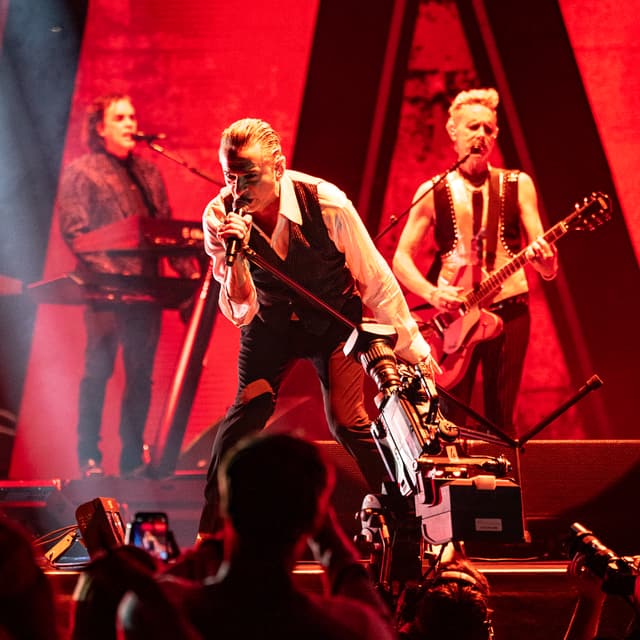
Perhaps most significantly, Depeche Mode normalized a certain masculine vulnerability in pop. Gahan's stage presence—equal parts rock frontman bravado and emotional exposure—and Gore's confessional songwriting created space for male artists to express doubt, fear, and desire without traditional machismo. Their influence extends beyond sound into pop's emotional possibilities, proving that commercial success and artistic depth needn't conflict. Four decades on, their discography remains essential listening for understanding how electronic music became the dominant language of contemporary pop.