The scorecard
8.9/10 · Essential
- Songwriting25%
- 9.0
- Production25%
- 9.5
- Performance15%
- 8.0
- Cohesion15%
- 8.5
- Originality10%
- 8.5
- Replay value10%
- 9.0
Personal Jesus and Enjoy the Silence are among the strongest hooks in synth-pop history, with choruses built on melodic economy rather than repetition, and the darker material like Halo and Waiting for the Night sustains tension without easy resolution.
Flood and Wilder's use of sampled percussion loops, live guitar textures and analogue sequencing creates a warm, physical density rare in electronic music, with the bass programming on World in My Eyes and the layered arrangement of Halo setting a new standard for the genre.
Gahan commands the singles with controlled drama, though his performance on the ballads can feel one-note, and Gore's lead turns on Sweetest Perfection and Blue Dress add necessary vulnerability.
The sequencing builds smartly from the opening one-two of World in My Eyes and Sweetest Perfection through the singles bloc and into the closing stretch, though Blue Dress and Clean feel slightly anticlimactic after Policy of Truth.
The fusion of synth-pop architecture with rock guitar textures and the warmth of sampled loops rather than drum machines distinguished Depeche Mode from both their New Romantic past and the house music dominating dance floors in 1990.
Three decades on, the album holds up better than most synth-pop of its era because the production choices favor texture over digital sheen and the songs earn their length rather than padding for effect.
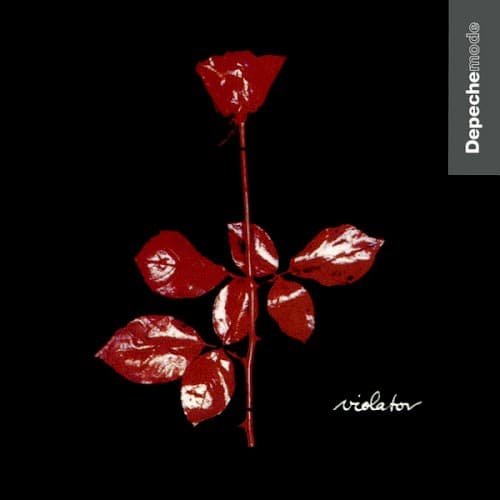
Depeche Mode Violator — When Synth-Pop Learned to Hit Like a Rock Record
Violator makes its argument in the first four bars of World in My Eyes: a bass sequence that sounds like it was recorded in a room rather than programmed on a grid, a snare hit with actual weight, and a melodic hook that moves in half-steps instead of fanfares. By 1990, synth-pop had spent a decade chasing either the gloss of Trevor Horn or the minimalism of Kraftwerk. Depeche Mode and co-producers Flood and Alan Wilder chose a third option: keep the electronic palette but make it physical, tactile, dense enough to fill a stadium without losing the intimacy of a whisper in a basement club. The result is the rare electronic album that sounds better loud.
The thesis is simple and the execution is not. Violator takes the architecture of synth-pop — sequences, drum machines, layered vocals — and runs it through the density and dynamics of rock production. Flood and Wilder built the album on sampled percussion loops instead of drum machines to preserve what Wilder called the human element, and they used live guitar not as decoration but as a structural layer, woven into the programming rather than pasted on top. Martin Gore brought in simpler demos than usual to force the band to collaborate in the studio, and the result is nine tracks where the arrangement does as much work as the melody. The singles are canonical, but the deeper album cuts reveal an act rethinking what electronic music could feel like in a post-acid house, post-hair metal moment. The album sold over seven million copies and still sounds like nothing that came before or since.
Sampled Loops and Stolen Bass Lines
The production rests on a deliberate choice: Flood and Wilder used sampled live percussion and played it back through loops rather than relying on the quantized perfection of a drum machine. The result is a rhythmic foundation that breathes and shifts slightly with each repetition, the way a human drummer drifts in and out of the pocket. On World in My Eyes, the snare cracks with actual resonance and the bass sequence has the fluid tuning variations of an ARP 2600 analogue sequencer, not the locked-in sterility of MIDI. On Policy of Truth, the programmed drums hit hard enough to work in a rock mix, and the guitar riff that opens the track is treated as a percussive element rather than a solo. The warmth comes from imperfection: timing variations, tuning drift, the sense that these machines were played rather than programmed.
Gore's songwriting strips down to hooks and verses, trusting Flood and Wilder to build the drama in the arrangement. Personal Jesus started as a beat and an acoustic guitar melody; Wilder and Flood added the stomp samples (recorded by jumping on road cases) and the slide guitar that functions as both lead and rhythm. Enjoy the Silence was written as a harmonium ballad, and Wilder had to convince a skeptical Gore to let him and Flood turn it into an uptempo track; the guitar riff was recorded later and the moment the band heard the final version, they knew it was a single. The melodic economy is unusual for synth-pop: choruses are two or three phrases, not anthems, and the verses do more work than the hooks. Halo sustains tension across four and a half minutes without a traditional release, built on a string arrangement and drum loops rather than a big chorus. Waiting for the Night uses a Tangerine Dream-style analogue sequence as the foundation and lets both Gahan and Gore share vocal duties, a rarity for the band.
Gahan's voice carries the singles with controlled drama, but his range is narrow and the ballads expose it. On Sweetest Perfection and Blue Dress, Gore takes the lead and his vulnerability suits the material better than Gahan's baritone would. The production compensates: on Clean, which lifts its hypnotic bass riff directly from Pink Floyd's One of These Days, the arrangement is dense enough that the vocal becomes one layer among many rather than the focal point. The album uses guitar more than any previous Depeche Mode record, not as a genre gesture but as a textural choice. The guitar on Personal Jesus and Policy of Truth is mixed as low and dirty as the bass programming, treated as part of the rhythmic scaffolding rather than a featured instrument.
The weak link is sequencing. Blue Dress and Clean are solid album tracks but they lack the momentum of what precedes them, and the stretch from Policy of Truth to the end feels like a slow descent rather than a finale. Blue Dress meanders and the psychedelic ending that Wilder admitted was a fallback when they couldn't find a proper conclusion does not justify the song's five-plus minutes. Clean earns its length with the bass groove and the hypnotic repetition, but it arrives too late to restore the energy. The hidden interludes tucked into Enjoy the Silence and Blue Dress add texture but not much else. The album runs forty-seven minutes and the back half exposes it.
A Front-Loaded Sequence That Peaks Early
Violator is sequenced like a singles collection: the first six tracks include the four singles and two album cuts strong enough to have been shortlisted for release, and the back third coasts on goodwill. The opening run is flawless, announcing the shift in sound immediately, building to a near-psychedelic peak, delivering the hooks, and providing the necessary comedown before the first half closes. That stretch alone justifies the album's reputation.
The second half never matches it. Policy of Truth is a strong single but it arrives after the album has already peaked, and the closing stretch lacks the urgency of the first six tracks. The pacing is too even: the album rarely shifts tempo or energy, and by the final track, the hypnotic repetition that worked in the opening feels like stasis. The album is nine tracks and forty-seven minutes, but it plays longer because the dynamics are so consistent. A tighter sequence or a different closer would have solved it. As it stands, Violator front-loads its best material and asks the listener to ride out the rest.
Where Synth-Pop Stopped Sounding Cold
Violator is the synth-pop album for people who thought synth-pop sounded too thin, too digital, too much like a genre exercise. Flood and Wilder's decision to build the production on sampled loops, live guitar and analogue sequencing rather than the drum machines and digital synths that defined the genre in the eighties gives the record a physicality that still sounds modern. The singles are canonical for a reason: Personal Jesus and Enjoy the Silence are two of the strongest pop songs of the nineties, and Policy of Truth and World in My Eyes are not far behind. The deeper cuts reveal a band willing to take risks with structure and texture, even when the sequencing and pacing do not always support them.
This is Depeche Mode's best album because it is the one where ambition and execution aligned. Music for the Masses built toward this sound, and later records either repeated the formula or abandoned it. Violator is the moment where the band trusted their collaborators, stripped down the songwriting and let the production do the work. The result is the rare electronic album that sounds better in a car or a club than it does on headphones, and one of the few synth-pop records from the pre-digital era that does not sound dated.
Start with Personal Jesus, Enjoy the Silence and World in My Eyes, then move to Halo and Policy of Truth. Skip Blue Dress unless you are already sold. If this works, try Music for the Masses for the warmer predecessor or Songs of Faith and Devotion for the harder follow-up. Fans of New Order's Technique, Pet Shop Boys' Behaviour or Erasure's The Circus will find common ground here, though Violator hits harder than any of them.
Track by track
Track Listing
World in My Eyes
StandoutThe album opens with its thesis: a bass sequence that sounds organic rather than programmed, a snare hit with actual room tone, and a melody built on economical half-step moves rather than anthemic leaps. Flood and Wilder used an ARP 2600 analogue sequencer for the main bass line, which drifts slightly in tuning and timing with each repetition, giving the track a fluidity that a locked MIDI grid would have killed. The production is dense without being cluttered, layering the bass, the drums, the synth pads and Gahan's vocal into a mix that sounds like it was recorded in a room rather than assembled on a computer. The chorus is two phrases and a melodic turn, no more, but the arrangement builds enough momentum that the simplicity reads as confidence rather than underwriting. It is one of the strongest album openers in synth-pop.
Sweetest Perfection
StandoutGore takes the lead vocal and his vulnerability suits the lyric better than Gahan's baritone would. The production builds to what one review called a psychedelic conclusion, which Wilder later admitted was the kind of thing you do when you cannot figure out a proper ending. The verse melody is strong and the arrangement is patient, letting the layers accumulate rather than front-loading the drama. The ending is a cop-out but the first three minutes justify it.
Personal Jesus
StandoutOne of the defining singles of the nineties, built from a demo that was just a beat and an acoustic guitar melody. Wilder and Flood sent the rest of the band away and constructed the track from stomp samples (recorded by jumping on road cases), a slide guitar riff that functions as both lead and rhythm, and a bass line that sits low and dirty in the mix. The chorus is a two-note melodic phrase and a lyric that courted controversy but got airplay anyway, and the groove is physical enough that the song still works in a DJ set thirty years later. The single became Mute's best-selling twelve-inch up to that point, outselling releases by Prince and Madonna, and it earned the band an invitation to Top of the Pops. The production is a lesson in economy: every element does double duty, and nothing is decorative.
Halo
StandoutWilder's favorite track on the album, built on drum loops and a string arrangement that sustains tension across four and a half minutes without a traditional payoff. The verse melody moves in minor-key steps and the chorus offers no release, just a shift in texture. Gore described the lyric as advocating immorality while acknowledging guilt, and the music matches that ambivalence: it never resolves, never offers catharsis, just circles the same emotional territory until it fades. The production is patient and the arrangement is layered enough that the song reveals new details on repeat listens. It was shortlisted as a single and a video was shot for it, but it was never officially released. It should have been.
Waiting for the Night
StandoutOne of the few Depeche Mode tracks to feature both Gore and Gahan on vocals, originally intended as a Gore solo piece until Gahan asked to join. Flood and Wilder built the arrangement around a Tangerine Dream-style analogue sequence, aiming for the same hypnotic fluidity that made tracks like One of These Days work. The dual vocal adds vulnerability and the production is minimal compared to the rest of the album, letting the sequence and the voices carry the track. At over six minutes it is one of the longest songs on the record, but the pacing earns the length. The arrangement shifts just enough to keep the repetition from feeling static.
Enjoy the Silence / Interlude #2: Crucified
StandoutThe album's biggest single and its most unlikely triumph. Gore wrote it as a harmonium ballad and resisted Wilder's suggestion to turn it into an uptempo track, arguing that a song called Enjoy the Silence should not be a disco record. Wilder and Flood built the track anyway, then invited Gore back in to record the guitar riff, at which point the band realized they had a hit. The final version is a masterclass in arrangement: the verse is minimal, the pre-chorus builds with a single synth line, and the chorus arrives with just enough lift to justify the repetition. The guitar riff is the hook, not the vocal melody, and the production is dense enough that the song works as both a pop single and a club track. It became Depeche Mode's best-selling single ever and won Best Single at the 1990 Brit Awards. The hidden interlude that follows, with Gahan on guitar, is a brief detour that adds texture but interrupts the flow.
Policy of Truth
SolidThe final single, built on a guitar riff treated as a percussive element and programmed drums that hit hard enough to work in a rock mix. The verse melody is strong and the chorus is direct, but the song arrives after the album has already peaked and it cannot quite recapture the momentum. The production is solid and the hook is memorable, but it is the weakest of the four singles. It still charted well and it works as an individual track; in the context of the album sequence, it feels like the beginning of the descent.
Blue Dress / Interlude #3
SolidGore described the lyric as pervy, about watching a woman dress and realizing that this is what makes the world turn. The song meanders and the production is less focused than the earlier tracks, with an ending that Wilder admitted was a fallback when they could not figure out a proper conclusion. The psychedelic flourish does not justify the five-plus-minute runtime and the song lacks the melodic strength of the singles or the textural interest of Halo. It is not weak enough to skip but it does not reward the time it demands. The hidden interlude adds nothing.
Clean
SolidThe closer, which lifts its hypnotic bass riff directly from Pink Floyd's One of These Days. Wilder and Flood did not sample the original; they programmed it using analogue synth and sampled bass guitar, aiming for the same repetitive groove and echoing bass that made the Pink Floyd track work. The arrangement is dense and the production is patient, letting the riff do the work for over five minutes. It is a strong album track but it arrives too late to restore the energy that Blue Dress dissipated, and as a closer it feels anticlimactic. The groove is hypnotic enough to justify the length, but the sequencing works against it.