The Piano Man Who Redefined Pop Stardom
Elton John emerged in 1970 as a classically trained pianist with a knack for melodic hooks and an instinct for theatrical excess. Born Reginald Dwight in Pinner, Middlesex, he transformed himself into one of pop's most flamboyant and commercially successful artists through a partnership with lyricist Bernie Taupin that would yield over three decades of hits. His breakthrough came swiftly — by 1972, he was selling out arenas worldwide, and by 1973, he had achieved a level of cultural saturation few British artists ever reach in America.
What made him distinct was the combination of musical conservatism and visual radicalism. While contemporaries were experimenting with prog rock's structural complexity or glam's sonic aggression, Elton John wrote tight, melodically rich pop songs rooted in piano balladry and rock and roll energy. His spectacle came through costume, stage presence, and emotional intensity rather than sonic experimentation. He wore feathered jumpsuits and platform boots while delivering songs that could have been written for Tin Pan Alley.
His influence extends beyond record sales into the DNA of modern pop performance. The idea that a pop star could be both musically serious and visually outrageous, both intimate and arena-sized, starts here. He proved that piano-driven rock could fill stadiums, that theatrical presentation enhanced rather than diminished musical credibility, and that longevity came from adapting without abandoning your core identity.
Piano as Lead Instrument: Elton John's Signature Sound Architecture
The foundation of his sonic identity is the piano — not as accompaniment, but as the primary rhythmic and melodic engine. His playing style blends classical training with barroom boogie, capable of delicate arpeggios on ballads like "Your Song" and driving, percussive patterns on uptempo tracks. The piano functions as both anchor and propulsion, creating a fuller sound than traditional guitar-led rock while maintaining pop accessibility. His left hand provides the rhythmic drive that other artists get from bass and drums, freeing arrangements to build orchestration around rather than underneath the keyboard.
Vocally, he occupies a middle register with natural warmth and surprising power. His delivery avoids the melismatic runs and vocal acrobatics that define soul or later R&B-influenced pop, instead emphasizing clarity, phrasing, and emotional directness. There's little vibrato, minimal improvisation — the performance comes through timing and emphasis rather than technical display. On ballads, he pulls back to near conversational intimacy; on rock numbers, he pushes into a controlled shout that never loses pitch or clarity. This consistency made him radio-friendly across formats.
Production across his classic period favored fullness over experimentation. Gus Dudgeon, his primary producer through the seventies, built arrangements that were lush without being cluttered — strings, backing vocals, and layered instrumentation that gave songs a sense of occasion. The aesthetic was closer to Phil Spector's wall of sound filtered through British pop sensibility than to the raw garage rock or minimalist punk emerging simultaneously. His records sound expensive, carefully constructed, designed for both AM radio and hi-fi systems.
Five Decades from Troubadour Breakthrough to Farewell Tour
His ascent was remarkably compressed. After years as a session musician and songwriter-for-hire, his debut album in 1970 received modest attention, but a legendary week-long residency at Los Angeles' Troubadour in August 1970 changed everything. Critics and industry insiders witnessed something unprecedented — a British pianist in horn-rimmed glasses delivering emotionally direct songs with the energy of a rock star and the craft of a Brill Building songwriter. Within eighteen months, he had multiple top ten hits and an international touring infrastructure.
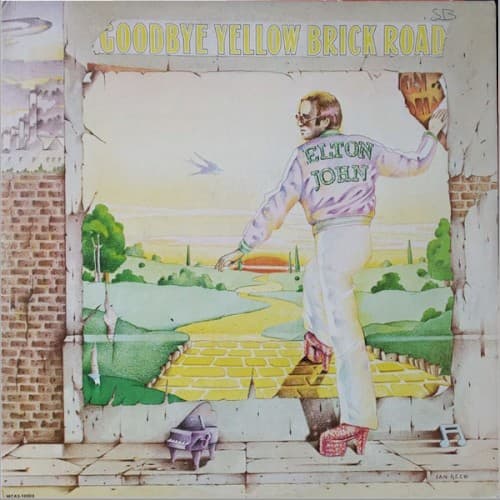
The peak commercial and creative period ran from 1972 through 1976, an almost absurd run of productivity and success. He released albums at a pace that would be considered reckless today — sometimes two per year — while maintaining quality control that yielded multiple classics. "Honky Château" in 1972 gave him his first number one album in the US. "Don't Shoot Me I'm Only the Piano Player" followed in 1973 with "Crocodile Rock," his first chart-topping single. Then came "Goodbye Yellow Brick Road," the double album that remains his creative and commercial summit, featuring "Candle in the Wind," "Bennie and the Jets," and the title track across seventeen songs that showcased the full range of his songwriting partnership with Taupin.
The late seventies saw creative restlessness and personal turbulence. He experimented with disco elements, worked with new producers, and dealt with the physical and psychological toll of constant touring and recording. Albums like "Blue Moves" in 1976 showed darker, more introspective material, while "A Single Man" in 1978 marked his first album without Taupin lyrics. Commercial success continued, but the cultural conversation shifted toward punk and new wave, genres that explicitly rejected the kind of theatrical, studio-polished pop he represented.
His eighties reinvention was less about sonic transformation than strategic positioning. He reunited with Taupin, scored hits with more contemporary production, and maintained stadium-level touring while younger artists dominated the charts. "I'm Still Standing" became an anthem of resilience. He began his long transition from current pop star to living legend, a process that required acknowledging changing tastes without chasing trends. His work on "The Lion King" soundtrack in 1994 introduced him to a new generation and demonstrated his ability to write for context beyond his own albums.
The 21st century has been about legacy management and calculated visibility. He became an elder statesman, collaborated selectively with contemporary artists, maintained a relentless touring schedule, and curated his catalog for new formats and audiences. His "Farewell Yellow Brick Road" tour, which began in 2018 and ran for five years, became one of the highest-grossing tours in history. The positioning was clear — this was not an artist desperately clinging to relevance, but a victory lap for someone who had already secured his place in pop history.
Cultural Architecture: How Elton John Built the Modern Pop Star Template
His influence operates on multiple levels simultaneously. Musically, he proved that piano-driven pop could be as commercially powerful as guitar rock, opening space for later artists from Billy Joel to Alicia Keys to Lady Gaga to build careers around keyboard-led songwriting. His melodic approach — sophisticated but immediately memorable, emotionally direct without being simplistic — became a template for adult contemporary and pop rock that persists today. Listen to any piano ballad on contemporary pop radio, and you hear the structural DNA he helped establish.
Visually and performatively, he normalized flamboyance in mainstream pop. Before him, theatrical presentation was largely confined to niche genres or specific subcultures. He brought it to stadiums and television, making spectacle a core component of pop stardom rather than an eccentric addition. His costumes, glasses, and stage productions said that a pop star could be larger than life while remaining musically credible. This paved the way for everyone from Prince to Madonna to contemporary pop's emphasis on visual concept and performance art.
Culturally, his openness about his sexuality — coming out publicly in the seventies, then more fully in the eighties — while maintaining massive commercial success was historically significant. He demonstrated that an openly gay artist could exist at pop's highest commercial level, though the industry's discomfort with this reality often manifested in how his personal life was covered versus how his music was marketed. His advocacy work, particularly around HIV/AIDS through the Elton John AIDS Foundation, gave him influence beyond music and helped shift how celebrity activism functioned.
The Bernie Taupin partnership itself became a model for songwriting collaboration — lyricist and composer working separately but symbiotically, creating a catalog that neither could have produced alone. This division of labor, with Taupin writing complete lyrics that Elton would then set to music without input or revision, was unusual and extraordinarily productive. It showed that pop songwriting could function as a true partnership without requiring the collaborators to write in the same room.