From Child Prodigy to Global Phenomenon: Michael Jackson's Unmatched Career Arc
Michael Jackson reshaped what popular music could accomplish, transforming from a precocious Motown child star into the most commercially successful and culturally significant entertainer of the late twentieth century. His five-decade career—spanning from his 1964 debut with The Jackson 5 through his 2009 death—produced a catalog that defined multiple eras of pop, R&B, and dance music while establishing new standards for visual presentation, choreography, and global reach. What distinguished Jackson wasn't merely commercial dominance but his ability to synthesize disparate influences—James Brown's kinetic performance energy, Jackie Wilson's showmanship, Diana Ross's polish—into something entirely his own.
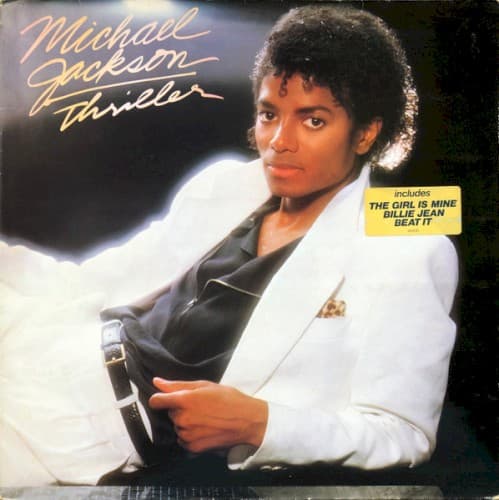
The Indiana-born performer achieved what no artist before had managed: genuine cross-format domination that erased genre boundaries and demographic divisions. His 1982 album Thriller didn't just break sales records—it fundamentally altered the music industry's understanding of what constituted a blockbuster, moving over 70 million copies worldwide while producing seven Top 10 singles. Beyond commercial metrics, Jackson established visual language that remains pop's baseline vocabulary: the moonwalk, the single white glove, the military jacket, the zombie choreography that transformed music videos from promotional tools into cultural events.
Yet his significance extends beyond innovation and salesmanship. Jackson's music existed at the intersection of technological advancement and emotional immediacy, pairing cutting-edge production techniques with vocal performances of startling vulnerability. His hiccups, gasps, and whoops became as recognizable as any guitar riff in rock history, while his rhythmic approach—rooted in funk but streamlined for maximum pop accessibility—created templates still followed today. Understanding Jackson requires examining both the unprecedented heights of his imperial phase and the complex legacy that followed, a career that illuminated pop's possibilities while revealing its pressures.
Sonic Architecture: The Signature Sound That Defined Modern Pop Production
Jackson's vocal instrument was pop music's most identifiable sound for over two decades—a high tenor capable of spine-tingling urgency, tender vulnerability, and explosive power within the same song. His approach to phrasing drew from R&B tradition while introducing idiosyncrasies that became part of pop's standard vocabulary: the hiccup punctuations on "Billie Jean," the breathy urgency of "The Way You Make Me Feel," the anguished wails threading through "Man in the Mirror." What made these tics effective rather than gimmicky was their emotional precision—each vocal ornament served the song's emotional architecture rather than functioning as empty showboating. His ability to shift from delicate falsetto to full-throated power created dynamic range that producers could build entire arrangements around.
The production aesthetic Jackson cultivated with Quincy Jones from Off the Wall through Dangerous established modern pop's sonic template: crystalline clarity where every element occupies its own frequency space, bass lines that function as melodic counterpoint rather than mere foundation, and rhythm arrangements that layer multiple percussive elements into interlocking grooves. Jones brought sophisticated harmonic knowledge and orchestral ambition, but Jackson's instinctive understanding of rhythm—honed through years as a dancer—drove the music's physical impact. Songs like "Wanna Be Startin' Somethin'" build from simple ostinatos into complex polyrhythmic structures that never sacrifice dancefloor accessibility for musicianly complexity.
His post-Jones work with Teddy Riley introduced new jack swing's mechanical precision to his organic funk foundation, creating the hydraulic grooves of Dangerous and HIStory. These later albums favored harder-edged production—industrial clangs, aggressive sampling, hip-hop influenced beat construction—that reflected both evolving musical trends and Jackson's own increasingly combative relationship with media scrutiny. The sonic shift from Thriller's warm analog glow to HIStory's cold digital aggression paralleled his thematic evolution from romantic optimism to defensive defiance, demonstrating how production choices reinforced lyrical content. Throughout these stylistic shifts, Jackson's core sonic signature remained: meticulous attention to rhythmic detail, dynamic arrangements that reward both casual and close listening, and vocal performances that balanced technical precision with emotional nakedness.
Five Decades of Evolution: Tracing Michael Jackson's Artistic Journey from Motown to Invincible
Jackson's professional life began at age five, performing in the family group that would become The Jackson 5. By 1969, the group had signed with Motown, and Jackson—barely eleven years old—was fronting consecutive number-one singles with "I Want You Back," "ABC," "The Love You Save," and "I'll Be There." These early hits showcased precocious vocal ability and natural rhythmic instinct, but also established patterns that would define his career: the tension between youthful innocence and professional sophistication, the weight of carrying commercial expectations, and the challenge of artistic growth within constraining circumstances. His Motown solo albums, particularly Got to Be There and Ben, demonstrated emerging individuality while remaining firmly within the label's established formulas.
The move to Epic Records in 1975 allowed creative expansion, though initial albums struggled to define a distinctive adult identity. The 1978 collaboration with Quincy Jones on Off the Wall represented genuine breakthrough—a mature work that balanced disco's rhythmic urgency with R&B sophistication and pop accessibility. The album produced four Top 10 singles and established Jackson as a serious adult artist rather than former child star. Yet its success, despite moving over 20 million copies, felt insufficient to Jackson himself, who believed it deserved Album of the Year recognition at the Grammys. This dissatisfaction fueled his determination to create something undeniable.
Thriller arrived in November 1982 and exceeded every conceivable benchmark for popular music success. Beyond its staggering sales figures and record-breaking seven Top 10 singles, the album demonstrated sophisticated sequencing that balanced uptempo dance tracks with ballads and mid-tempo grooves, creating an immersive listening experience rather than mere singles collection. "Billie Jean" paired paranoid lyrics with an unforgettable bass line and drum programming that sounded simultaneously organic and futuristic. "Beat It" brought Eddie Van Halen's guitar heroics into pop-R&B fusion that crossed demographic boundaries previously considered impenetrable. The 14-minute "Thriller" video, directed by John Landis, transformed the promotional clip into cinematic event, effectively creating MTV's cultural dominance while breaking the network's de facto color barrier. Our 8.9/10 review of the album notes how it "established templates for pop production that remain influential four decades later," while acknowledging that its cultural omnipresence sometimes obscures genuine musical achievement beneath statistical superlatives.
Bad followed in 1987 under impossible expectations, yet still produced five number-one singles and moved over 35 million copies. The album's harder-edged production and more aggressive posturing reflected Jackson's desire to maintain relevance in hip-hop's rising era, though it lacked Thriller's effortless flow between styles. Dangerous (1991) pushed further into new jack swing territory through collaboration with Teddy Riley, creating the mechanical funk of "Remember the Time" and "Jam" while retaining ballad showcases like "Will You Be There." The album's sprawling 77-minute runtime demonstrated both ambition and the CD era's tendency toward bloat, yet its best moments—particularly the environmental anthem "Earth Song"—showed Jackson engaging with global concerns beyond personal relationships.
HIStory (1995) arrived amid mounting personal controversies and media scrutiny, its confrontational tone reflecting Jackson's embattled psyche. Double-disc format split between greatest hits compilation and new material, the album's original songs oscillated between defensive anger ("Tabloid Junkie," "D.S.") and wounded vulnerability ("Childhood," "Stranger in Moscow"). Invincible (2001) would be his final studio album, a commercial disappointment despite competent execution, arriving in a music industry landscape Jackson no longer dominated. The album's muted reception illustrated how completely pop had moved beyond the blockbuster solo artist model Jackson embodied, with fragmented audiences and digital distribution rendering his approach to album-as-event obsolete.
Enduring Influence and Complex Inheritance: Michael Jackson's Contested Place in Pop History
Jackson's influence on subsequent generations of pop artists operates at every level—vocal approach, visual presentation, production aesthetics, career strategy, and global ambition. Contemporary pop from Justin Timberlake through The Weeknd to Bruno Mars demonstrates clear lineage in vocal techniques, rhythmic sensibilities, and performance concepts directly traceable to Jackson's innovations. His integration of dance into pop performance established expectations that subsequent artists must meet or deliberately subvert. The music video as narrative art form, the album as multimedia event, the tour as theatrical spectacle—these now-standard elements of pop stardom all trace to templates Jackson established.
Yet his legacy exists in permanent tension with personal controversies that shadowed his later career and intensified after his death. Child molestation allegations, bizarre lifestyle choices, and extensive plastic surgery created a tabloid narrative that competed with and often overwhelmed serious discussion of musical achievement. This dual legacy—unquestionable artistic innovation alongside troubling personal behavior—ensures Jackson remains pop's most complicated inheritance. Artists who cite his influence must navigate this complexity, taking musical lessons while often distancing themselves from biographical elements.
His commercial achievements established benchmarks that subsequent industry changes have rendered effectively unrepeatable. Thriller's sales figures emerged from a specific moment when physical album purchases represented the only legal consumption method, MTV wielded enormous cultural influence, and demographic fragmentation hadn't yet splintered popular taste into innumerable micro-genres. No artist will again dominate popular culture with Jackson's totality, not because of insufficient talent but because the monocultural conditions that enabled his supremacy no longer exist. This makes his imperial phase simultaneously inspiring and irrelevant to contemporary artists operating in streaming's fractured landscape.
What remains most valuable in Jackson's catalog is its demonstration of pop's capacity for both mass appeal and artistic substance. Thriller and Off the Wall prove that commercial domination need not require artistic compromise, that sophisticated production and genuine emotion can coexist with dancefloor accessibility. His best work rewards both casual enjoyment and deep analysis, containing layers of musical detail that justify repeated listening beyond nostalgic familiarity. As pop continues evolving into ever more specialized subgenres and platform-specific sounds, Jackson's career stands as both aspiration and historical artifact—a reminder of what unified popular music once accomplished and what it might never achieve again.