The Minneapolis Virtuoso Who Redefined Pop Stardom
Prince Rogers Nelson didn't just make music—he constructed an alternate universe where funk, rock, psychedelia, and soul converged into something entirely his own. Emerging from Minneapolis in the late 1970s, he arrived with technical mastery that seemed impossible for someone barely past adolescence. Multi-instrumentalist, producer, composer, arranger: Prince controlled every element of his sound before most artists had learned to work a mixing board. His refusal to be contained by genre expectations or industry conventions made him simultaneously pop's most successful rebel and its most uncompromising auteur.
The sheer breadth of his output defies easy categorization. He could craft a radio-ready pop anthem, then immediately pivot to sexually explicit funk workouts or guitar solos that rivaled rock's most celebrated axemen. His prolificacy bordered on compulsive—vault recordings number in the thousands, entire albums recorded in weeks, personas adopted and discarded with theatrical flair. What unified this restless creative energy was an unwavering belief in absolute artistic freedom. When Warner Bros. balked at his release schedule, he appeared in public with "SLAVE" written on his face and legally changed his name to an unpronounceable symbol, forcing the music industry to reckon with questions of ownership and creative autonomy that resonate decades later.
Sexual Mystique Meets Sonic Experimentation
Prince's sonic signature blended the rhythmic architecture of funk with rock's electric aggression, pop's melodic accessibility, and a distinctly psychedelic approach to studio production. His falsetto could shift from vulnerable tenderness to carnal provocation within a single phrase, while his guitar work—often overlooked in favor of his other talents—delivered solos that burned with Hendrix-level intensity. The Minneapolis Sound he pioneered merged drum machine precision with live instrumentation, creating a synthetic-organic hybrid that defined 1980s R&B production before others even understood what he was building.
His production aesthetic favored crisp, clean separation—every element occupying its own sonic space, from the snapping snare hits to the synthesizer washes that colored his arrangements. The Linn LM-1 drum machine became as much his signature as any guitar riff, providing the mechanical backbone over which he layered impossibly tight bass lines, crystalline keyboard runs, and vocal harmonies he recorded himself in meticulous layers. Songs rarely followed conventional verse-chorus structures when Prince could incorporate sudden tempo shifts, extended instrumental passages, or genre pivots that transformed pop songs into seven-minute odysseys.
Sexuality permeated his music not as mere provocation but as philosophical statement. He wrote about desire with a directness that shocked radio programmers while maintaining an androgynous mystique that complicated traditional masculine posturing in pop and R&B. The purple symbolism, the ruffled shirts, the ambiguous pronouns—all contributed to a carefully constructed persona that existed beyond binary categories, making space for gender fluidity in mainstream pop years before such conversations entered broader cultural discourse.
From Wunderkind to Symbol: A Creative Arc Without Compromise
Prince's 1978 debut For You announced his arrival with a simple declaration: "Produced, Arranged, Composed and Performed by Prince." He was nineteen. While that first album showed promise, 1979's self-titled follow-up delivered "I Wanna Be Your Lover," a Top 20 hit that showcased his falsetto and synth-funk blueprint. The early Warner Bros. years saw him refining his approach album by album—Dirty Mind (1980) pushing sexual boundaries, Controversy (1981) adding political dimensions to the provocation. By 1999 (1982), he'd perfected the formula: title track prophecy mixed with "Little Red Corvette" crossover appeal, delivered by a newly formed backing band called The Revolution.
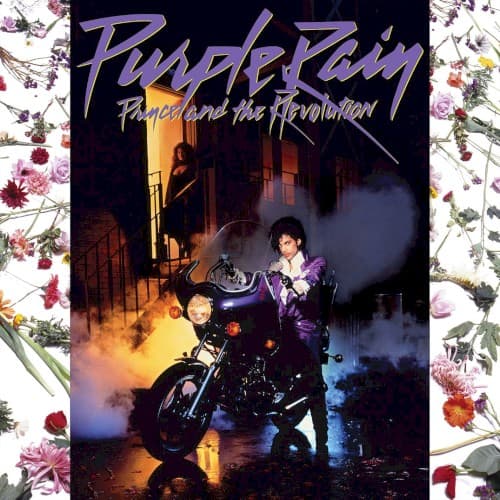
Then came Purple Rain. The 1984 album and accompanying film transformed Prince from cult phenomenon into global supernova. That record balanced stadium-ready rock anthems with intimate ballads, proving he could dominate MTV and arenas without diluting his vision. The title track's guitar solo became one of rock's defining moments, "When Doves Cry" stripped away bass entirely in a production gamble that paid off with a number-one single, and "Let's Go Crazy" opened with a sermon that positioned dance floors as spiritual spaces. Suddenly Prince wasn't just a pop star—he was a movement, selling thirteen million copies in the United States alone and cementing purple as his permanent brand color.
The post-Purple Rain era saw creative expansion and commercial volatility. Around the World in a Day (1985) indulged his psychedelic tendencies, Parade (1986) soundtracked another film with art-pop sophistication, and Sign o' the Times (1987) stands as perhaps his most musically diverse statement—sprawling across social commentary, spiritual searching, and pure funk abandon across a double album that many critics consider his masterpiece. The late eighties brought Lovesexy (1988) and the Batman soundtrack (1989), the latter demonstrating his ability to deliver commercial blockbusters on demand.
The 1990s marked his battle for artistic independence. Frustrated by Warner Bros.' refusal to release material at his preferred pace, he became The Artist Formerly Known as Prince in 1993, adopted an unpronounceable symbol, and spent years fulfilling contractual obligations while releasing independent work through unconventional channels. Albums like The Gold Experience (1995) and Emancipation (1996) varied wildly in quality but represented hard-won freedom. The prolificacy that labels saw as oversaturation was, to Prince, simply how creation worked—why should commerce dictate when art gets released?
Post-Warner, he controlled everything. Some releases recaptured old magic (Musicology in 2004, 3121 in 2006), while others disappeared without much notice. He pioneered digital distribution before iTunes, gave albums away with concert tickets and newspapers, and treated the internet as both opportunity and threat. Live performance became his primary medium—small club residencies where he'd play until dawn, selecting songs on instinct rather than setlist, proving nightly that his virtuosity hadn't diminished. His final years saw a late-career creative resurgence, collaborating with 3RDEYEGIRL and returning to Warner Bros. on his own terms, the prodigal genius welcomed home.
The Creative Control Blueprint and Cross-Genre Influence
Prince's most lasting contribution may be ideological rather than musical. His fight for artist ownership predated streaming economy debates by decades, establishing principles that Taylor Swift and countless others would later invoke. The symbol years looked like eccentricity to many observers, but they were calculated resistance—a successful artist literally erasing his marketable identity rather than let a corporation control his output. He proved that even within commercial pop structures, absolute creative autonomy was negotiable if you were willing to sacrifice convenience and conventional career logic.
Musically, his fingerprints appear across genre boundaries. The Minneapolis Sound influenced every R&B producer who followed, from Jimmy Jam and Terry Lewis (who started in his orbit with The Time) to contemporary figures like The Weeknd, who channels Prince's sexual mystique through darker sonics. His genre fluidity opened lanes for artists who refused categorical boxes—OutKast, Janelle Monáe, Lenny Kravitz, and Anderson .Paak all operate in spaces Prince mapped. The androgynous iconography paved roads for everyone from David Bowie's later work to contemporary artists exploring gender performance. His guitar work remains underrated outside musician circles, where players like D'Angelo and St. Vincent cite him alongside traditional rock heroes.
The vault remains partially unsealed. Posthumous releases have offered glimpses into the thousands of unreleased recordings Prince left behind, though debates rage about whether releasing material he chose to withhold honors or exploits his legacy. What's undeniable is the scale of his creative compulsion—an artist for whom music was perpetual necessity rather than periodic project. He changed what pop stardom could look like: weirder, more sexually complex, more musically ambitious, more fiercely independent. In an industry built on compromise, Prince built a career on refusal, and the music that resulted continues challenging artists to imagine what becomes possible when you answer to no one but the muse.