The scorecard
9.1/10 · Essential
- Songwriting25%
- 9.5
- Production25%
- 9.0
- Performance15%
- 9.0
- Cohesion15%
- 8.5
- Originality10%
- 9.0
- Replay value10%
- 9.5
The melodic hooks in the title track and the riskiest structural choices in When Doves Cry prove Prince could abandon every pop convention and still write songs that became standards.
The live recordings of I Would Die 4 U and Baby I'm a Star retain the rawness of the First Avenue show while the studio tracks layer synthesizers and guitars into something both huge and precise.
Prince commands every register from the falsetto pleading in The Beautiful Ones to the gospel shout in Purple Rain, and the Revolution sounds like a band that earned the room.
The sequencing builds from the opening scream of Let's Go Crazy to the eight-minute closer without a weak track, though the shift from Darling Nikki to When Doves Cry is abrupt.
Stripping the bass from When Doves Cry and recording three songs live for a studio album were moves no other pop star in 1984 would have risked on their commercial peak.
Four decades later the album still sounds like nothing else from its era, with none of the production choices that date most mid-eighties records.
Prince Purple Rain — The Pop Album That Proved Ambition Could Sell Millions
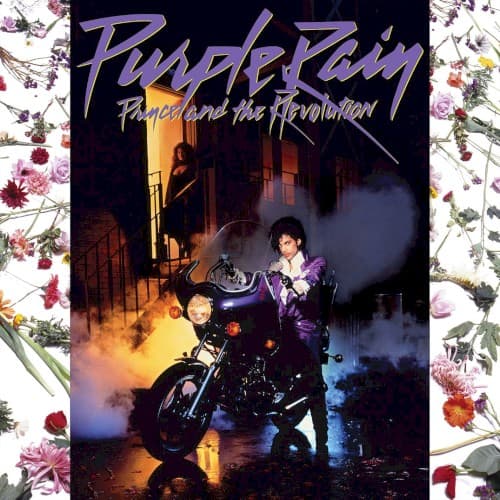
Purple Rain arrives at the exact moment when Prince had the leverage to demand a film and the skill to make the soundtrack matter more than the movie. The album works because it refuses the safety of the formula that got him here: the sparest hit single of 1984 has no bass line, three of the nine tracks were recorded live at a Minneapolis club, and the centerpiece ballad started as a country song intended for Stevie Nicks. That none of these choices should have worked on a record that spent half a year at number one is the thesis and the vindication. Prince built the biggest album of his career by trusting that pop audiences would follow him past the edges of what radio was playing, and the 24 weeks at the top of the Billboard 200 proved he was right.
The stakes in 1984 were simple: this was the album that would either make Prince a MTV star who could fill arenas or confirm him as a brilliant niche act who wrote hits for other people. The Revolution had been formalized and expanded the year before with Wendy Melvoin and Lisa Coleman, and the band sounds like it knows this is the shot. The writing leans harder into rock and psychedelia than anything on 1999, the production is denser and more layered, and the sequencing takes risks that most soundtrack albums avoid. What the album shares with 1999 is the refusal to pick a lane: Purple Rain is funk and rock and gospel and new wave and orchestral balladry, often in the same song, and the only consistent thread is that Prince is in control of all of it. The film gave the songs a narrative frame, but the album stands without it because the music itself has a shape and a journey that the movie only illustrates.
How Prince Built a Band Sound That Could Still Bend in Any Direction
Purple Rain is denser and more collaborative than the albums that preceded it, but collaboration here means Prince allowing the Revolution to shape arrangements he had already written. The band appears on six of the nine tracks, and the difference is audible: Let's Go Crazy and Computer Blue have the energy of a group that had been rehearsing in a Minneapolis warehouse for months, not a studio musician hired for a session. Melvoin and Coleman are credited as co-writers on Computer Blue, where Melvoin's guitar chords pulled the song out of the country arrangement Prince had originally imagined for Purple Rain, and Doctor Fink contributed the keyboard bass line that drives the track. The interplay between the guitar and synthesizer layers throughout the album is the sound of Prince using the Revolution to thicken the arrangements without losing the control that defined his earlier solo work.
The production is grandiose and synthetic in a way that should date the album to 1984, but the density of the layering and the care in the mixing keep it from sounding like a period piece. The drum machines and electronic effects are present on nearly every track, but they are mixed with live drums and full-band performances in a way that gives the record weight. The Beautiful Ones is essentially a Prince solo performance, but the arrangement builds from a sparse verse to a falsetto breakdown that could only work with the dynamic range the studio allowed. When Doves Cry is the opposite approach: Prince played every instrument and then removed the bass line after a conversation with Jill Jones, leaving a track that sounds empty in a way no other hit single of the year attempted. The boldness of that choice, and the fact that it became his first number-one single, is evidence that the production instincts were ahead of what radio programmers thought would work.
The live recordings that close the album show what the band could do in a room. I Would Die 4 U, Baby I'm a Star and Purple Rain were all captured at the First Avenue show in August 1983, then overdubbed and edited in the studio. The rawness is still there, especially in the call-and-response sections of Baby I'm a Star, but the edits tighten the performances enough that they sit next to the studio tracks without feeling like bonus material. The decision to include live recordings on a studio album was rare in 1984, and it works because the songs were written to be performed, not just produced.
The weaknesses are few but present. Darling Nikki exists mostly for the controversy it sparked, and while the lyrical explicitness got Tipper Gore's attention, the song itself is a midtempo funk track that does not earn its place in the sequence on musical grounds. Take Me With U is pleasant but slight, written for the Apollonia 6 album and repurposed here with Apollonia on co-lead vocals. It serves the film's narrative but adds little to the album's argument.
The Sequence That Proved a Soundtrack Could Pace Like a Statement
Purple Rain is 43 minutes long and wastes none of them. The sequencing builds deliberately from the opening scream through the eight-minute gospel-rock closer, and the only sag is the transition between the album's most provocative moment and its sparest, where the tonal shift is abrupt enough to feel like a side break even on the CD.
The first half moves quickly: the opening sets the energy high, a brief duet follows, balladry shifts the mood, the band returns, and the provocateur track exists before the flip. The back half resets with the sparest production and the most unconventional structure. The final three tracks were sequenced as they were performed live at First Avenue: the uptempo pivot, the extended groove, and the finale that earns every second of its eight minutes.
The pacing works because Prince understood that a soundtrack album is not a greatest-hits collection. The film's narrative justifies the slower moments and the tonal shifts, but the album holds together without the context because the sequence has its own logic. The length is earned by the fact that no track feels like filler except the one that is.
Where Purple Rain Ranks and Who It Is For
Purple Rain is Prince's commercial and creative peak, the album where the ambition and the audience met at the same scale. It is not his most experimental record, and the albums that followed would push further into psychedelia and funk, but it is the one where he proved that pop music in 1984 could accommodate all of his ideas at once. The synthesizers and drum machines place it in the mid-eighties, but the songwriting and the performances are why it still gets played.
This is the album for listeners who think Prince was a singles artist and want to hear him sustain the vision across nine tracks. It is also the album for anyone who wants to understand how a Black artist from Minneapolis became the biggest pop star in the world for six months by refusing to make the safe record. The Revolution's contributions are what make the album feel like a band statement rather than a solo auteur project, and Melvoin and Coleman's presence is a reminder that collaboration made the sound bigger without diluting the vision.
The album has aged better than most of its 1984 peers because the production choices that seemed risky at the time are now the reason it does not sound like every other record from the year. When Doves Cry still sounds like nothing else, and Purple Rain still builds to the kind of emotional release that guitar solos were invented for.
Start with When Doves Cry, then play Purple Rain and Let's Go Crazy. If those three tracks work, the rest of the album will. For the next album, the best choice is 1999, which has the funk and the experimentation without the film's narrative structure, or Sign o' the Times, which is where Prince took the psychedelic and experimental pop threads from Purple Rain and built a double album around them. Purple Rain remains the definitive statement because it is the one where he had the budget, the band and the confidence to make every choice the riskiest version of itself.
Track by track
Track Listing
Let’s Go Crazy
StandoutThe album opens with a spoken invocation about the afterlife before the band locks into one of the tightest rock performances on the record. The guitar solo in the final minute is Prince at his most Hendrix-derived, but the synthesizer stabs and the drum machine keep it from sounding like a straightforward rock track. The Christian ethics in the lyrics are veiled but present, with the elevator as a metaphor for the Devil, and the exhortation to party before the end of the world gives the track a manic energy that sets the tone for the album. The decision to open with this much adrenaline is a statement: this is not a mellow auteur project, this is a band that can fill arenas.
Take Me With U
SolidOriginally written for the Apollonia 6 album, this duet with Apollonia is the lightest track on the record. The melody is hooky and the arrangement is clean, but the song exists primarily to serve the film's romantic subplot. It does its job without making a case for why it belongs on an album this lean.
The Beautiful Ones
StandoutA solo performance that builds from a hushed verse to a falsetto breakdown that sounds unhinged in the best way. The lyric is a plea for romantic commitment, and Prince sells it with the kind of vocal performance that proves he could out-sing anyone in pop when he wanted to. The arrangement is sparse for the first three minutes, just piano and synth, and then it explodes into a climax that would be melodramatic if the delivery were not so committed. The track is a showcase for Prince's range and his willingness to risk sounding desperate, and it works because the desperation feels earned by the arrangement's patience.
Computer Blue
StandoutThe only track with formal co-writing credits for the Revolution, and the band's influence is audible in the density of the arrangement. Doctor Fink's keyboard bass line drives the groove, and Melvoin and Coleman's contributions to the structure give the song a complexity that the simpler tracks on the album do not attempt. Prince borrowed the bridge from his father's unreleased Father's Song, and the combination of influences makes the track feel like a genuine collaboration rather than a Prince solo performance with backing musicians. The lyrics are abstract and the structure is loose, but the groove is strong enough to hold it together.
Darling Nikki
WeakThe song that launched the Parental Advisory sticker exists mostly for its notoriety. The lyric about a girl in a hotel lobby is explicit enough that Tipper Gore made it the centerpiece of her campaign against rock lyrics, but the music itself is a midtempo funk track that does not do much beyond the provocation. The backwards message at the end is a nice touch, but the song is filler on an album that otherwise has none.
When Doves Cry
StandoutThe sparest and most radical hit single of 1984. Prince wrote the song after the rest of the album was complete, played every instrument, and then removed the bass line because he thought the track was too conventional with it. The result is a song that sounds empty in a way that should not work on pop radio, but the vocal melody and the synthesizer hook are strong enough that the absence of low end becomes the defining characteristic rather than a flaw. The lyric about family dysfunction and romantic confusion is more vulnerable than most of Prince's writing, and the production choice to leave the track so bare makes the vulnerability more exposed. It became his first number-one single and it still sounds like nothing else.
I Would Die 4 U
StandoutRecorded live at First Avenue and tightened in the studio, this is the uptempo pivot that sets up the final stretch. The lyric is a religious metaphor disguised as a love song, and the call-and-response structure works because the band sounds like they are in the same room. The track is short and economical, and it functions as a palate cleanser before the extended groove of Baby I'm a Star.
Baby I’m a Star
StandoutA live recording that captures the energy of the First Avenue show, with the band locked into a groove that could sustain for ten minutes if the edit had allowed it. The lyric is pure ego and the performance backs it up: Prince and the Revolution sound like a band that knows they are about to own the next year of pop culture. The call-and-response sections give the track a loose, celebratory feel, and the decision to include it as the penultimate track rather than the closer is smart sequencing: it builds the energy high enough that Purple Rain can bring it back down without losing momentum.
Purple Rain
StandoutAn eight-minute guitar ballad that closes the album with the kind of emotional release that only a live recording could deliver. Prince originally wrote it as a country song for Stevie Nicks, who turned it down because the instrumental version he sent her felt overwhelming. Wendy Melvoin's guitar chords during a rehearsal changed the arrangement, and the band played it for six hours straight until it became the version on the record. The lyric is vague enough to support multiple interpretations, but Prince explained it as being about the end of the world and letting faith guide you through. The guitar solo in the final three minutes is one of the most famous in pop music, and it earns every second by building slowly from the verses rather than arriving as a showcase. The live recording from First Avenue was overdubbed and edited, but the performance retains the rawness that makes it feel like a moment rather than a construction. It is the best closing track on any Prince album.