Style & Context
Influences
Pre-Raphaelite painting, Ophelia imagery, dance photography, Peter Gabriel's visual experiments
Location
This emerged from Britain's Fairlight CMI-driven progressive pop scene where artists treated albums as multimedia statements.
Visual Language
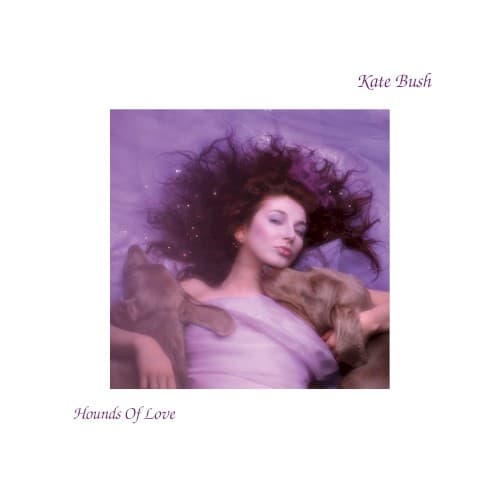
The blurred motion technique transforms a studio portrait into something mythological and timeless.
Symbols
Suspended hair
Her hair defies gravity like seaweed underwater, visualizing the submersion theme of The Ninth Wave.
Closed or half-closed eyes
The inward gaze signals introspection and trance states central to Bush's shamanic pop vision.
Draped fabric
The flowing garment blurs boundaries between clothing and water, solid and liquid realities.
Where Sound Meets Image
The suspended, weightless quality mirrors the album's production—Fairlight strings and sampled sounds creating orchestral depth without traditional instruments. Her closed eyes and dreamy expression reflect the album's themes of erotic surrender in "Hounds of Love" and near-death experience in "The Ninth Wave." The purple glow evokes the album's twilight settings, from dusk romance to midnight ocean rescue, while the soft focus matches Bush's layered vocal production and echo-heavy arrangements.
This cover established the visual vocabulary for ethereal pop—influencing everyone from Björk's underwater photography to Florence Welch's flowing fabric obsession. The purple-haze aesthetic became shorthand for feminine mysticism in pop, copied endlessly but rarely matched. Its painterly quality proved album art could compete with music videos for defining an artist's image, and its refusal of literal representation set the template for art pop's visual ambition.