
The Piano Man Who Defined American Pop Storytelling
Billy Joel emerged from Long Island's working-class suburbs to become one of pop music's most commercially successful and narratively rich songwriters. His piano-driven sound bridged the gap between Tin Pan Alley craftsmanship and contemporary rock energy, creating a distinctive template that felt simultaneously timeless and immediate. Where many 1970s singer-songwriters favored introspection and folk textures, Joel brought theatrical arrangements, character-driven lyrics, and a melodic sophistication drawn from classical training and doo-wop reverence.
His breakthrough came after years of false starts and label disappointments. Early albums flopped, a disastrous California relocation left him broke, and his first marriage dissolved under industry pressure. The turning point arrived in 1973 with Piano Man, a collection of observational sketches that introduced his narrative voice—empathetic but clear-eyed, capable of capturing both loneliness and resilience. The title track became his signature, but the album's modest success only hinted at what would follow.
By the late 1970s, Joel had refined his approach into something more ambitious. He stopped chasing trends and leaned into his strengths: melodic complexity, lyrical specificity, and an unashamed embrace of pop grandeur. The result was a run of albums that defined FM radio for a generation and established him as a commercial force capable of matching anyone in the industry.
Melodic Architecture and Piano-Driven Arrangements
Joel's musicality rests on a foundation of formal piano training filtered through rock and roll instincts. His chord progressions favor sophisticated jazz voicings and classical movement over standard pop formulas, giving even his most straightforward songs harmonic depth. He builds melodies with careful attention to phrasing and dynamics, often layering multiple melodic ideas within a single track. This structural complexity never overwhelms accessibility—his best songs feel effortless even when their construction is intricate.
His lyrical approach combines narrative detail with emotional economy. He writes from perspectives both personal and invented, often inhabiting characters who struggle with class anxiety, romantic disappointment, or the gap between ambition and reality. These aren't abstract meditations but concrete stories—waitresses, construction workers, suburbanites, streetwise kids. The specificity grounds his work in recognizable American life without slipping into sentimentality. When he aims for broader commentary, as on social critiques or historical reflections, he balances cynicism with surprising tenderness.
Production-wise, Joel favored clean, powerful arrangements that showcased instrumental interplay. His best records feature muscular rhythm sections, tasteful horn charts, and spacious mixes that let the piano lead without dominating. He avoided the gauzy overproduction that dated many of his peers, opting instead for clarity and punch. This sonic approach aged well—his albums from the 1970s and early 1980s still sound direct and energetic rather than trapped in their era.
From Piano Man to Pop Royalty: A Five-Decade Trajectory
Joel's recording career began inauspiciously with Cold Spring Harbor in 1971, an album marred by technical issues and poor promotion. Family Productions, his management company at the time, saddled him with exploitative contracts that would haunt him for years. Frustrated and nearly destitute, he fled to Los Angeles and spent six months playing piano bars under an assumed name. Those experiences directly inspired Piano Man, released in 1973 after he signed with Columbia Records. The album's title track became an unlikely hit, but sales were middling and Joel remained a second-tier act.
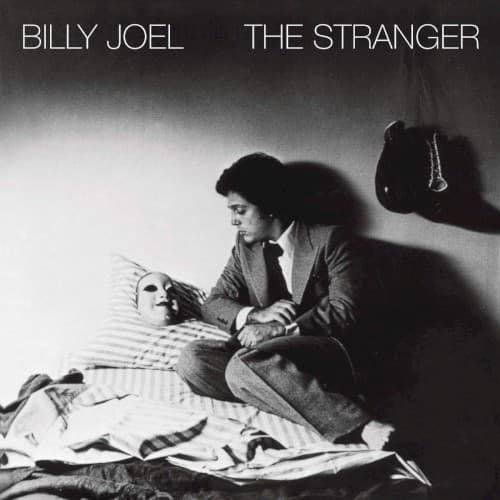
The next three years saw incremental progress. Streetlife Serenade (1974) and Turnstiles (1976) found him refining his voice, but neither broke through commercially. Columbia grew impatient. Joel knew he needed a creative and commercial reset. He recruited producer Phil Ramone, whose work prioritized sonic precision and dynamic range. The partnership transformed his sound. The Stranger, released in September 1977, became the album that redefined his career. It spawned four Top 40 hits, including "Just the Way You Are" and "Only the Innocent," and went multi-platinum. Joel had finally delivered on his potential, and the industry took notice.
The late 1970s and early 1980s represented Joel's imperial phase. 52nd Street (1978) won the Grammy for Album of the Year and confirmed he could sustain commercial momentum. Glass Houses (1980) leaned harder into rock, featuring guitar-driven tracks that competed with new wave's energy. The Nylon Curtain (1982) took a darker turn, addressing Vietnam, recession, and suburban despair with a seriousness that surprised critics. An Innocent Man (1983) pivoted toward retro soul and doo-wop homage, yielding massive hits like "Uptown Girl" and proving his versatility. Each album sold millions, and Joel became a fixture on MTV and arena tours.
The second half of the 1980s brought diminishing creative returns. The Bridge (1986) felt transitional, and Storm Front (1989) leaned on nostalgic gestures like "We Didn't Start the Fire," a rapid-fire history lesson that became a cultural touchstone despite its musical simplicity. River of Dreams (1993) would be his final pop album. Joel announced he was done chasing hits and shifted focus to classical composition and live performance. He hasn't released a pop album since, though he continues to tour extensively, playing monthly residencies at Madison Square Garden that draw multigenerational audiences.
Legal and financial troubles shadowed his peak years. Joel's former manager and ex-brother-in-law embezzled millions, leading to protracted lawsuits that drained resources and energy. His personal life—three divorces, struggles with depression and alcohol—played out in the tabloids. Yet he remained remarkably productive during these periods, channeling turmoil into his work rather than retreating. His willingness to address his failures and vulnerabilities in song distinguished him from more guarded peers.
Enduring Influence on Pop Craft and American Songwriting
Joel's influence operates at the structural level of pop songwriting. He demonstrated that melodic sophistication and lyrical complexity could coexist with mass appeal, creating a template that artists from Ben Folds to Sara Bareilles to Rufus Wainwright have built upon. His piano-centric arrangements proved that rock instrumentation wasn't mandatory for credibility or commercial success, opening space for a generation of keyboard-driven pop acts. He never apologized for his ambitions or his influences, validating an approach to pop that valued craftsmanship over coolness.
Critical reception has always been mixed. Rock purists dismissed him as too slick, too mainstream, too concerned with hit-making. Yet his albums have aged remarkably well, free from the sonic gimmickry that dates many 1980s productions. His best songs remain radio staples and streaming favorites, introduced to new listeners through film soundtracks, commercials, and viral covers. The Stranger alone has sold over ten million copies in the United States, a rare achievement for any artist in any era.
Culturally, Joel represents a specific strand of American identity—working-class aspiration, East Coast grit, and the belief that intelligence and accessibility aren't mutually exclusive. His catalog serves as a document of late-twentieth-century American life, from suburban ennui to urban hustle to generational anxiety. He captured the contradictions of his time without preaching or posturing, which is perhaps why his work continues to resonate. Fans don't just admire his songs—they see their own lives reflected in them.