From Brill Building Prodigy to Singer-Songwriter Royalty
Before Carole King became synonymous with the confessional singer-songwriter movement of the 1970s, she spent a decade invisibly shaping the sound of American pop. Writing alongside then-husband Gerry Goffin in New York's legendary Brill Building, she crafted hits for The Shirelles, Aretha Franklin, and The Monkees—architecture that defined early 60s pop before most people knew her name. Born Carol Joan Klein in Manhattan in 1942, she began piano lessons at four and was writing songs in her teens, landing her first publishing deal before she could legally vote.
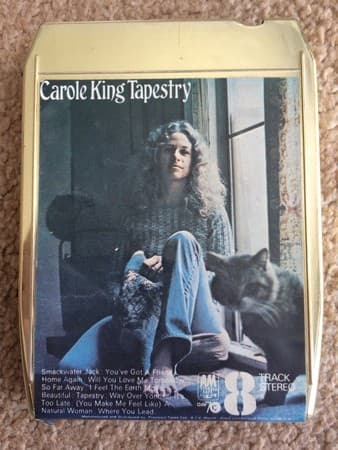
Her transition from behind-the-scenes craftsperson to front-facing artist happened gradually, almost reluctantly. Early solo albums in the late 60s garnered critical respect but little commercial traction. Then 1971's Tapestry arrived like a cultural reset—intimate, piano-driven, emotionally direct in ways that felt revolutionary precisely because they felt so ordinary. The album spent 15 weeks at number one, won four Grammys, and held the record for most weeks on the Billboard 200 by a female artist for over two decades. King didn't just ride the singer-songwriter wave; she created the template.
What distinguishes King's legacy is the duality: she exists both as architect of the pop machinery and as the artist who dismantled it in favor of something more human-scaled. Her songwriting catalog reads like a genealogy of American pop—over 400 compositions, 118 charting singles as a writer. Yet her most enduring work as a performer centers on vulnerability, domestic intimacy, and the quiet revolutions of personal emotion. She turned the confessional into commercial gold without ever sounding calculated.
The Architecture of Intimacy: King's Piano-Driven Emotional Clarity
King's approach as a performer centers on an almost deceptive simplicity. Her piano playing—rooted in stride, gospel, and early rock and roll—provides harmonic richness without showiness. She rarely indulges in virtuosity for its own sake. Instead, the piano functions as conversational partner, its chord progressions mirroring the emotional logic of her lyrics. Listen to "So Far Away" and notice how the descending bass line physically embodies longing, how the major-to-minor shifts in "It's Too Late" sound like acceptance arriving in real time.
Vocally, King operates in a narrow but expressive range, favoring directness over acrobatics. There's a lived-in quality to her phrasing—slight catches, conversational cadences, the sense that she's working through feelings rather than performing them. This stands in sharp contrast to the technical precision of contemporaries like Barbra Streisand or even Joni Mitchell's exploratory range. King sounds like she's singing in your living room, which was precisely the point. The folk-rock arrangements on her classic albums favor warmth over production sheen: acoustic guitars, subtle bass, restrained drums, occasional strings that color rather than dominate.
What makes King's musical identity so influential is how it democratized songcraft. Her melodies are memorable without being novelty hooks—they lodge in memory through repetition and emotional association rather than gimmickry. Her chord progressions draw from jazz sophistication but land with pop accessibility. She proved that songs could be structurally complex and emotionally resonant while still feeling effortless. Generations of singer-songwriters borrowed this blueprint: emotional honesty delivered through meticulous but invisible craft.
Two Acts, One Legacy: The Brill Building Years and the Tapestry Revolution
King's professional life essentially divides into two distinct eras, though the skills honed in the first made the second possible. Her partnership with Gerry Goffin began in 1958 when both were still teenagers. Working in the Brill Building's song-factory environment—cubicles with pianos, 9-to-5 hours, assignments to fulfill market demands—they became one of the era's most successful teams. "Will You Love Me Tomorrow" for The Shirelles became the first number one by a Black girl group. "The Loco-Motion" for Little Eva, "One Fine Day" for The Chiffons, "(You Make Me Feel Like) A Natural Woman" for Aretha Franklin—these weren't vanity projects. They were professional assignments executed with uncommon emotional intelligence.
This apprenticeship taught King pop structure at its most refined: verse-chorus economy, melodic hooks that survive any arrangement, lyrics that balance specificity with universality. When her marriage to Goffin dissolved and she relocated to Los Angeles in 1968, she carried this expertise into a very different context. Her first solo album, Writer, appeared in 1970—a promising but tentative effort that sold modestly. Label executives at Ode Records saw potential but no immediate breakthrough.
Tapestry changed everything. Recorded quickly with a small band including guitarist Danny Kortchmar and drummer Russ Kunkel, the album captured something unplanned: the sound of a woman at her piano, processing divorce, motherhood, and self-discovery through song. "I Feel the Earth Move" opened with physical urgency. "It's Too Late" offered clear-eyed acceptance rather than melodrama. "You've Got a Friend," written for James Taylor, became an anthem of platonic devotion. The album's commercial dominance—over 25 million copies sold—proved that intimacy could scale to stadium-level success.
King followed with Music in 1971, which went platinum, and Rhymes & Reasons in 1972, maintaining commercial momentum. Fantasy in 1973 and Wrap Around Joy in 1974 produced hits like "Believe in Humanity" and "Jazzman," but critics noted a gradual drift toward safer, more polished production. By the mid-70s, the raw immediacy of Tapestry felt increasingly distant. Thoroughbred in 1976 and Simple Things in 1977 marked a creative plateau—well-crafted but lacking the urgency that made her breakthrough era vital. Audiences began to move on.
The 80s and beyond saw King in a different mode: respected elder stateswoman rather than chart presence. She continued recording sporadically—City Streets in 1989 featured production from Rudy Guess and a minor adult contemporary hit. She focused on environmental activism, living in Idaho and advocating for land conservation. A 2005 collaboration with James Taylor on a cover of "It's Too Late" for a tribute compilation reminded audiences of her legacy. The Beautiful musical, opening on Broadway in 2014, introduced her story to a new generation, running for over five years and winning two Tony Awards. A 2021 performance with Taylor Swift and James Taylor at the Rock and Roll Hall of Fame induction ceremony felt like cultural coronation—King receiving flowers from artists who built careers on the foundation she laid.