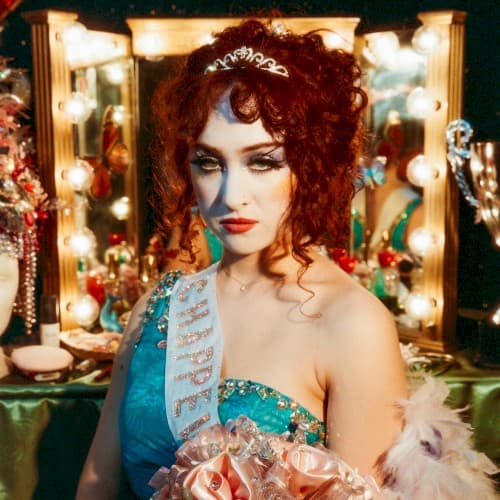
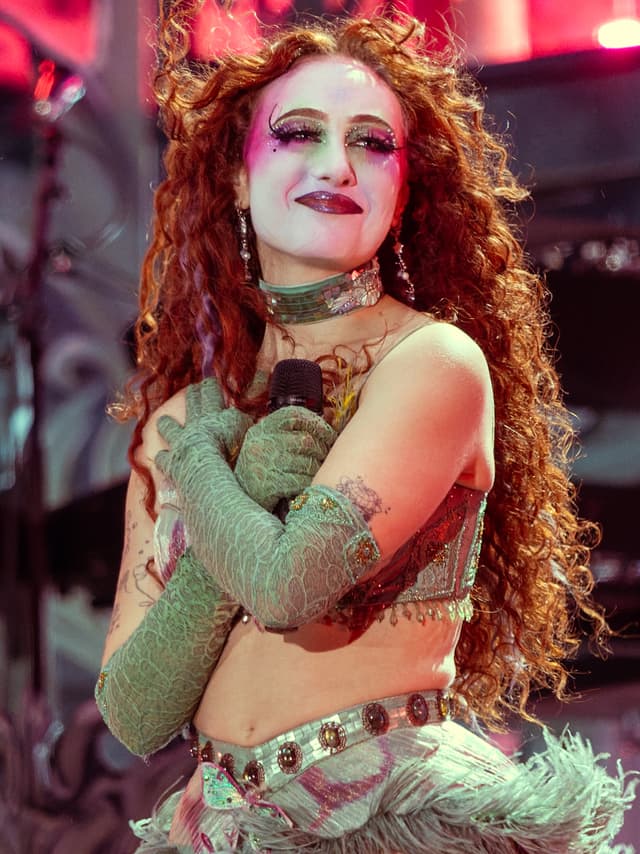
From Willard, Missouri to Queer Pop Stardom
Chappell Roan — born Kayleigh Rose Amstutz in 1998 — spent nearly a decade as one of pop's most overlooked artists before suddenly becoming one of its most essential voices. The Willard, Missouri native signed to Atlantic Records at seventeen after a YouTube upload caught industry attention, released a handful of singles that went nowhere, got dropped, moved to Los Angeles, worked day jobs while writing at night, and eventually re-emerged with a sound so vivid and a persona so fully realized that the industry had no choice but to pay attention. By 2024, she was selling out arenas and headlining major festivals, proof that artistic conviction can outlast commercial indifference.
What separates Roan from the wave of bedroom pop artists who emerged in the late 2010s is her commitment to full theatrical presentation. This isn't music designed for passive streaming — it's designed for drag brunches, pride parades, and packed club floors where everyone knows the words. She writes pop songs that function as queer anthems without diluting either requirement, balancing Dan Nigro's crisp production with lyrics specific enough to feel autobiographical and universal enough to become communal. The breakthrough came not through algorithm luck but through relentless touring, word-of-mouth momentum, and an audience hungry for pop music that centered their experiences without apology.
Theatrical Synth-Pop with Queer Specificity
Chappell Roan's sonic identity sits at the intersection of 1980s synth-pop grandeur and contemporary queer club culture. Working primarily with producer Dan Nigro — who helped shape Olivia Rodrigo's confessional rock-pop — Roan builds tracks around pulsing synthesizers, live drums, and vocal melodies designed to soar over festival sound systems. The production recalls everything from Kate Bush's art-pop drama to Robyn's emotionally direct dance-pop, filtered through a distinctly American Midwest lens. Tracks move between breathless kiss-off anthems and vulnerable ballads, but even the quietest moments maintain theatrical scale.
Her vocal delivery splits the difference between Gaga's campy drama and Lorde's conversational intimacy. She can belt with full chest voice conviction, then drop into a near-whisper for maximum emotional impact. Lyrically, she writes with the specificity of someone who spent years working through identity in journal entries before turning them into hooks — references to sapphic desire, complicated relationships with hometowns, and the particular loneliness of closeted youth appear throughout her catalog. The arrangements favor live instrumentation layered with synthesizers rather than pure electronic production, giving the songs warmth and physicality. This isn't music about queer experience in abstract terms — it's about late-night texts, dive bar makeouts, and the specific feeling of being the only gay kid in a small Missouri town.
A Decade-Long Journey from Atlantic Records Dropout to Festival Headliner
Roan's career began with the kind of false start that destroys most artists. Atlantic Records signed her at seventeen after "Good Hurt" went viral on YouTube in 2015, relocated her to Los Angeles, and released a handful of singles that failed to connect. The label pushed a softer, more conventional pop sound that didn't match her emerging artistic vision. By 2020, she was dropped, broke, and working as a nanny and production assistant while continuing to write. Most artists would have quit. She kept going.
The turning point came when she connected with Dan Nigro and began developing the sound and persona that would define her breakthrough. The name Chappell Roan itself — derived from her grandfather's name and his favorite song — became a boundary between her private self and public persona, allowing her to fully inhabit a theatrical character on stage. She started releasing singles independently in 2020, beginning with "Pink Pony Club," a synth-pop anthem about escaping small-town Missouri for the West Hollywood gay scene. The song built slowly through TikTok and word-of-mouth, becoming a queer anthem without mainstream radio support.
Roan spent 2021 and 2022 touring relentlessly, building an audience through live performance rather than streaming playlists. She opened for Olivia Rodrigo, performed at small pride festivals, and cultivated a fan base that showed up in full drag to her shows. By the time The Rise and Fall of a Midwest Princess arrived in September 2023, the groundwork was laid. The album — released on Island Records after she re-signed to a major — received immediate critical acclaim and commercial traction, with tracks like "Red Wine Supernova" and "Casual" becoming fan favorites. The project balances kiss-off anthems with vulnerable confessions, mapping the emotional geography of queer desire with precision and humor.
What followed was one of pop's most dramatic ascents in recent memory. Festival bookings exploded. Her 2024 Coachella performance became one of the weekend's most talked-about sets. By summer, she was playing sold-out arena shows and appearing on late-night television. The success felt earned rather than manufactured — the result of years spent refining her craft while the industry ignored her. Unlike viral TikTok stars who arrive fully formed and disappear just as quickly, Roan's breakthrough carried the weight of someone who had already survived failure and kept working anyway.
Her live shows became events, with fans arriving in elaborate costumes matching her rotating stage personas — cowgirl drag, 1980s prom queen, campy fortune teller. The performances combined pop spectacle with genuine emotional vulnerability, proof that theatricality and authenticity aren't opposing forces. By late 2024, she was selling out arenas and headlining major festivals, a trajectory that seemed impossible just two years earlier. The career arc mirrors artists like Lady Gaga and Troye Sivan — queer pop stars who refused to sand down their specificity to chase mainstream acceptance and found that audiences were hungry for exactly that clarity of vision.
Redefining Queer Representation in Mainstream Pop
Chappell Roan's cultural impact extends beyond her own discography. She arrived at a moment when queer pop was simultaneously more visible and more sanitized than ever — artists could come out, but the music itself often avoided explicit queer content in favor of universal relatability. Roan rejected that compromise entirely. Her songs name what they're about without metaphor or evasion, creating space for listeners who spent years reading subtext into straight pop songs to finally hear their experiences centered. The fanbase she built — largely queer, largely young — treats her music as both party soundtrack and emotional lifeline.
Her influence shows up in how a new generation of pop artists approaches identity and presentation. The success of Midwest Princess proved that queer specificity can drive mainstream success rather than limit it, opening doors for artists who might have been told to stay vague. She's frequently compared to Lady Gaga and Charli XCX for her commitment to full artistic vision and refusal to compromise sonic identity for commercial considerations. But where Gaga built her early career around provocation and Charli around experimental production, Roan's lane is emotional directness wrapped in theatrical presentation — camp without distance, vulnerability without apology.
The long-term legacy remains in formation, but the foundation is clear: she transformed from dropped major-label artist to one of pop's most vital voices by trusting her audience and refusing to dilute her vision. That journey — the years of struggle, the artistic persistence, the eventual breakthrough on her own terms — may prove as influential as the music itself. She demonstrated that the path to pop stardom doesn't require erasing specificity or chasing algorithms. Sometimes it just requires showing up, doing the work, and waiting for the world to catch up.