From Barbados to Billboard: The Rihanna Phenomenon
When Robyn Rihanna Fenty arrived in 2005 with "Pon de Replay," few could predict she'd become the template for modern pop stardom itself. The Barbadian singer didn't just chase trends—she set them, pivoted through them, and occasionally obliterated them entirely. Across eight studio albums released between 2005 and 2016, she moved from dancehall-inflected teen pop to EDM maximalism to the moody introspection that defined ANTI, her most critically acclaimed work.
What separates Rihanna from her 2000s peers is her refusal to be boxed in. She's collaborated with everyone from Jay-Z and Eminem to Calvin Harris and Tame Impala, treating genre boundaries as suggestions rather than mandates. Her Caribbean roots remain audible even when she's working with Scandinavian hitmakers or experimental R&B producers. That duality—island warmth meeting icy pop precision—became her signature.
Beyond the music, Rihanna rewrote the rules of celebrity itself. She turned album rollouts into cultural events, music videos into fashion statements, and her personal life into a masterclass in boundary-setting with the media. By the time she semi-retired from recording to focus on Fenty Beauty and fashion, she'd already secured her position as one of the most influential artists of the 21st century.
Sonic Versatility: The Chameleon Approach to Pop
Rihanna's vocal instrument isn't built on range or technical pyrotechnics. It's her tone—smoky, slightly nasal, effortlessly cool—that makes her unmistakable. She sings like someone who's already over it, which paradoxically makes you lean in harder. That detached delivery works whether she's selling heartbreak ballads or club bangers, giving even the most polished productions a lived-in quality.
Her musical approach has always been collaborative in the truest sense. She doesn't write most of her material, but she curates it with the precision of a gallery owner. The Rihanna sound is less about a single style and more about a mood: confident, occasionally wounded, always in control. She's equally comfortable over Timbaland's stuttering percussion, Stargate's pristine pop scaffolding, or the sparse, dark production that defined her later work.
What's remarkable is how she adapted without losing coherence. The girl singing "SOS" in 2006 and the woman delivering "Needed Me" a decade later sound like the same artist who simply lived through some things. Her Caribbean inflections surface strategically—a patois phrase here, a dancehall riddim there—grounding even her most synthetic productions in something warm and human. She mastered the art of sounding present without sounding desperate, a balance many pop stars spend careers chasing.
Eight Albums, Multiple Eras: Charting a Decade of Dominance
Rihanna's career moved at a pace that would exhaust most artists. Her debut Music of the Sun arrived in August 2005, and by November 2009, she'd released four more albums. This wasn't just productivity—it was strategic evolution. Each project tested new sonic territory while keeping one foot planted in whatever was dominating radio at that moment.
The breakthrough came with Good Girl Gone Bad in 2007, the album that transformed her from promising newcomer to global force. "Umbrella," produced by Tricky Stewart and featuring Jay-Z, spent seven weeks at number one in the UK and became one of the defining pop songs of the decade. The album's fusion of R&B, dance-pop, and hip-hop influences established a blueprint she'd refine for years. Suddenly, Rihanna wasn't just another pop singer—she was a hit-making apparatus.
The Rated R era in 2009 marked a deliberate pivot toward darker, more aggressive material. Recorded in the aftermath of her highly publicized assault by Chris Brown, the album channeled genuine anger and vulnerability into tracks like "Russian Roulette" and "Hard." Critics praised her willingness to explore uncomfortable emotional territory, even as some questioned whether the timing was exploitation or catharsis. Either way, it proved she could weather personal crisis and emerge with credible artistic growth.
Loud (2010) and Talk That Talk (2011) saw Rihanna fully embrace pop maximalism. Working with producers like RedOne, Stargate, and Calvin Harris, she delivered relentless hit sequences: "Only Girl (In the World)," "We Found Love," "Where Have You All the Lovers Gone." These albums prioritized immediate gratification over cohesion, turning Rihanna into a singles artist whose albums existed mainly as delivery systems for radio dominance. It worked commercially—she racked up fourteen number-one singles on the Billboard Hot 100 across this period.
Unapologetic in 2012 added hip-hop edge and explicit content, with features from Future, Eminem, and Mikky Ekko. The lead single "Diamonds" showcased a softer side, while deeper cuts like "Numb" featuring Eminem leaned into druggy, nihilistic themes. The album felt scattered but intentionally so, reflecting an artist comfortable enough to stop chasing coherence. By this point, Rihanna's brand was strong enough that she could release whatever she wanted.
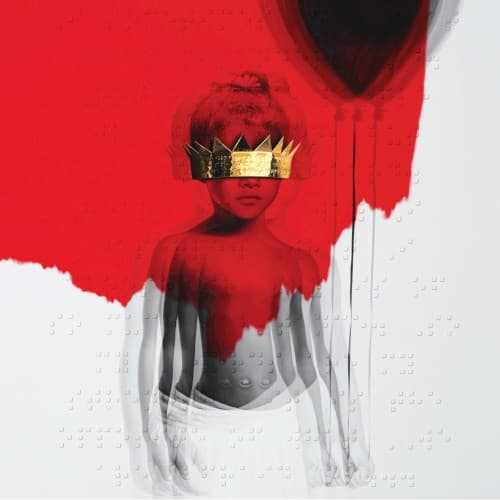
Then came the four-year gap. When ANTI finally arrived in January 2016 after endless delays and label drama, it sounded like nothing she'd done before. Ditching the hit-chasing approach, she worked with producers like DJ Mustard, Boi-1da, and Tame Impala to create something moodier, more introspective, and deliberately paced. Tracks like "Consideration" featuring SZA and "Love on the Brain" revealed new vocal textures, while the Anti-folk leanings of "Higher" showed an artist finally prioritizing artistic statement over commercial calculation. Our review scored it 7.6 out of 10, noting its willingness to challenge expectations even when it didn't fully cohere.
Beyond Music: Redefining Pop Stardom for the Streaming Era
Rihanna's influence extends far beyond her recorded output. She became the prototype for the modern multi-hyphenate celebrity: musician, fashion icon, beauty mogul, and cultural tastemaker operating simultaneously. When she launched Fenty Beauty in 2017 with an unprecedented 40 foundation shades, she didn't just disrupt cosmetics—she demonstrated that pop stars could build empires that outlast their musical relevance.
Her impact on contemporary pop is audible everywhere. The moody, minimal R&B that dominates streaming playlists owes a debt to the risks she took on ANTI. Artists like Billie Eilish, SZA, and even Ariana Grande have followed the path she carved: Caribbean-inflected rhythms, detached vocal delivery, genre fluidity as default. She proved you could headline festivals, move fashion trends, and maintain mystique all while releasing music on your own timeline.
What makes her legacy particularly interesting is the silence. Since ANTI, Rihanna hasn't released a full album, yet her cultural presence hasn't diminished. She's become bigger than her discography, a rare achievement in an industry that typically demands constant content. Whether she ever returns to music full-time or not, her eight albums document one of pop's most fascinating transformations—from teen sensation to artistic auteur to mogul who transcended the medium that made her famous.