The Duo That Defined Intelligent Pop in the Turbulent Sixties
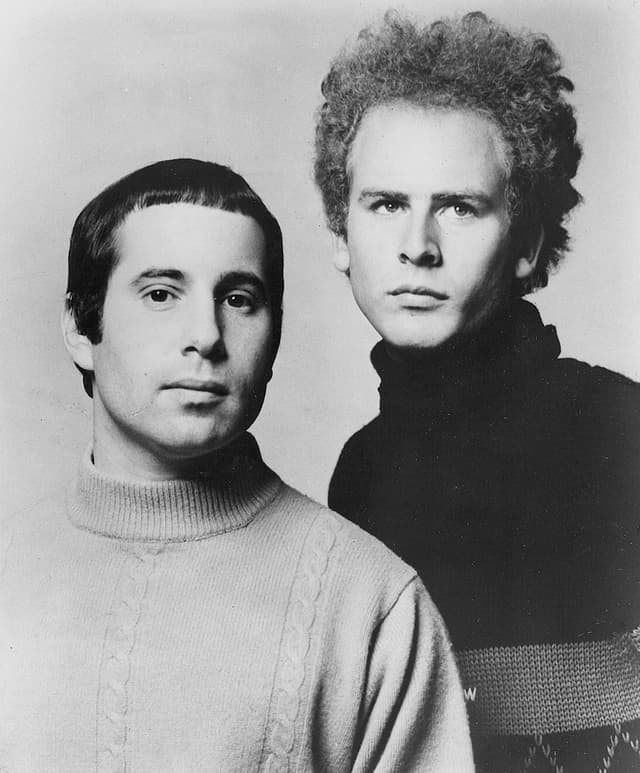
Simon & Garfunkel existed as a commercial entity for barely seven years, yet their imprint on popular music remains indelible. Paul Simon and Art Garfunkel, childhood friends from Queens, New York, transformed folk music from protest singalongs into meticulously crafted pop architecture. Their partnership produced five studio albums between 1964 and 1970, each one refining a sonic template that balanced literary ambition with radio-friendly accessibility.
What separated them from the Greenwich Village folk scene was their willingness to embrace studio sophistication. While peers stripped arrangements to acoustic essentials, Simon and producer Roy Halee layered textures with cathedral-like precision. Garfunkel's choirboy tenor floated above Simon's earthier harmonies, creating a vertical dimension that made even simple folk progressions feel expansive. Their 1965 breakthrough came not from coffeehouse stages but from an unauthorized remix—producer Tom Wilson overdubbing electric instruments onto the acoustic recording of The Sound of Silence, transforming a album track into a number-one single without the duo's knowledge.
Their cultural timing proved impeccable. As America navigated civil rights upheaval, campus unrest, and generational fracture, Simon & Garfunkel offered music that acknowledged complexity without demanding tribal allegiance. Mrs. Robinson soundtracked The Graduate's disaffected youth. The Boxer gave voice to urban loneliness. Bridge Over Troubled Water became a nondenominational hymn for uncertain times. They dissolved their partnership in 1970 at their commercial zenith, leaving behind a catalog that would influence everyone from the introspective singer-songwriters of the seventies to the harmony-obsessed indie folk revival five decades later.
Architectural Harmonies and Studio-Crafted Folk Pop
The Simon & Garfunkel sound rests on a deceptive foundation: folk instrumentation processed through pop studio discipline. Early albums like Wednesday Morning, 3 A.M. adhered to acoustic folk orthodoxy, but even then, the vocal stacking revealed ambitions beyond traditional folk purity. Garfunkel's crystalline high register—trained through years of choral singing—provided the melodic throughline, while Simon's mid-range harmony added warmth and grounding. Their blend didn't just complement; it created a third voice, a composite timbre that became their signature.
Producer Roy Halee's role cannot be overstated. His engineering background at Columbia Records gave him technical fluency rare in the folk world. On Parsley, Sage, Rosemary and Thyme, he introduced unconventional microphone placements and chamber echo that made intimate performances feel cinematic. Scarborough Fair layers harpsichord and countermelodies into what began as a traditional English ballad. The sparse arrangement of Homeward Bound uses negative space as an instrument, letting silence emphasize yearning. This wasn't folk purism—it was folk reimagined through the possibilities of multitrack recording.
Simon's songwriting evolved from Dylan-influenced folk poetry toward something more sculptural. His lyrics favored concrete imagery over abstract protest: the specific architecture of the 59th Street Bridge, the particular loneliness of a New Jersey Turnpike, the precise alienation of reading poetry on subway walls. Musically, he incorporated Latin rhythms (El Condor Pasa), gospel structures (Bridge Over Troubled Water), and Appalachian fingerpicking, always filtered through an arranger's sensibility. By their final album, they were working with full orchestras and multi-movement suites, pushing folk-pop into territory that anticipated the studio ambitions of artists like Elton John and Carole King.
From Tom & Jerry to Cultural Phenomenon: Seven Years That Reshaped Folk
The origin story begins in 1957, when fifteen-year-olds Paul Simon and Art Garfunkel released Hey Schoolgirl as Tom & Jerry, reaching number forty-nine on the Billboard charts. That early taste of success led nowhere—they separated for college, Simon heading to Queens College while Garfunkel pursued mathematics at Columbia. They reunited in 1963, adopting their real names and recording Wednesday Morning, 3 A.M. for Columbia Records. The album sold poorly. Simon moved to England, playing folk clubs and absorbing the British folk revival that would later surface in Scarborough Fair's arrangement.
Everything changed when producer Tom Wilson, without consulting the duo, overdubbed electric guitar, bass, and drums onto The Sound of Silence in mid-1965. The remix climbed to number one by January 1966. Simon returned from England to find himself half of a hit-making duo. They capitalized immediately with Sounds of Silence, an album that codified their approach: literary lyrics, immaculate harmonies, and arrangements that smuggled folk sensibilities into Top 40 radio. Homeward Bound and I Am a Rock became AM staples, proving that contemplative songwriting could compete with British Invasion energy.
Their third album, Parsley, Sage, Rosemary and Thyme, arrived in late 1966 as the folk-rock wave crested. Here they established full creative control, spending months on vocal arrangements and instrumental textures. The album went platinum, but their next move elevated them beyond the folk category entirely. Director Mike Nichols recruited them to soundtrack The Graduate in 1967, and Mrs. Robinson became synonymous with sixties generational conflict. The exposure was massive—the soundtrack sold over five million copies, introducing their catalog to audiences who'd never visited a coffeehouse.
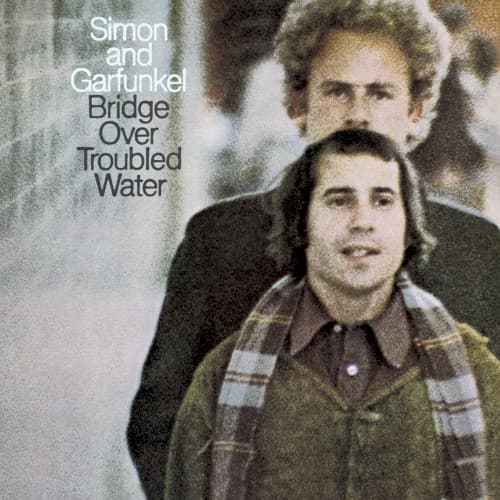
Bookends, released in 1968, showed both their creative peak and the fractures forming beneath. The album juxtaposed conceptual ambition (the aging-themed bookend tracks) with straightforward pop craft (Mrs. Robinson, Fakin' It). Critics praised its sophistication; the duo privately struggled with diverging visions. Garfunkel wanted to pursue acting. Simon chafed at the compromises required for vocal harmony. Their final studio effort, Bridge Over Troubled Water, took over eight hundred hours of studio time across 1969. The title track—written by Simon as a solo vehicle for Garfunkel's voice, arranged with orchestral grandeur by Jimmy Haskell—became their biggest hit and deepest wound. Simon resented watching his partner receive standing ovations for a song he'd written. The album won six Grammys and sold over twenty-five million copies, but by the time it dominated 1971's charts, Simon & Garfunkel had already disbanded.
Reunion attempts followed—a 1972 benefit concert, a 1975 single (My Little Town), major tours in 1982 and 2003—but these were nostalgia exercises, not creative partnerships. Their studio recordings remained frozen in the 1963-1970 window, a short burst that generated disproportionate influence.
The Lasting Architecture of Thoughtful Pop
Simon & Garfunkel's dissolution left a template that pop music has returned to repeatedly: intelligent lyrics need not sacrifice melodic accessibility, and studio craft can elevate rather than diminish emotional authenticity. The introspective singer-songwriter wave that followed—James Taylor, Joni Mitchell, Jackson Browne—built on their proof that personal, literary songwriting could achieve mass commercial success. Later artists absorbed different lessons. Fleet Foxes and Bon Iver studied their vocal stacking techniques. Mumford & Sons took the folk instrumentation while missing the studio sophistication. Even contemporary pop draws on their harmonic language, the way voices can interlock to create textures larger than individual performances.
Their catalog's durability stems partly from its specificity. These songs exist in recognizable spaces—city streets, train stations, apartment complexes—rather than universal abstractions. That grounding keeps them from feeling dated even as the sixties recede into history. The Boxer's narrative of struggle remains portable across decades. America's road-trip imagery translates to any generation discovering mobility and possibility. Bridge Over Troubled Water functions as ceremonial music for weddings, funerals, and graduations because its comfort feels earned rather than prescribed.
Perhaps their most significant contribution was proving that pop albums could be crafted objects rather than collections of singles plus filler. The attention they devoted to sequencing, sonic consistency, and thematic coherence anticipated the album-as-statement approach that would dominate the seventies. Artists like Prince and Madonna would later apply similar studio perfectionism to different genres, but the idea that every element deserves obsessive refinement—that model traces back to Roy Halee's mixing board and two perfectionists arguing over vocal takes. Seven years, five albums, and a partnership that couldn't survive its own success. The music continues doing what it always did: making complexity sound effortless, turning introspection into communion.