The scorecard
8.2/10 · Great
- Songwriting25%
- 9.0
- Production25%
- 8.5
- Performance15%
- 8.0
- Cohesion15%
- 7.0
- Originality10%
- 7.5
- Replay value10%
- 8.5
The title track and The Only Living Boy in New York deliver melody and lyric that withstand five decades of overplay, while El cóndor pasa and Save the Life of My Child feel like experiments that didn't resolve.
The orchestral sweep on Bridge Over Troubled Water and the vocal layering on Cecilia show precision and ambition, though Save the Life of My Child sounds dated in its attempt at psychedelia.
The restraint on So Long, Frank Lloyd Wright and the control on the title track are matched by stiffness on Why Don't You Write Me, where the rhythm never loosens.
The front half peaks early with the title track and sags through filler like Save the Life of My Child, then recovers with The Only Living Boy in New York before trailing off again.
Keep the Customer Satisfied and Cecilia push the duo toward rhythm and grit, but El cóndor pasa and Bye Bye Love are borrowed arrangements that add little.
The title track, Cecilia and The Only Living Boy in New York justify repeat visits, but the back half dilutes the stakes with covers and sketches that feel like contract fulfillment.
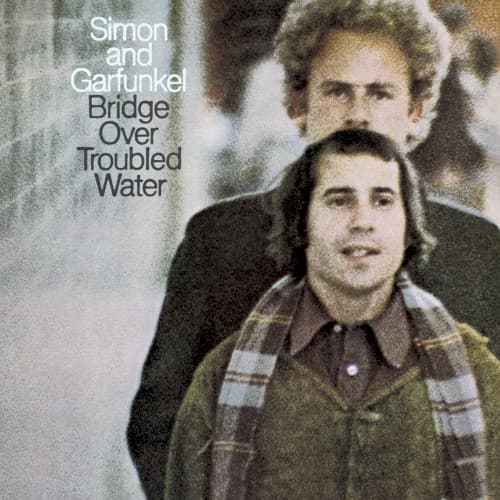
Simon and Garfunkel Bridge Over Troubled Water — The Breakup That Builds a Hit
Bridge Over Troubled Water is the sound of a duo pulling in opposite directions and accidentally making their best singles in the process. The title track became their signature, a gospel-shaped ballad that turned restraint into architecture, but it sits at the front of an album that never settles on a second idea. The rest of the record splits between rhythm experiments that work, like Cecilia, and filler that sounds like two songwriters who stopped talking to each other before the track list was done. The gap between the peaks and the sags is the album's defining fact.
The thesis here is that Bridge Over Troubled Water succeeds as a singles collection despite failing as an album. The title track and The Only Living Boy in New York are among the best things the duo ever recorded, built with the kind of melodic patience that pop abandoned a decade later. Cecilia and Keep the Customer Satisfied push toward rhythm and grit in ways that suggest a different career path, one the breakup ended before it could be explored. But the back half is padded with covers, instrumentals and half-sketches that exist to fill space, not to argue for the album's necessity. The sequencing peaks in the first minute and never builds that kind of tension again. What remains is a handful of permanent songs surrounded by context that has aged into curiosity.
Songcraft That Peaks Early and Diversions That Don't Earn Their Place
The songwriting on Bridge Over Troubled Water divides cleanly into songs that could carry an album and songs that expose the seams. The title track is a master class in withheld resolution, a melody that delays its chorus lift until the second verse and saves the full orchestral release for the third. The lyric works by understatement, offering comfort without specifying the trouble, which is why the song has been borrowed for every public moment of grief since. The Only Living Boy in New York does similar work with less bombast, building a goodbye around a melody that rises and falls in waves, the kind of writing that trusts the listener to follow a long line. So Long, Frank Lloyd Wright is quieter still, a sketch of regret that works because it doesn't overstate.
Cecilia and Keep the Customer Satisfied are the album's most adventurous songs, both built on rhythm rather than melody, both reaching for a groove that the duo's earlier work avoided. Cecilia is the album's most immediate track after the opener, a handclap-driven stomp with a vocal arrangement that layers call and response into something close to chaos. Keep the Customer Satisfied moves faster, a road song that uses repetition and tempo to suggest exhaustion rather than triumph. Both tracks hint at a direction the duo never pursued, a move toward rhythm and grit that would have required a different kind of partnership.
The rest is filler or borrowed material that adds nothing. El cóndor pasa is an instrumental folk melody with English lyrics laid over the top, an arrangement that sounds like tourism even by the standards of its moment. Save the Life of My Child is a failed experiment in psychedelia, a production that tries to sound futuristic and lands dated instead. Bye Bye Love is a cover that exists because the duo needed one more track, and Song for the Asking is a fragment that trails off rather than ends. The sequencing front-loads the title track and then alternates between strong material and padding, which means the album never builds momentum after the first minute.
Production choices are sharp where the songs are strong and thin where the songs are weak. The title track uses orchestration to amplify the melody without smothering it, a build that earns the final crescendo in ways that recall the careful arrangement philosophy of Pet Sounds. Cecilia is all texture, the handclaps and percussion mixed forward to create a sense of crowded joy. The Only Living Boy in New York layers vocals into a wall of harmony that suggests both presence and absence. But Save the Life of My Child sounds like a production looking for a song, and Why Don't You Write Me never finds the rhythm it reaches for, the arrangement too stiff to let the vocal relax.
A Record That Peaks in the First Minute and Never Recovers the Stakes
The album is sequenced like a greatest hits collection that includes the B-sides. The opener establishes an orchestral sweep and melodic control that only two other tracks can approach. It is the correct choice for a single and the wrong choice for an album, because everything that follows is heard in its shadow. The sequencing should have built toward that moment or away from it; instead it places the peak at the start and spends the next forty minutes reminding the listener of what has already passed.
The middle stretch recovers some ground. Three consecutive tracks form an accidental suite of strong material, a sequence where the writing, performance and production align. This is the album's best stretch, the section that works as songs rather than as filler. But the momentum collapses again with the following two tracks, which exist to fill space rather than to argue for the album's necessity. The back half feels like contract fulfillment, which is likely what it was.
The length is not earned. At thirty-six minutes the album is short by later standards, but it still includes at least three tracks that could be cut without loss. The pacing never builds, because the opener is the climax and the rest is aftermath. An album that opened with Cecilia, placed the title track at the center, and closed with The Only Living Boy in New York would have had a shape; this one has singles and then what came with them.
A Singles Collection That Holds Three Permanent Songs and Filler That Shows the Seams
Bridge Over Troubled Water ranks as the duo's commercial peak and their creative endpoint, an album that contains their best-known song and also the evidence that the partnership had run out of shared ideas. The title track, Cecilia and The Only Living Boy in New York are worth the price of entry; they are songs that have withstood five decades of overplay because the melodies and the arrangements were built to last. The rest of the album is either solid work that doesn't quite reach that level, like Keep the Customer Satisfied and So Long, Frank Lloyd Wright, or filler that exposes the gaps between the two songwriters, like Save the Life of My Child and El cóndor pasa.
This is an album for listeners who want the hits and can tolerate the filler, not for listeners who want a unified statement. The sequencing and the padding make it clear that this was a collection of songs rather than a considered work, which is fine if the singles justify it. Here they do. The title track is one of the best pop ballads of its era, a song that turned gospel architecture into something secular and universal. Cecilia is the album's most joyful track, a handclap-driven stomp that still sounds immediate. The Only Living Boy in New York is the album's saddest song, a goodbye built on harmony and withholding.
Start with those three tracks. If they connect, the album has enough strong material to justify a full listen, even if the back half sags. If you want a deeper catalog, the duo's earlier work is more consistent from front to back; this one trades cohesion for a higher ceiling. Skip it if you already know the title track and have no curiosity about the rest, because the filler does not reveal hidden depths.
Track by track
Track Listing
Bridge Over Troubled Water
StandoutThe title track is a gospel ballad that borrows the architecture of spiritual music and strips out the theology, leaving only comfort and promise in its place. The melody withholds resolution for nearly two minutes, circling the tonic without landing, which makes the final chorus lift feel earned rather than automatic. The first verse is nearly a cappella, just voice and piano, a choice that establishes intimacy before the orchestration arrives. The second verse adds strings but holds back the full arrangement, and the third verse finally releases the tension with horns and a choir-like swell that turns the song into a cathedral. The lyric works by saying less than it could, offering to be a bridge and a sail without specifying the trouble or the destination, which is why the song has been borrowed for every public grief since. The performance is controlled to the point of stiffness, but that restraint is the point; the song is about withholding emotion until the final release. It is one of the best pop ballads of its era because the structure, the arrangement and the melody all build toward the same climax.
El cóndor pasa
WeakAn instrumental Andean folk melody with English lyrics laid over the top, an arrangement that sounds like cultural tourism even by the standards of its moment. The melody is borrowed, the lyrics are vague, and the combination adds nothing to either source. The production is thin, just the melody and the vocal, with no attempt to integrate the two elements into a unified song. It exists on the album because the duo needed material, not because the song earned its place.
Cecilia
StandoutThe album's most immediate track after the opener, a handclap-driven stomp built on rhythm and vocal layering rather than on melody alone. The song is structured around a two-chord vamp and a lyric that repeats the same story from different angles, a structure that should feel repetitive but instead feels accumulative, each pass adding another voice or another percussion element. The handclaps and the stomp are mixed forward, creating a sense of crowded joy, and the vocal arrangement layers call and response into something close to chaos. The lyric is oblique, a story about love or betrayal or both, but the details matter less than the rhythm, which is relentless. The production is the song's best choice, building texture instead of melody, using repetition to create momentum rather than to fill time. It is the album's most joyful track and the one that sounds least like the duo's earlier work, a hint at a direction they never pursued.
Keep the Customer Satisfied
StandoutA road song that uses tempo and repetition to suggest exhaustion rather than triumph. The melody is simple, almost a chant, and the lyric is a catalog of indignities faced by a traveling musician, but the song works because the arrangement never lets the tempo sag. The rhythm section drives forward without variation, and the vocal delivery is clipped and impatient, matching the lyric's complaint. The song hints at grit and fatigue, emotions the duo's earlier work avoided, and the production supports that shift by keeping the arrangement spare and the mix dry. It is not a great song, but it is a strong one, and it points toward a version of the duo that could have leaned harder into rhythm and away from harmony.
So Long, Frank Lloyd Wright
SolidA sketch of regret and farewell, a song that works because it underplays its emotion rather than overstating it. The melody is simple and the lyric is direct, a goodbye to an architect and possibly to a partnership, and the vocal delivery is quiet enough to suggest ambivalence rather than certainty. The arrangement is minimal, just voice and guitar and light orchestration, which keeps the focus on the lyric and the melody. It is a small song that does not overreach, and that modesty is its strength. The song earns its place by saying goodbye without drama.
The Only Living Boy in New York
StandoutThe album's saddest song, a goodbye built on harmony and melodic patience. The lyric is addressed to someone leaving, possibly the other half of the duo, and the melody rises and falls in waves, each verse building to a chorus that offers comfort and then retreats. The vocal arrangement is the song's best element, layering harmonies into a wall of sound that suggests both presence and absence, the voices filling the space the departed person has left. The production is lush but not overdone, using orchestration to amplify the emotion without smothering the melody. The song is structured like a hymn, with verses that repeat the same melodic shape and a chorus that offers resolution without finality. It is one of the duo's best songs because the melody, the lyric and the arrangement all work toward the same feeling, a sense of loss that is accepted rather than fought.
Save the Life of My Child
WeakA failed experiment in psychedelia, a production that tries to sound futuristic and lands dated instead. The song opens with synthesizer effects and a vocal effect that suggests distance or distortion, and the arrangement adds layers of sound that are meant to create disorientation but instead create clutter. The melody is weak, and the lyric is vague, a story about a child on a ledge that never resolves into a narrative or a theme. The production is the song's main idea, but the production has aged poorly, and what remains is a track that sounds like a misstep even in the context of its own album.
America
StandoutA road song that builds a narrative around a bus trip and a failing relationship, the lyric specific enough to feel real and vague enough to be universal. The melody is patient, circling the same phrases, and the arrangement is spare, just voice and guitar and minimal percussion. The song works by accumulation, adding small details about cigarettes and magazines and the New Jersey Turnpike until the setting becomes a character. The vocal delivery is detached, which matches the lyric's sense of disconnection, and the production supports that choice by keeping the mix dry and the arrangement minimal. It is a strong song that earns its place by trusting the listener to follow a long, quiet line.
Why Don’t You Write Me
WeakA reggae-influenced rhythm track that never finds its groove. The song reaches for a loose, swaying feel but lands stiff instead, the rhythm section too careful and the vocal too tight to let the song relax. The melody is thin, and the lyric is a complaint about absent letters that does not develop into a larger theme. The production tries to create space and texture, but the arrangement is too cluttered to breathe, and the vocal delivery is too precise to match the rhythm's intent. It is filler, a track that exists because the album needed more material.
Bye Bye Love
SolidA cover of an Everly Brothers song, included because the duo needed one more track and had nothing original left to give. The arrangement is faithful to the original, and the vocal harmonies are clean, but the song adds nothing to the album or to the source. It is competent and unnecessary.
Song for the Asking
SolidA fragment, barely two minutes, that sounds like a sketch rather than a finished song. The melody is pleasant and the lyric is a simple offer of a song in exchange for love, but the track trails off rather than ending, and the arrangement is so minimal that the song feels incomplete. It exists to close the album on a quiet note, but it does not earn that role.