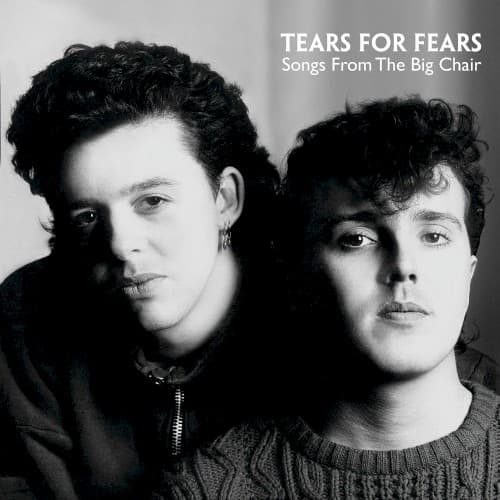

The Architects of Emotionally Articulate Synth-Pop
When Roland Orzabal and Curt Smith emerged from Bath, England in 1981, they arrived with an agenda that separated them from their new wave contemporaries. Tears for Fears wasn't interested in the cold detachment or ironic distance that characterized much early-80s synth-pop. Instead, they built cathedral-sized arrangements around explicitly therapeutic themes, drawing from primal scream therapy and Jungian psychology to create pop music that treated emotional excavation as its central project. The band's name itself—lifted from Arthur Janov's primal therapy concept—signaled their intention to make vulnerability a strength rather than a liability.
What distinguished Tears for Fears immediately was the sheer scale of their sonic ambition. Where peers might settle for a catchy synth hook and a tight three-minute runtime, Orzabal and Smith constructed layered soundscapes that borrowed equally from post-punk's experimental edge and classic pop's melodic sophistication. Their breakthrough album Songs From the Big Chair transformed them from cult art-pop curiosities into global superstars, yielding massive singles that somehow maintained conceptual depth while dominating radio worldwide. They proved that stadium-sized pop could carry intellectual weight without sacrificing accessibility.
Four decades into their career, Tears for Fears occupies a unique position in pop history—too expansive and melodically rich to be dismissed as mere new wave revivalists, too emotionally direct to fit comfortably in the art-rock tradition, yet absolutely essential to understanding how British synth-pop evolved beyond its austere origins into something warmer and more psychologically complex.
Maximalist Production Meeting Psychologically Charged Songwriting
The Tears for Fears sound operates on a principle of controlled excess. Their productions layer synthesizers, live drums, orchestral elements, and intricate vocal arrangements into dense, meticulously crafted walls of sound that recall Phil Spector's production aesthetic filtered through 1980s technology. Songs From the Big Chair exemplifies this approach—tracks build from sparse beginnings into overwhelming sonic events, with producer Chris Hughes helping shape arrangements that feel simultaneously modern and timeless. The drum sounds alone became iconic: that distinctive gated reverb snap that defined mid-80s production, executed with more musicality and dynamic range than most contemporaries managed.
Vocally, the duo established a distinctive interplay between Orzabal's more nasal, urgent lead delivery and Smith's smoother, more traditionally melodic approach. Orzabal handles the bulk of lead vocals, bringing an earnest intensity that grounds even the most elaborate productions in human feeling. His voice carries a slight tremor on sustained notes—never quite settled, always emotionally present. Smith's contributions provide essential counterpoint, his cleaner tone offering moments of resolution within the band's complex harmonic structures.
Songwriting-wise, they favor extended structures that allow ideas to develop rather than simply repeat. Verses build through multiple iterations, bridges function as genuine transitions rather than formulaic breaks, and choruses often withhold full arrival until the listener has been properly prepared. This patience separates their work from more conventional pop construction. The melodies themselves draw from British folk traditions, Beatles-influenced pop craft, and progressive rock's willingness to follow musical ideas wherever they lead, all wrapped in production that sounds unmistakably of its technological moment while transcending period piece status.
From Post-Punk Origins to Pop Dominance and Beyond
Tears for Fears coalesced from the ashes of mod revival band Graduate, with Orzabal and Smith recognizing they needed a clean break to pursue their more ambitious vision. Their 1983 debut The Hurting introduced their therapeutic framework explicitly, with songs addressing childhood trauma, isolation, and psychological pain through synth-driven arrangements that owed debts to bands like Ultravox and Japan while pushing toward something more melodically generous. The album succeeded commercially in the UK, establishing them as serious artists within the new wave landscape, but nothing prepared the music world for what came next.
Songs From the Big Chair arrived in February 1985 as a creative statement so fully realized it seemed to rewrite the rules for what synth-pop could accomplish. Working with producer Chris Hughes and engineer Dave Bascombe, the band spent over a year crafting an album that balanced radio-friendly immediacy with genuine artistic ambition. "Shout" became a global anthem with its primal scream vocal exhortations and that unforgettable ascending synth line. "Everybody Wants to Rule the World" delivered a seemingly effortless pop perfection—jangly guitars meeting programmed drums, a melody so natural it felt inevitable, and lyrics that critiqued power structures while remaining singable. "Head Over Heels" showcased their ability to construct complex emotional narratives within immaculate pop frameworks. The album dominated charts worldwide, eventually selling over five million copies in the US alone and establishing the duo as A-list pop stars.
The follow-up The Seeds of Love took four years and over a million pounds to complete, reflecting both the duo's perfectionism and growing creative tensions. The album abandoned much of the synth-pop foundation in favor of lush, Beatles-influenced arrangements featuring live orchestration and jazz elements. While commercially successful and containing the hit "Sowing the Seeds of Love," the difficult recording process led to Smith's departure in 1991. Orzabal continued under the Tears for Fears name, releasing the introspective Elemental in 1993 and the darker Raoul and the Kings of Spain in 1995, both solid albums that nonetheless felt like one half of a conversation.
The duo's 2004 reunion for Everybody Loves a Happy Ending marked an unexpected creative reconciliation, though the album received limited promotion from their label. The real triumph came nearly two decades later with The Taming of the Mill in 2022, a sprawling double album that proved they could still construct sophisticated pop with real emotional stakes. Recorded over several years with various collaborators, the album addressed aging, grief, political disillusionment, and personal resilience without resorting to nostalgia or easy answers. Critics and longtime fans responded enthusiastically, recognizing that Tears for Fears remained committed to their original vision of pop music as a vehicle for psychological exploration rather than simple entertainment.
Emotional Openness as Template for Modern Pop Vulnerability
Tears for Fears' most significant contribution might be their demonstration that male pop artists could center emotional vulnerability without ironic distance or defensive posturing. In an era when synth-pop often cultivated cool detachment, they built an entire aesthetic around admitting fear, pain, and confusion. That openness created a template that artists from Radiohead to The 1975 would later expand upon, establishing emotional honesty as not just acceptable but essential to meaningful pop music. Their willingness to discuss therapy, childhood wounds, and psychological struggle in explicitly accessible pop songs helped normalize conversations about mental health decades before such discussions became culturally mainstream.
Musically, they proved that sophisticated production and genuine pop hooks weren't mutually exclusive. Songs From the Big Chair remains a touchstone for producers interested in creating dense, layered arrangements that serve the song rather than overwhelming it. The album's influence echoes through decades of pop production—you hear it in how artists like Depeche Mode expanded their sonic palette on Violator, in the lush maximalism of contemporary pop producers, in any artist attempting to balance technological possibilities with timeless melodic craft.
The band's critical reassessment has only strengthened over time. Where they were once sometimes dismissed as slick 80s pop confection, contemporary listeners recognize the genuine artistry in their work—the ambition, the craftsmanship, the emotional courage. Their catalog has aged remarkably well precisely because they never chased trends or settled for safe choices. They remain vital not as nostalgia objects but as artists who proved pop music could be simultaneously massive and meaningful, technologically sophisticated and emotionally direct, commercially successful and artistically uncompromising.