The scorecard
8.2/10 · Great
- Songwriting25%
- 8.5
- Production25%
- 9.0
- Performance15%
- 7.5
- Cohesion15%
- 7.0
- Originality10%
- 8.0
- Replay value10%
- 8.5
Choruses built for permanence: the two-word hook in Shout and the entire melodic arc of Everybody Wants to Rule the World earn their lift through craft rather than repetition.
Chris Hughes pushes past the synth-pop template with dense guitar layering, MIDI programming and saxophone arrangements that sound deliberate rather than decorative, especially on The Working Hour and Listen.
Orzabal and Smith trade verses with control and the harmonies hold up, though the smoothness sometimes flattens the urgency the lyrics want to convey.
The front half delivers four singles in a row; the back half sprawls into a six-minute instrumental and a live reprise that reads more like bonus material than album architecture.
The shift from The Hurting's synth-driven introspection to guitar-heavy sophistication set a template for British pop-rock throughout the late eighties, though the progressive rock influences are worn openly.
The singles remain necessary decades later and the deep cuts reward attention, though the sequencing back-loads the moments that test patience on repeat.
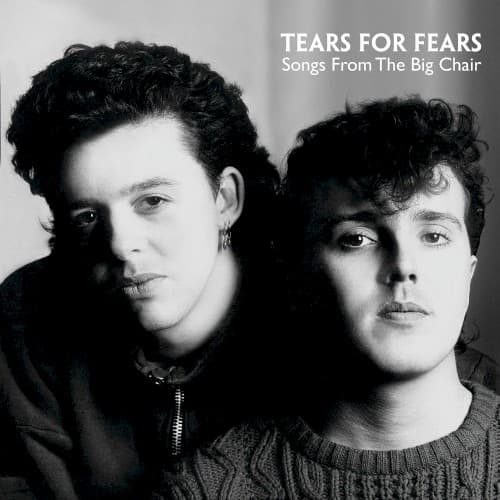
Tears for Fears Songs From the Big Chair — When Synth-Pop Learned to Build Like Prog Rock
The second album from a British synth duo could have played it safer. The Hurting had moved units and established a sound; Songs From the Big Chair abandons that blueprint halfway through the opening track. Shout starts with a drum machine and a keyboard line, then explodes into a guitar-driven chorus that sounds like a stadium anthem built in a studio. The shift is deliberate: Roland Orzabal and Curt Smith wanted out of the synthesizer corner and brought back producer Chris Hughes to help them escape. The result is an album that redefined what British pop-rock could sound like in 1985, trading the introspective gloom of the debut for a glossier, more complex sound that borrowed from progressive rock without collapsing under its weight.
The thesis here is craft over cool. Songs From the Big Chair is meticulous to the point of obsession—eight months of recording, a month of mixing in Munich, half the production time spent on two singles. That level of detail shows up in the arrangements: saxophone solos placed for drama rather than decoration on The Working Hour, MIDI programming that gives Everybody Wants to Rule the World its rhythmic snap, the operatic vocal sample buried in Listen. The songs work as singles but the album plays like a bid for something larger, a pop record that wanted to prove it could handle six-minute tracks and live reprises and still top the charts. It did: number one in the US, number two in the UK, five million copies sold domestically. The accomplishment is not the sales but the fact that the songs earned them without simplifying the approach.
The Studio as the Fourth Instrument
The production is the argument. Chris Hughes pushed the band toward guitars and away from the synth-pop tag that followed them after The Hurting, but the shift is integration rather than replacement. The rhythm section still runs on LinnDrum programming and synth bass, but now there are layers: Neil Taylor's guitar solos on Broken and the second solo on Everybody Wants to Rule the World, Mel Collins and Will Gregory's saxophone arrangements on The Working Hour and I Believe, Andy Davis's grand piano anchoring Head Over Heels. The textures pile up without crowding each other out, a trick of mixing that gives every element its own space. The result is dense but not cluttered, polished but not sterile.
The songwriting reflects the same ambition. Orzabal and Ian Stanley wrote most of the album, with Hughes contributing to Everybody Wants to Rule the World, and the structures show progressive rock's influence on verse length and bridge placement. Shout takes six and a half minutes to make its point, The Working Hour stretches past six, Listen is almost seven minutes of instrumental build. The risk is self-indulgence but the songs justify their length through variation: Shout's quiet-loud dynamics, The Working Hour's saxophone interludes, Listen's orchestral arrangement. The melodies carry the weight, especially the two-word hook in Shout and the entire top line of Everybody Wants to Rule the World, which became unavoidable for a reason.
The performances serve the production rather than fighting it. Orzabal and Smith's vocals are smooth and controlled, harmonies locked in tight, rarely raw. The delivery fits the polish but sometimes flattens the urgency: Mothers Talk wants to sound more desperate than it does, I Believe aims for vulnerability but lands closer to studied. The guest vocalists—Sandy McLelland and Stevie Lange on backing, Marilyn Davis's operatic turn on Listen—add color without taking over. Manny Elias's drumming on the non-programmed tracks gives the album its human feel, especially the live-drum arrangement on The Working Hour that cuts through the electronic foundation.
The weaknesses are sequencing and length. The front half delivers four singles in a row, each one built for radio, and the momentum carries through to I Believe. Then the album sprawls: Broken is a two-and-a-half-minute sketch that functions as a prelude to its own live reprise at the end of Head Over Heels, Listen is a nearly seven-minute instrumental that closes the record with ambition but not urgency. The back half reads like bonus material rather than conclusion, and the decision to bookend Head Over Heels with two versions of Broken breaks the flow instead of enhancing it. The album is forty-one minutes of singles and album tracks, then seven minutes of epilogue.
Four Singles, Then the Sprawl
The pacing works until it stops working. The first stretch opens with its two biggest moments separated by a six-and-a-half-minute track that earns its runtime through saxophone and dynamics, followed by two more singles. The first thirty minutes are flawless sequencing for 1985: every song designed to hold attention on the radio and on the album. The transitions are clean, the tempos varied enough to avoid monotony, the hooks immediate.
Then the album pivots. The back half opens with a brief skeletal ballad fragment that sets up what becomes the last fully realized song on the record. A live reprise tacked onto the end feels like an afterthought, and the closer—despite its orchestral ambition and clear craft—ends things on a question mark rather than a statement. The sequencing choice makes sense if the goal was to prove range, but the effect is a record that peaks early and spends its final third exploring rather than concluding. The length is earned by the opening stretch; the rest is the cost of ambition.
The Album That Set the Template and Paid the Price
Songs From the Big Chair ranks as the high-water mark in Tears for Fears' catalog until proven otherwise. The combination of hooks, production sophistication and chart dominance makes it the band's essential record, the one that answered what a synth-pop duo could do with a bigger budget and a producer who knew how to build outward. It has aged better than most mid-eighties British pop because the production choices—MIDI programming, layered guitars, calculated dynamics—became standard rather than dated, and because the two biggest singles are simply better-written than most of what surrounded them on the charts.
This is for listeners who want pop-rock that swings for scale without embarrassing itself, and for anyone tracing the line from progressive rock's complexity to eighties pop's gloss. Skip it if you need rawness or if six-minute tracks and live reprises sound like red flags. Start with Everybody Wants to Rule the World and Shout, both of which deliver exactly what their reputations promise, then move to The Working Hour to hear the album's ambition in full. The second half is for completionists and for anyone curious how far the band was willing to push past the single format.
From here, the logical next step is The Hurting to hear where they started, darker and more insular, or move forward to The Seeds of Love to hear where the ambition led—longer songs, denser production, diminishing returns. Songs From the Big Chair is the moment when Tears for Fears figured out how to be both meticulous and massive, and the singles are proof that the work paid off. The album tracks show the cost.
Track by track
Track Listing
Shout
StandoutThe album's thesis statement in six and a half minutes. Shout opens on drum machine and keyboards, then detonates into a guitar-driven chorus that announces the shift from The Hurting's synth-bound approach. The quiet-loud dynamics are blunt but effective, the two-word hook is built to outlast the decade, and Chris Hughes's drum arrangement gives the programmed foundation a human feel. The song earns its length through variation rather than repetition, and the fact that it hit number one in the US while running over six minutes says everything about the craft. The lyrics aim for political and emotional catharsis at once; the music delivers both.
The Working Hour
StandoutSix and a half minutes of saxophone, grand piano and patient build. Andy Davis's piano anchors the verses, Mel Collins and Will Gregory's sax solos add drama without camp, and the arrangement breathes where Shout pushed. The track justifies its length by giving every section room to develop, and the production—Jerry Marotta's percussion, the layered horns—makes the case for the album's prog-rock ambitions. Not a single, but the deepest cut on the first half and the track that proves the band could sustain attention past the four-minute mark.
Everybody Wants to Rule the World
StandoutThe last song written for the album and the one that broke them in America. Roland Orzabal built the track on two acoustic guitar chords and a chorus line, then Chris Hughes and Ian Stanley programmed the rhythm section to give it snap. The result is the most radio-friendly song Tears for Fears ever recorded, with a melody that lodged itself in 1985 and never left. The lyric is about power and control, the music is about inevitability: the hook is so clean it feels like it was always there. Neil Taylor's second guitar solo adds texture without showboating. The song is perfect on its terms and those terms are permanent.
Mothers Talk
SolidThe first single from the sessions, re-recorded after the label rejected the initial version with producer Jeremy Green. The final take is dense and urgent, Stevie Lange's backing vocals adding lift to the chorus, but the song works harder than Everybody Wants to Rule the World for less payoff. The production is meticulous—five minutes of layered synths and programmed drums—but the hook does not land with the same inevitability. Solid single, weaker than the two that surrounded it.
I Believe
SolidInfluenced by Robert Wyatt's songwriting and originally intended for him to record. Tears for Fears kept it and turned it into a four-minute ballad that aims for vulnerability but lands closer to smooth. Will Gregory's saxophone adds warmth, Orzabal's vocal is controlled, the melody is strong enough to carry the track. The weakness is the delivery: the song wants rawness but the production is too polished to let it through. The re-recorded single version tightened the arrangement further and charted internationally, which says something about the song's bones if not its execution here.
Broken
WeakA two-and-a-half-minute ballad sketch, skeletal and unfinished. Neil Taylor's guitar solo is the only moment of weight, and the track functions as a prelude to its own live reprise at the end of Head Over Heels rather than a standalone song. The melody is fragile, the arrangement is sparse, the decision to split it across the album's back half breaks the flow instead of enhancing it. Filler.
Head Over Heels/ Broken (live)
SolidThe last fully realized song on the album, five minutes that include a live reprise of Broken tacked onto the end. Head Over Heels is built around Andy Davis's grand piano and a three-part harmony from Marilyn Davis, Annie McCaig and Sandy McLelland, and the chorus is strong enough to justify the single release. The verses are patient, the bridge lifts, the production is as dense as anything on the album. Then the song ends and the live version of Broken starts, and the sequencing choice deflates the momentum. Head Over Heels works; the reprise is a mistake.
Listen
SolidA six-and-three-quarter-minute instrumental that closes the album on ambition rather than conclusion. The arrangement is orchestral, Marilyn Davis's operatic vocal is used as texture rather than melody, and the production is as meticulous as anything Chris Hughes and the band built. The track is described as symphonic and it earns the label, but the decision to end the album here rather than on Head Over Heels or a stronger vocal track leaves the record trailing off instead of finishing. The craft is audible, the purpose is unclear. For completionists and for anyone who wants to hear how far Tears for Fears pushed past the single format, but not a reason to return to the album.