Style & Context
Influences
horror film aesthetics, David Lynch dreamscapes, clinical portraiture
Location
This represented Gen Z's embrace of mental health transparency over carefully curated happiness narratives.
Visual Language
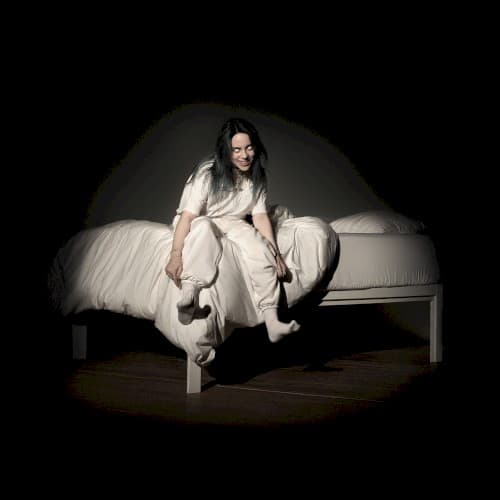
The vignetting creates tunnel vision, forcing viewers into Eilish's claustrophobic nightmare perspective with nowhere else to look.
Symbols
White bed in void
The bed floats in darkness like a fever dream, representing sleep as an isolated psychological arena.
Oversized white clothing
The baggy clothes became Eilish's signature armor against body scrutiny and adult expectations.
Bare feet hovering
Her feet never touch the ground, suspending her in that weightless moment before falling asleep.
Where Sound Meets Image
The cover's minimalist composition directly mirrors producer Finneas's stripped-down beats and whispered vocals that define tracks like 'bury a friend' and 'xanny.' The hovering, suspended posture captures the album's obsession with sleep paralysis and the moments between consciousness and dreams. The clinical whiteness against void reflects how the album treats dark themes—depression, drug use, heartbreak—with stark honesty rather than melodrama. The lone figure on the bed mirrors the claustrophobic intimacy of songs recorded in Finneas's childhood bedroom, the same space where nightmares feel most real.
This cover helped establish the anti-glam aesthetic that dominated late 2010s alt-pop, proving album art could be deliberately unsettling rather than aspirational. The image became instantly meme-able while maintaining artistic credibility, a balance few pop covers achieve. It influenced countless bedroom-pop artists to embrace raw, uncomfortable imagery. The white-on-black minimalism spawned countless imitations, and the cover's refusal to sexualize a teenage female artist set a new standard for how young women in pop could present themselves—powerful through discomfort rather than conventional beauty.