Style & Context
Influences
John Waters, Divine, pageant photography, 1980s glamour shots, contemporary drag aesthetics
Location
The cover speaks to queer youth in conservative American regions who find liberation through performance and costume.
Visual Language
The composition borrows from both small-town beauty parlor portraiture and professional drag photography's celebration of excess.
Symbols
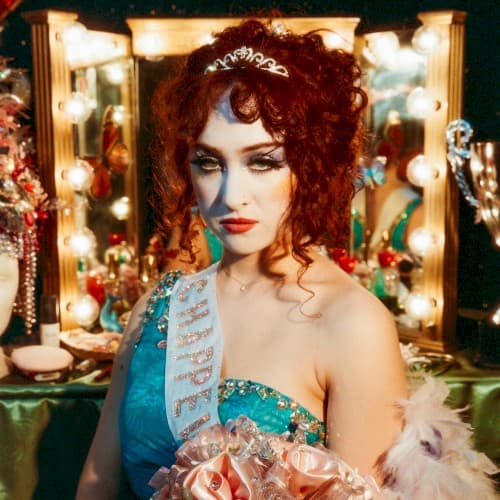
Vanity mirror with bulbs
The classic backstage mirror represents transformation spaces where ordinary people become performers and stars.
Rhinestone tiara and sash
Beauty pageant imagery reclaims Midwestern femininity rituals through a queer, exaggerated lens of self-coronation.
Teal asymmetric gown
The bold shoulder construction signals confidence and departure from traditional feminine presentation expected in small towns.
Where Sound Meets Image
The theatrical setting perfectly mirrors synth-pop and dance-pop production that layers artifice and sincerity, much like drag performance itself. The vanity mirror's backstage intimacy suggests confessional lyrics delivered through uptempo electropop arrangements. The pageant aesthetics connect to songs exploring Midwestern queer experience, feminine performance, and the emotional work of self-invention. The image's simultaneous warmth and camp matches alt-pop that refuses to choose between vulnerability and playfulness.
This cover helped establish early 2020s pop's visual vocabulary where drag aesthetics and queer pageantry became album art language rather than niche subculture references. The specific Midwest pageant angle created a template for regional queer storytelling in mainstream pop imagery. Its success demonstrated audiences' appetite for covers that celebrate artifice and transformation over naturalistic artist photography.