Style & Context
Influences
Bon Iver aesthetics, Fleetwood Mac's Rumours naturalism, indie folk visual language
Location
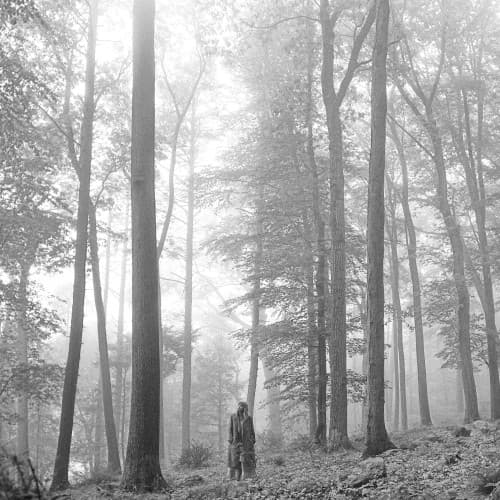
The forest setting evokes rural escapism that became aspirational during urban quarantine anxiety and screen fatigue.
Visual Language
The grainy, atmospheric photography borrows directly from indie folk's visual vocabulary, distancing Swift from pop's glossy production.
Symbols
Misty forest
The fog obscures clear vision, representing the blurred boundaries between truth and fiction in Swift's storytelling.
Solitary figure
Swift appears small against towering trees, visualizing her escape from celebrity scrutiny into creative isolation.
Black and white photography
The absence of color suggests stripping away artifice to reveal raw emotional truth beneath.
Where Sound Meets Image
The misty, undefined landscape mirrors folklore's narrative ambiguity, where Swift inhabits fictional characters rather than speaking directly. The trees create natural separation and privacy, reflecting songs like 'exile' and 'hoax' that explore emotional distance. The gray tones match the album's muted production—Aaron Dessner's finger-picked guitars and subtle synths replacing pop's bombast. This visual retreat into nature parallels Swift's sonic retreat into storytelling.
The cover normalized pandemic-era DIY aesthetics in mainstream pop, proving major artists could release lo-fi visuals without compromising commercial success. It influenced a wave of indie-inspired pop visuals prioritizing atmosphere over styling. The forest imagery became shorthand for Swift's artistic reinvention, spawning countless fan recreations and solidifying nature as her folklore/evermore era symbol.