The scorecard
8.7/10 · Essential
- Songwriting25%
- 8.5
- Production25%
- 9.5
- Performance15%
- 8.0
- Cohesion15%
- 9.0
- Originality10%
- 8.0
- Replay value10%
- 8.5
Hooks on Miss You Much and Escapade are built to outlast trends, and the bridge on Come Back to Me lifts without leaning on repetition, though a few ballads coast on melody alone.
The E-mu SP-1200 gives the record a percussive snap that still sounds modern, and the sequencing from militant funk to rock to slow jams is expertly mixed and paced.
Jackson's vocal range peaks in the middle eight of Rhythm Nation and her phrasing on Love Will Never Do sharpens the hooks, though some ballad performances play it safe.
The album sequences from social commentary to romance with purpose, using interludes to mark transitions, and at 20 tracks it earns the length without sagging.
The socially conscious concept and new jack swing production shaped late-80s pop, though the ballads follow templates set by Jam and Lewis on earlier records.
The singles remain radio staples decades later, and the production choices have aged better than most 1989 releases, though a few deep cuts feel like album context rather than standalone plays.
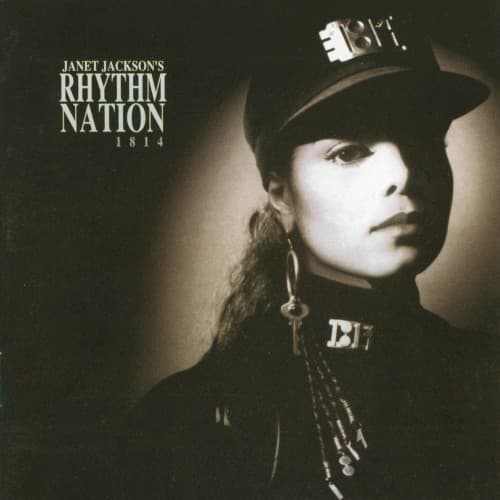
Janet Jackson Rhythm Nation 1814 — The Album That Made Pop Music Answer to the News
Rhythm Nation 1814 opens with a pledge to form a nation without borders, then spends the next hour proving that pop music can address homelessness, illiteracy and the crack epidemic without losing the dancefloor. The thesis is clear: Jackson, Jimmy Jam and Terry Lewis believed in 1989 that a concept album built on new jack swing could be both a call to action and a string of number-one singles. The album delivered seven top-five hits, including four that reached number one, and became the best-selling album of 1990 in the United States. The question is whether the concept holds together or whether the social conscience is window dressing for another Control?
The album earns its argument. The sequencing is deliberate, starting with the title track, then the next two statements before an interlude announces "Get the point? Good. Let's dance" and pivots to the first single. The first half addresses systemic problems with funk built on the E-mu SP-1200 drum machine and samples from Sly and the Family Stone; the second half delivers romance and sex with the same production rigor.
The interludes mark the shifts, and the twenty-track length is justified by the scope. The concept could have been a marketing stunt or a one-song statement padded with filler. Instead, Jackson and her producers built a record where the thesis and the hits serve each other, and where the sound of the drum programming matters as much as the message in the pledge.
Drum Machines, Guitar Amps and the Sound of 1989 Trying to Matter
The production on Rhythm Nation 1814 is built on the heavily swung percussion of new jack swing, using the E-mu SP-1200 to give the mechanized rhythms a snap and punch that defined late-80s dance music. Jam and Lewis moved away from the LinnDrum they used on Control, experimenting with different drum machines and the Oberheim OB-8 synthesizer to update the sound. The result is a record where the beats feel harder and more physical than the polished synth-pop of the mid-80s. The title track samples Thank You (Falettinme Be Mice Elf Agin) by Sly and the Family Stone, looping it under triplet-swing programming and a vocal that climbs from B-flat3 to A5 in the middle eight.
The production uses blues notes and rapped sections to blend R&B styles, creating a sound that worked across pop, dance and quiet storm formats. The singles lock into the same mechanized groove, with hooks that repeat just enough to stick without overstaying. The instrumental tracks for those songs were recorded early in the process, designed as follow-ups to the beat-heavy singles from Control.
Jackson sang her lead vocals first, with the rest of the track built around her voice, and handled all her own background vocals to keep the record unified. The production uses sampling throughout, but the clearest departure is the rock track, which Jackson wrote alone and which Jellybean Johnson produced using a Rockman and a Marshall amplifier to get a heavy metal guitar sound. Dave Berry played the guitar, and the track stands out not just for the hard rock arrangement but for how well it sequences after the new jack swing that dominates the rest of the album. The sequencing itself is a production choice: the album starts with the three socially conscious tracks to set the tone, then pivots to the romance material, creating two halves that mirror each other in pacing and energy.
The weakness is in the ballads, where the production occasionally smooths the edges too much. Two of them are well-constructed but rely on familiar Jam and Lewis chord progressions and vocal arrangements, and neither adds much that isn't already present in the third. The album's length means a few tracks feel like variations rather than new ideas. But the production across the singles is sharp enough to carry the concept. The drum programming, the sampling, the sequencing and the genre shifts all serve the thesis: that a pop record in 1989 could address the news and still dominate the charts. The record proved the point by producing seven top-five singles, and the production choices are the reason the songs worked across formats.
A Concept Album That Sequences Like a DJ Set
The sequencing on Rhythm Nation 1814 is as carefully constructed as the production, starting with a 47-second pledge and then moving through the socially conscious material before shifting to the romance tracks in the second half. The first three songs after the pledge set the militant tone with black-and-white imagery and funk built on sampled loops and triplet-swing programming. The interlude marks the pivot, and the first single arrives as the first moment where the album lets the dancefloor take over. The sequencing keeps the two halves balanced: the first seven tracks address the concept, the second half delivers the hits and ballads, and the interludes prevent the shifts from feeling abrupt.
The pacing works because the album never loses the groove. Even the ballads are built on the same drum programming and synth bass that anchor the uptempo tracks, so the flow never stalls. The rock track is the one outlier, arriving late in the sequence and disrupting the sound intentionally. The placement works because the album has already earned the right to take risks, and because the track leads into the final stretch of ballads without breaking the momentum. The length is justified by the concept: the album needs the interludes and the range of material to make the thesis legible, and the sequencing ensures that the 20 tracks feel like a unified statement rather than a playlist. The only sag is in the final stretch, where one ballad runs six minutes and adds little that another hasn't already delivered.
The Record That Proved Pop Could Do Both
Rhythm Nation 1814 sits at the top of Jackson's catalog not because it outsold Control but because it took a bigger risk and delivered on it. The concept could have been a gimmick, and the socially conscious lyrics could have dated quickly, but the production and sequencing make the album work as both a statement and a collection of singles. The record shaped late-80s pop by proving that new jack swing could carry a concept album, and the influence shows in the work of artists who followed. The album has aged better than most 1989 releases because the drum programming still sounds sharp and the sequencing still feels intentional.
The album is for listeners who want a pop record that takes itself seriously without losing the dancefloor, and for anyone interested in how a concept album can dominate the charts. Skip it if the interludes and the didactic framing feel heavy-handed, or if the ballads in the second half drag. Start with Miss You Much and Rhythm Nation for the hits, then move to Black Cat for the outlier, and finish with Love Will Never Do (Without You) for the vocal performance. If those tracks work, the rest of the album earns the length and the concept. For context, listen to Control to hear where Jackson started, and to The Velvet Rope to hear where she went next. Rhythm Nation 1814 is the album where Jackson and her producers proved that pop music could address the news and still produce four number-one singles, and the record remains the clearest example of what new jack swing could do when it aimed higher than the club.
Track by track
Track Listing
Interlude: Pledge
SolidA 47-second spoken-word introduction that establishes the concept of a nation without borders, bound by shared beliefs. The pledge sets the militant tone and frames the album as a socially conscious project, though the rhetoric is more effective as a framing device than as a standalone piece.
Rhythm Nation
StandoutThe title track is the album's thesis statement, built on a sample loop from Sly and the Family Stone and triplet-swing programming that defined new jack swing. Jackson's vocal climbs from B-flat3 to A5 in the middle eight, and the hook repeats just enough to stick without overstaying. The production uses rapped sections and blues notes to blend R&B styles, and the track works as both a dance record and a protest song. The sequencing places it first to set the tone, and the martial imagery in the music video reinforced the concept. The track became a cultural touchstone, with the choreography and uniform inspiring youth groups and fashion trends.
Interlude: T.V.
SolidA 22-second transition using television audio to connect the socially conscious material. The interlude serves the sequencing but adds little on its own.
State of the World
SolidA socially conscious track addressing homelessness, illiteracy and the crack epidemic, built on the same new jack swing production that anchors the album. The groove is solid, and the lyrics are direct without being preachy, but the track lacks the melodic hook that makes Rhythm Nation and Miss You Much work as singles. The sequencing places it early to reinforce the concept, and the production keeps it from feeling like filler, but it's not a standout.
Interlude: Race
SolidA five-second transition marking the shift from State of the World to The Knowledge. Brief and functional.
The Knowledge
SolidThe third socially conscious track in the opening sequence, encouraging education and self-improvement with the same mechanized percussion that defines the album. The hook is weaker than Rhythm Nation, and the track feels more like album context than a standalone song. The sequencing justifies its placement, but it's the least memorable of the first three.
Interlude: Let’s Dance
SolidA three-second interlude announcing "Get the point? Good. Let's dance," marking the pivot from the socially conscious material to the romance tracks. The transition is effective and self-aware, acknowledging the shift in tone.
Miss You Much
StandoutThe lead single and the album's first pure dance track, built on E-mu SP-1200 percussion and a hook that became one of the biggest radio hits of 1989. The production is mechanized but swinging, with a groove that locks in immediately and never lets go. Jackson's vocal is confident and playful, and the phrasing sharpens the hook without overworking it. The track topped the Hot 100 for four weeks and sold more than four million copies worldwide, and the production has aged better than most late-80s pop. The sequencing places it after the socially conscious material to prove the album can deliver both message and dancefloor.
Interlude: Come Back Interlude
SolidA 21-second transition between Miss You Much and Love Will Never Do (Without You). Functional but unremarkable.
Love Will Never Do (Without You)
StandoutA mid-tempo track built on the same drum programming and synth bass that anchor the album, with a vocal performance that sharpens the hook and a bridge that lifts without leaning on repetition. The production is clean and tight, and the sequencing places it early in the romance section to balance the socially conscious opening. The track became the album's fourth number-one single, and the music video marked a shift toward a more sensual persona for Jackson. The song works as both a pop single and as album context, and the vocal range and phrasing are among the strongest on the record.
Livin’ in a World (They Didn’t Make)
StandoutA track addressing youth homelessness and systemic neglect, inspired by the Stockton playground murders. The production is darker and more industrial than the singles, with mechanized percussion and a minor-key melody that underscores the lyrical weight. The sequencing places it in the middle of the album to bridge the socially conscious opening and the romance material, and the track adds emotional depth without losing the groove. It's one of the album's most effective statements, and the production serves the subject matter without being heavy-handed.
Alright
SolidA six-minute track built on a looped groove and a chorus that repeats too often for the length. The production is solid, and the track works as a mid-tempo breather in the sequence, but the melody is less memorable than the singles. The extended version featured rapper Heavy D, and the music video used a Broadway-influenced production style, but the album cut feels like it's coasting.
Interlude: Hey Baby
SolidA ten-second transition between Alright and Escapade. Brief and functional.
Escapade
StandoutThe album's second-biggest single, built on the same new jack swing production that defined Miss You Much, with a hook that locks in immediately and a groove that never sags. The production is mechanized but playful, and Jackson's vocal is light and confident. The track became a number-one hit and worked across multiple radio formats, and the sequencing places it late in the album to keep the energy high. The music video used a Broadway-influenced style, and the track remains one of the album's most enduring singles.
Interlude: No Acid
WeakA five-second anti-drug message that feels dated and preachy. The interlude serves the concept but interrupts the flow.
Black Cat
StandoutThe album's biggest outlier, a hard rock track that Jackson wrote alone and that Jellybean Johnson produced using a Rockman and a Marshall amplifier to get a heavy metal guitar sound. Dave Berry played the guitar, and the production is raw and aggressive, with none of the mechanized percussion that defines the rest of the album. The track became a number-one hit and proved Jackson could cross genres, and the sequencing places it late enough that the shift feels earned. The vocal performance is strong, and the guitar riff is memorable, but the track works better as a standalone single than as album context.
Lonely
SolidA ballad built on familiar Jam and Lewis chord progressions and synth arrangements, with a vocal performance that is competent but not distinctive. The production is clean, but the melody is less memorable than Come Back to Me, and the track feels like a variation on a template. It's solid but not essential.
Come Back to Me
StandoutA ballad with a bridge that lifts the chorus and a vocal performance that adds emotional weight. The production uses the same drum programming and synth bass that anchor the album, and the sequencing places it late in the record to balance the uptempo material. The music video was filmed near the Eiffel Tower, and the track works as both a pop single and as album context. It's the strongest ballad on the record, and the melody and phrasing make it more than filler.
Someday Is Tonight
SolidA six-minute ballad that runs too long and adds little that Come Back to Me hasn't already delivered. The production is polished, and the vocal performance is solid, but the melody is less distinctive, and the track sags in the final stretch. It's the album's clearest moment of filler.
Interlude: Livin’… in Complete Darkness
SolidA 67-second closing interlude that reprises the militant imagery from the opening. The spoken-word section closes the concept without adding much, though it provides symmetry.