The scorecard
7.4/10 · Good
- Songwriting25%
- 7.0
- Production25%
- 8.5
- Performance15%
- 8.0
- Cohesion15%
- 6.0
- Originality10%
- 7.0
- Replay value10%
- 7.5
Hooks land hard on anthem tracks and the title track chorus earns its lift, but several mid-album cuts recycle ideas and the sheer volume of songs dilutes the best work.
Garibay and RedOne build dense, layered tracks that shift between techno, house and rock without losing the dance floor, and the Clemons saxophone on two tracks adds weight without sentiment.
Gaga pushes her vocal range across the tracklist, from the theatrical chant on Bloody Mary to the throaty belt on The Edge of Glory, though some performances feel oversold.
At fourteen tracks plus a remix, the album sags in the middle with filler like Bad Kids and Highway Unicorn, and the sequencing buries stronger material behind weaker songs.
The move from pure synth-pop to heavy metal and rock influences sets it apart from The Fame, though several tracks echo Madonna and the Express Yourself comparison dogs the title song.
The singles hold up on repeat and Bloody Mary proved its durability eleven years later, but the deep cuts wear thin and the album length makes full listens a task.
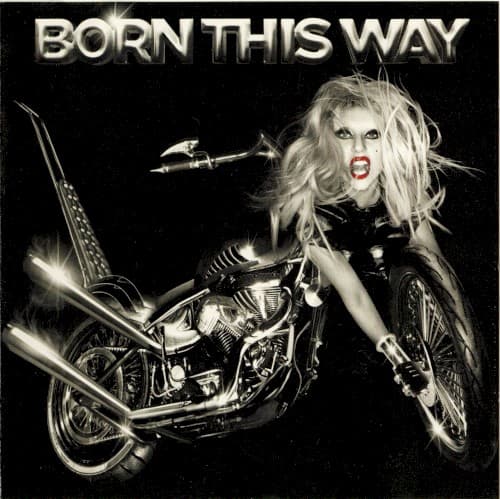
Lady Gaga Born This Way — The Dance Floor Gets a Heavy Metal Heart
Born This Way opens with a thesis it cannot sustain: that Lady Gaga can stretch dance-pop into every genre she names and still hold the club. The first three tracks make the case. Marry the Night builds from church bells to a house beat to a funk rock breakdown without losing momentum. The title track rides Euro disco into an anthem that topped charts in nineteen countries and became the fastest-selling single in iTunes history.
Government Hooker drops into industrial techno with an opera vocal and a Kraftwerk pulse. By the end of those twelve minutes, the argument is won. Then the album keeps going for another hour, and the center sags under the weight of its ambition.
The record chases Bruce Springsteen, Iron Maiden, Queen and Madonna in the same breath, and while the production team makes most of those pivots work on a track level, the sequencing buries the strongest songs behind weaker ones. The title track arrived as a cultural moment: an equality anthem that Gaga later revealed was inspired by Carl Bean and spent six weeks at number one. But the album around it is uneven, front-loaded with singles and back-loaded with filler.
At fourteen tracks plus a Jost & Naaf remix, Born This Way is too long by at least three songs, and the pacing never recovers from the slow stretch between Hair and Electric Chapel. When it works, it proves Gaga can bring guitars and saxophones and Gregorian chants to the dance floor. When it does not, it is a promising dance record inflated past its natural length.
How the Record Builds and Where It Breaks Down
The album was written and recorded during the Monster Ball Tour across studios on three continents, and the production process shows in both the density of the arrangements and the inconsistency of the material. Fernando Garibay and RedOne, who co-produced most of the tracks, build songs in layers: techno beats under disco strings, house percussion under heavy metal guitars, trance synths under rock and roll piano. The title track and Judas both work because the production serves the hook.
The title track uses Euro disco to carry a chorus that lifts on melody, not just repetition. Judas moves from a dance-pop verse to an industrial breakdown to a dubstep bridge without falling apart, and the 1980s pop chorus is the anchor. The Edge of Glory, produced by Garibay, uses Clarence Clemons on saxophone to add blues texture to an electronic rock frame, and the result is one of the album's best performances: Gaga belts the chorus without overselling it, and the instrumental break earns its length. You and I, produced by Robert John Mutt Lange, brings in Brian May on guitar and samples We Will Rock You, and the result is a rock and roll ballad that stands apart from the rest of the record.
But several tracks in the middle stretch lean on production tricks to cover weak songwriting. Bad Kids has 1980s synthpop guitars and a Donna Summer disco beat, but the chorus is thin and the verse melody does not develop. Highway Unicorn uses Springsteen-style drums and synths to build toward a climax that never arrives. Heavy Metal Lover piles on electro-industrial beats and house synths, but the song is all texture and no hook.
Electric Chapel tries for Europop with heavy metal guitars, but the melody is generic and the production cannot save it. The sequencing makes the problem worse. The album opens with four strong tracks, then stumbles through a mid-section where Americano, a mariachi-techno hybrid sung in Spanish and English, is the only track with a clear idea. By the time the album reaches The Edge of Glory at track fourteen, the momentum is gone.
The production is ambitious and mostly successful, but the songwriting does not justify the length. Garibay said each song was revised fifty times, but several tracks sound like first drafts stretched to meet a tracklist quota.
Pacing, Flow and the Cost of Overstuffing
The album front-loads its best material and never recovers. The first stretch is the argument: four single-worthy tracks that build energy across the first fifteen minutes. Then the record loses focus.
The middle section occupies the space where momentum should carry through, and only one track has enough personality to justify its place. After that stretch comes the slowest-tempo track on the album and one of the best: Bloody Mary. The dark electropop production, the trance melody and the religious imagery make it the most distinctive song in the mid-section, and its 2022 viral moment on TikTok proved its durability.
But the album buries it at track eight, where most listeners will not reach it on a first listen. The back half rallies, but by then the record has already played for fifty minutes. The deluxe edition adds three more tracks, and none of them improve the flow.
The standard edition should have been eleven or twelve tracks. At fourteen tracks plus a remix, the album asks for more attention than it earns. The singles justify the runtime, but the deep cuts do not.
Where It Ranks and Who Should Start Here
Born This Way is a bigger, louder and messier record than The Fame, and the ambition is both its strength and its weakness. The Fame was a tight nine-track statement with a clear sound and no filler. Born This Way chases every influence Gaga named in interviews—Madonna, Springsteen, Iron Maiden, Queen—and the result is a dance album that wants to be a rock album, a pop album, an industrial album and a house album at the same time. The production holds it together on a track level, but the sequencing and the length work against it.
The highs are higher than anything on The Fame: the title track is a better anthem than Just Dance, and The Edge of Glory is a better vocal performance than Poker Face. But The Fame has no weak tracks, and Born This Way has at least four. The album ranks below The Fame in the catalog because it is less cohesive and less consistent, but the best songs are among Gaga's strongest work.
This is the album for listeners who want Gaga at her most ambitious, even when the ambition exceeds the execution. Skip it if you want a tight, focused dance-pop record. Start with the title track, Judas and The Edge of Glory to hear the album at its best, then decide whether the rest is worth the time. If you like what you hear, go back to The Fame for a leaner version of the same ideas.
The album sold over five million physical copies and generated four top-ten singles in the United States, and the title track became a cultural moment. But the record is too long and too uneven to be essential, and the best material is surrounded by filler that dulls the impact. Born This Way proves Gaga can bring heavy metal and rock and roll to the dance floor, but it also proves she should have stopped at twelve tracks.
Track by track
Track Listing
Marry the Night
StandoutA dance-pop opener that moves from church bells to a four-on-the-floor house beat to a funk rock breakdown, with disco, techno and Hi-NRG layered underneath. The production, handled by Gaga and Garibay, shifts textures without losing the groove, and the 1980s glam metal influence in the melody gives the track weight. The chorus hook is strong enough to carry the five verses, and the sequencing choice to open with this instead of the title track sets up the album's genre-jumping ambition. The track works because the production serves the song, not the other way around.
Born This Way
StandoutThe lead single and the album's thesis: an equality anthem built on Euro disco beats and a chorus that lifts on melody. The song topped charts in nineteen countries, spent six weeks at number one in the United States, and became the fastest-selling single in iTunes history. The Express Yourself comparison is unavoidable, but the hook is distinct and the lyric about fulfilling dreams regardless of skin color, sexuality or creed landed as a cultural moment. Gaga later revealed the song was inspired by Carl Bean and his 1977 track I Was Born This Way. The production by Gaga, Jeppe Laursen, Garibay and DJ White Shadow is dense but clean, and the organ close gives the anthem a ceremonial finish.
Government Hooker
StandoutIndustrial techno with an opera vocal, a Kraftwerk-style pulse and a hip hop-influenced beat. The production, by Gaga, DJ White Shadow, Garibay and DJ Snake, drops into trance and post-disco without losing the dance floor. The melody is minimal, the hook is a chant, and the track works as a club edit, not a single. The Kraftwerk comparison from the Los Angeles Times is accurate: the song is all groove and texture, with no verse-chorus structure to anchor it. It is the most experimental track on the standard edition, and it proves Gaga can hold a dance floor with rhythm and sound design alone.
Judas
StandoutA dance-pop and house track with techno, industrial and disco influences, a 1980s pop chorus and a dubstep-techno breakdown. The production by Gaga and RedOne moves through four distinct sections without falling apart, and the Bad Romance comparison is fair but not damaging: both songs use the same template, but the hooks are different. The Biblical Judas Iscariot reference and the lyric about honoring darkness to reach light give the track thematic weight, and the breakdown earns its length. The song debuted at number four on the Hot Digital Songs chart and peaked at number ten in the United States, making it the album's second-biggest single.
Americano
StandoutA mariachi-techno hybrid sung in Spanish and English, written in response to Arizona immigration law SB 1070. The production by Gaga, Garibay and DJ White Shadow layers house and disco beats under vaudevillian horns and strings, and the result is the album's most distinctive genre experiment. The Judy Garland and Édith Piaf comparisons cite the theatrical vocal and the chanson-style melody. The song has personality and a clear idea, and it stands out in the mid-album stretch where most tracks blend together.
Hair
SolidA dance-pop track with rock and heavy metal guitars, a Clemons saxophone solo and a freedom-through-hair lyric. The production by Gaga and RedOne brings in Springsteen, Iron Maiden and Kiss influences, but the melody is flat and the chorus does not lift. The saxophone solo is the best moment, but it is not enough to save a weak song. The track tries for arena rock energy and lands somewhere between disco and Europop, and the result is forgettable.
Scheiße
SolidFaux-German lyrics over Euro disco and techno beats, with a feminist message and heavy synths. The production by Gaga and RedOne is dense, and the NME comparison to Madonna and electroclash artist Miss Kittin is accurate. But the melody is thin, the message is vague, and the track feels like an experiment that did not land. The song works as a fashion show soundtrack—remixes were previewed at Thierry Mugler shows in early 2011—but not as an album track.
Bloody Mary
StandoutThe darkest and slowest-tempo track on the standard edition, with plucked strings, filthy beats, a trance melody and religious imagery. The production by Gaga, DJ White Shadow, Garibay and Clinton Sparks uses Gregorian chant-inspired male vocals, French and Spanish lyrics, and a hypnotic groove that builds without a traditional chorus. The song is distinctive, durable—it went viral on TikTok in 2022, eleven years after release—and buried at track eight where most listeners will not reach it. The sequencing is a mistake; this should have been higher in the tracklist.
Bad Kids
Weak1980s synthpop with electric guitars and a Donna Summer disco beat. The production by Gaga, Laursen, Garibay and DJ White Shadow is competent, but the chorus is thin and the verse melody does not develop. The track is filler, and the heavy metal influences cited in the fact sheet do not add weight.
Highway Unicorn (Road to Love)
WeakSpringsteen-style drums and synths building toward a climax that never arrives. The production by Gaga, RedOne, Garibay and DJ White Shadow is polished, but the song has no hook and no memorable moment. The track is filler.
Heavy Metal Lover
SolidElectro-industrial beats, house synths and 1990s power pop comparisons. The production by Gaga and Garibay is all texture and no hook. The synthesizers are the focal point, but the song has no melody and no chorus. The track works as a club edit but not as an album cut.
Electric Chapel
WeakHeavy metal guitars and Europop production, with Madonna comparisons. The production by Gaga and DJ White Shadow is competent, but the melody is generic and the song does not stand out. The track is filler.
Yoü and I
StandoutA rock and roll ballad with country rock elements, a We Will Rock You sample and Brian May on guitar. The production by Gaga and Robert John Mutt Lange gives the song room to breathe, and the moderato tempo and the Queen influence set it apart from the rest of the record. The chorus lifts without overselling, and the guitar work adds weight. The song became Gaga's eleventh consecutive top-ten single in the United States, peaking at number six, and received a Grammy nomination for Best Pop Solo Performance. The track is one of the album's best, and the sequencing at track thirteen is a mistake.
The Edge of Glory
StandoutElectronic rock and synth-pop with a Clemons saxophone solo that adds blues texture without sentiment. The production by Gaga and Garibay is upbeat and clean, and the vocal performance is one of Gaga's best: throaty, soulful and controlled. The song was inspired by the death of Gaga's grandfather, and the underlying message about living fully before death gives the track emotional weight without melodrama. The saxophone solo, Clemons's final recorded appearance before his death, is the album's most memorable instrumental moment. The song debuted at number three on the Billboard Hot 100, became Gaga's tenth consecutive top-ten single, and is an album highlight. The sequencing at track fourteen is too late; this should have been higher in the tracklist.
Born This Way (Jost & Naaf remix)
WeakA remix of the title track with no reason to exist on the standard edition. Filler.