The scorecard
6.7/10 · Good
- Songwriting25%
- 6.5
- Production25%
- 8.0
- Performance15%
- 7.0
- Cohesion15%
- 6.0
- Originality10%
- 5.5
- Replay value10%
- 6.0
The hooks on Sussudio and One More Night are purpose-built for repetition, but half the album trades on lyrical vagueness Collins himself admits he does not understand.
Padgham's gated reverb and horn arrangements are textbook mid-eighties pop craft, though the drum machine reliance now sounds like exactly what it is.
Collins sings with urgency on Long Long Way to Go and restraint on One More Night, but the performance rarely breaks out of the polite soul template he set with Face Value.
The uptempo front half peaks early with Sussudio, then the album loses momentum through the middle before rallying with Take Me Home at the end.
The drum sound influenced a decade of pop production, but the songwriting borrows heavily from Prince and The Jacksons, and Collins was chasing the mainstream rather than leading it.
The singles hold up as radio staples, but the album tracks feel like extensions of the same formula rather than discoveries that reward return visits.
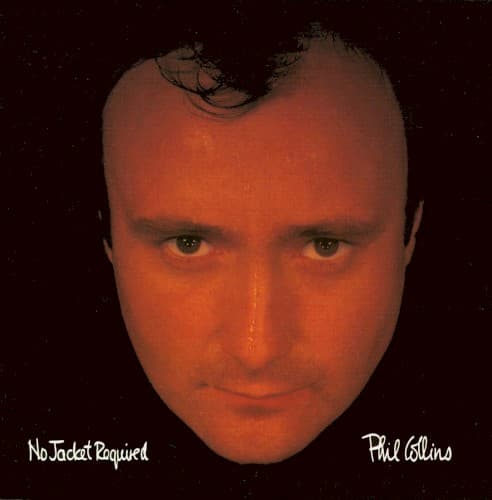
Phil Collins No Jacket Required — The Album That Made Gated Drums a Genre
No Jacket Required is the album where Phil Collins stopped writing through a divorce and started writing for the dancefloor, and the shift is audible in the first four bars of Sussudio. The gated snare that defined Face Value becomes the foundation here, but instead of serving ballads about separation it now drives uptempo tracks built on drum machine loops and horn stabs borrowed from The Jacksons. Collins has said he made a conscious decision to break out of the love song box, and he succeeded commercially: the album sold twelve million copies in the United States, won Album of the Year at the Grammys, and produced four Top 10 singles. The question is whether the songs justify the sound, or whether this is the record that turned a distinctive production style into a template that calcified.
The album works when Collins writes hooks that earn their repetition. One More Night and Take Me Home are built to last, with choruses that lift without leaning on the drum sound alone. The album struggles when the production does the work the songwriting should be doing. Collins has admitted he does not fully understand the lyrics to Don't Lose My Number, and the vagueness shows: the song is all atmosphere and no argument. That same vagueness runs through half the tracklist, and it raises the stakes for the verdict. This is either the record that proved Collins could dominate pop radio without Genesis, or the record that proved he could dominate pop radio by sanding down what made Face Value worth hearing in the first place.
Drum Machines, Horn Sections, and the Sound of 1985
No Jacket Required is a producer's album disguised as a songwriter's album, and the production is what holds up. Hugh Padgham engineered the gated reverb that became Collins' signature, and here he applies it to uptempo material that demands precision rather than mood. The snare on Sussudio is compressed into a crack that cuts through the synthesizer bass, and the horns on I Don't Wanna Know are arranged to punch on the upbeat rather than sustain. The mix is clean and the sequencing is tight, and the result is an album that sounds expensive in the way mid-eighties pop was supposed to sound expensive: every element audible, every transition smooth, every hook foregrounded.
The songwriting is more uneven. Collins wrote Sussudio by improvising nonsense syllables over a drum machine and kept the nonsense because he could not think of a better hook. The choice works because the chorus is structured to repeat, but it sets the standard for the rest of the album: melody first, meaning later. One More Night is the best example of the approach succeeding. The song is built on a ticking snare and a vocal performance that stays in the low register until the chorus, and the restraint makes the lift feel earned. Long Long Way to Go, which features Sting on backing vocals, is the album's most pointed lyric, and the political message gives the song a weight the production alone could not carry.
The weaknesses show up in the middle of the album, where the formula starts to repeat without variation. Only You Know and I Know borrows Motown phrasing but lands as pastiche rather than homage. Who Said I Would and Doesn't Anybody Stay Together Anymore are both competent ballads, but neither offers a melody or a lyrical turn that the other does not. Inside Out stretches past five minutes without developing the central hook, and the length feels unearned. The album is strongest when Collins writes with urgency or restraint, and weakest when he writes to fill space between the singles.
Daryl Stuermer contributed the music for I Don't Wanna Know, and the collaboration highlights a recurring problem: Collins is a better arranger than he is a writer of verses. The choruses are built to last, but the verses often feel like scaffolding to reach the next hook. That imbalance works on the radio, where the chorus is what registers, but it makes the album a less satisfying listen front to back than Face Value, where the verses carried as much weight as the refrains. The production is immaculate, but the songs do not always justify the craft.
Front-Loaded Singles and a Long Fade to the Finish
No Jacket Required peaks in the first three tracks and does not recover the momentum until the final two. Sussudio, Only You Know and I Know, and Long Long Way to Go establish the uptempo sound Collins was aiming for, but the sequencing sags once the album shifts into ballad mode. One More Night is the best song on the album, but it arrives as the fifth track rather than the closer, and the placement diffuses its impact. The second half opens with Don't Lose My Number, which is all groove and no payoff, and then cycles through three mid-tempo tracks that blur together. Inside Out is the low point: a five-minute track that revisits the same progression without building to a climax or offering a bridge that changes the texture.
The album rallies with Take Me Home, which closes the original vinyl tracklist with the most ambitious arrangement on the record. The song is built on a pulsing synthesizer line and a vocal performance that escalates gradually, and the length feels justified because the song develops rather than repeats. The sequencing would have been stronger if Collins had placed Take Me Home earlier and cut one of the mid-tempo ballads, but the album was designed for radio rather than for flow, and the pacing reflects that priority. The singles are front-loaded, and the album tracks fill the gaps.
The Album That Defined a Decade Collins Later Disowned
No Jacket Required is Phil Collins' most commercially successful album and the one he has grown to dislike the most. In a 2016 interview he said it is among his least favorite records he had made, and the discomfort is understandable: this is the album that turned his sound into a style other artists could copy, and the style aged worse than the songs. The gated drums and synthesizer horns that sounded modern in 1985 now sound like a time capsule, and the production choices that made the album a blockbuster also locked it into its moment. The album ranks as his most influential work in terms of production, but it is not his best songwriting.
Face Value remains the stronger record because the songs were written to express something specific rather than to break out of a box. No Jacket Required is for listeners who want to hear where eighties pop production came from, and for fans who want the singles in one place. The album is not for listeners who want the emotional directness of Face Value or the complexity of his work with Genesis. The production is impeccable, but the songs are uneven, and the album works better as a greatest hits collection than as a sustained statement.
Start with the two ballads that still sound like arguments rather than exercises. The uptempo opener is worth hearing because it became unavoidable. Skip the middle four tracks unless you are cataloging the sound of 1985. The album to hear next is Face Value, which has better songs and less formula, or Brothers in Arms by Dire Straits, which outsold this record in the UK and used similar production techniques with more dynamic range."},
Track by track
Track Listing
Sussudio
SolidThe song that became Collins' most famous and most ridiculed track, built on a drum machine loop and a hook Collins improvised as nonsense syllables. The synthesizer riff borrows heavily from Prince's 1999, a similarity Collins has acknowledged, and the lyric about a schoolboy crush is deliberately slight. The song works because the structure is designed for repetition: the verses are minimal, the pre-chorus builds with horn stabs, and the chorus repeats the title until it lodges in memory. The production is immaculate, with every element compressed and balanced, and the result is a radio single that dominated the charts and defined the sound of mid-eighties pop. The song has not aged well in critical terms, but it remains the track people sing to Collins on the street, and that durability counts for something.
Only You Know and I Know
SolidAn uptempo track built on Motown-style horns and a rhythm section that stays in the pocket. The lyric is vague, described by Stephen Holden of The New York Times as an angry love song, but the melody is strong enough to carry the repetition. The production foregrounds the horn section, and the mix is clean, but the song feels like an exercise in genre rather than a statement with urgency. Solid radio material, but not a standout.
Long Long Way to Go
StandoutThe most political song Collins had written at this point in his career, and the one track on the album with a lyric that makes a clear argument. Sting provides backing vocals, and the collaboration gives the song a weight the production alone could not carry. The melody is restrained, and the verse builds gradually to a chorus that repeats the title without feeling like filler. The song was never released as a single, but it remains one of Collins' more popular deep cuts, and it holds up better than most of the album because the lyric gives the listener something to return to. The production is典型 mid-eighties, with gated drums and synthesizer pads, but the song transcends the sound because the writing is specific.
I Don't Wanna Know
SolidDaryl Stuermer wrote the music as an instrumental for another band, and Collins added lyrics and changed the key. The result is a competent uptempo track with a strong guitar line, but the lyric is generic and the melody does not develop. The song works as an album track, but it does not justify its four minutes, and it feels like filler between the singles.
One More Night
StandoutThe best song on the album, and the one track where the restraint in the arrangement serves the lyric rather than substituting for it. The song is built on a ticking snare and a bass line that stays minimal, and Collins sings in the low register until the chorus, where the melody lifts without overselling the emotion. The lyric is about going through one more night without her, and the performance captures the repetition and the ache without tipping into self-pity. The production is spare by the standards of the album, and the space makes the song feel more immediate than the tracks where every element is foregrounded. The song reached number one on the Billboard Hot 100 and remains the most durable single from the album, and the durability is earned: the hook is built to repeat, and the verse carries enough weight to justify the chorus.
Don't Lose My Number
WeakA song Collins has said he does not fully understand, and the vagueness is the problem. The production is built on a drum machine and a guitar riff, and the groove is solid, but the lyric sketches the outline of a story without filling in the details. The music video became famous for parodying other eighties videos, including Michael Jackson and David Lee Roth, but the song itself is all atmosphere and no payoff. The track reached number four on the Billboard Hot 100, which speaks to the strength of the production, but the song does not hold up on repeat listens because there is nothing to discover beneath the surface.
Who Said I Would
WeakA mid-tempo ballad with a melody that does not develop and a lyric that feels like a rewrite of other tracks on the album. The production is competent, but the song does not offer a turn or a bridge that changes the texture, and the result is four minutes of filler. A live version was released as a single in 1991 and reached number 73 on the Billboard Hot 100, but the studio version is forgettable.
Doesn't Anybody Stay Together Anymore
SolidA song written in response to the divorces happening around Collins, including his own. The lyric is more specific than most of the album, and the subject gives the song a weight the production alone could not carry. The melody is restrained, and the arrangement stays minimal, with a piano line that anchors the verse and a chorus that lifts without overselling. The song works as a ballad, but it does not offer enough contrast to the other mid-tempo tracks on the album, and the placement in the second half makes it feel like part of a sag rather than a peak. Collins later sang this at Prince Charles' 40th birthday party, not knowing the Prince's divorce would follow.
Inside Out
WeakThe longest track on the album and the least justified. The song stretches past five minutes without developing the central hook or offering a bridge that changes the progression. The production is clean, and the rhythm section stays locked, but the song feels like an extended take rather than a composition with a structure. The track charted at number nine on the Hot Mainstream Rock Tracks chart, but it is the weakest moment on the album, and the length makes the problem worse.
Take Me Home
StandoutThe closer on the original vinyl tracklist and the most ambitious arrangement on the album. The song is built on a pulsing synthesizer line and a vocal performance that escalates gradually, and the lyric is deliberately vague in a way that works: Collins has said the song is about a patient in a mental institution, based on One Flew Over the Cuckoo's Nest, but the metaphor is open enough to support multiple readings. Peter Gabriel, Helen Terry, and Sting all provide backing vocals, and the collaboration gives the song a density the solo tracks lack. The production builds in layers, and the length feels earned because the song develops rather than repeats. The track reached number seven on the Billboard Hot 100 and became a staple of Collins' live shows. The song holds up better than most of the album because the arrangement justifies the production, and the vocal performance has urgency rather than polish.
We Said Hello Goodbye
SolidA bonus track on the CD release, and a second-class citizen by Collins' own admission. The song was co-written with producer Arif Mardin, and a remixed version with additional guitars appeared on the Playing for Keeps soundtrack in 1986. The melody is straightforward, and the lyric is about leaving home, but the song feels like a B-side rather than an album track. Collins has said the song would have been looked at differently if it had been included on the original vinyl tracklist, but the exclusion was justified: the song does not add anything the album needs, and the placement as a bonus track is where it belongs.