The scorecard
8.5/10 · Essential
- Songwriting25%
- 9.5
- Production25%
- 8.0
- Performance15%
- 8.5
- Cohesion15%
- 7.5
- Originality10%
- 8.5
- Replay value10%
- 9.0
Timeless melodies and emotional precision: choruses like "It's Too Late" lift without gimmicks, "You've Got a Friend" earns every reassurance, hooks from a decade of hits refined to essentials.
Lou Adler's arrangements serve the songs without fuss: strings on "I Feel the Earth Move" frame the groove, piano-and-bass economy throughout, warmth over polish.
King's unpolished voice makes vulnerability sound like authority: conversational phrasing on "It's Too Late," lived-in ache on "So Far Away," no technical decorum but complete control of feeling.
Strong first half with the singles cluster, sags slightly in the middle stretch with "Home Again" and "Tapestry," but the reimagined Goffin collaborations anchor the close.
Songwriter-as-performer model that cleared space for imperfect voices: not the first to try it but the first to prove it worked at scale, turning craft songs into confessional ones without rewriting them.
Six years on the chart and fourteen platinum certifications: melodies this sturdy and performances this direct hold up because they were built to communicate, not to impress.
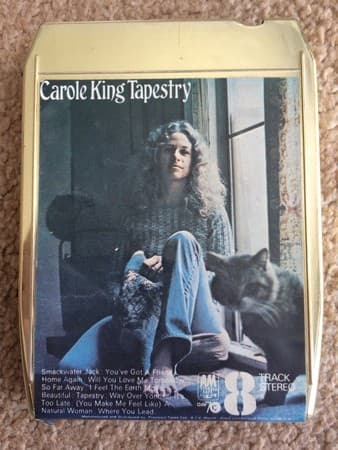
Carole King Tapestry — The Hit Factory Learns to Sing Its Own Songs
Carole King spent the 1960s writing other people's hits and proving she understood pop structure better than almost anyone working. By 1971 she had written or co-written dozens of chart songs, most famously with ex-husband Gerry Goffin, and the question was whether the architect could also be the performer.
Tapestry answers by doing something technically simple and emotionally hard: it takes the same melodic craft that made The Shirelles and Aretha Franklin sound great and applies it to King's own unpolished, conversational voice. The thesis is that songwriting skill transfers.
The risk is that what worked as a vehicle for other singers might feel empty when the writer steps in front. Instead, Weave became one of the biggest albums of the decade, spent fifteen weeks at number one, and stayed on the Billboard 200 for six years because King's imperfect voice made the songs feel more direct, not less.
She sings like someone talking through a problem, not like someone performing one, and the gap between the pristine architecture of the melodies and the worn-in grain of the delivery is what makes the record work. This is craft that sounds like confession, hooks that feel like advice from a friend, and a songwriter finally trusting that her voice is enough.
Piano, Voice, and the Essentials
Lou Adler produced Thread at A&M Studios in January 1971 with a lean band: King on piano and keyboards, James Taylor on acoustic guitar, bassist Charles Larkey, drummers Joel O'Brien and Russ Kunkel, and occasional strings and backing vocals from Merry Clayton, Joni Mitchell and others. The arrangements are economical.
"I Feel the Earth Move" builds on a two-chord piano vamp and a bass-and-drums pocket, adding strings and Curtis Amy's tenor sax only where they amplify the groove. "It's Too Late" floats on Larkey's electric bass and Ralph Schuckett's electric piano, the instrumental lines weaving around King's vocal without crowding it. "So Far Away" is piano, bass, light drums and Taylor's acoustic guitar, nothing more.
The production philosophy is transparency: serve the melody, frame the voice, get out of the way. What makes it work is that the melodies are strong enough to carry that exposure. King wrote or co-wrote every song, and the craft is consistent.
"You've Got a Friend" has a chorus that reassures without overselling, the lift earned by the verse's patient build. "Beautiful" turns a simple self-affirmation into a tune sturdy enough for repetition. The rerecorded Goffin collaborations—"Will You Love Me Tomorrow," "Natural Woman"—are stripped of the arrangement flourishes that defined the original hit versions, leaving just the bones of the songwriting, and the bones hold.
King's voice is the variable. It is not technically polished: pitches sometimes sag, phrasing is conversational rather than controlled, there is no vibrato for emphasis. What it has is emotional clarity.
On "It's Too Late" she sings the verses like someone delivering news, not performing sadness, and the chorus lands because the resignation in her voice matches the lyric. On "So Far Away" the ache is in the plainness of the delivery, not in any vocal technique. The imperfection works as honesty.
The weakness is repetition of texture. Most of the album is piano-and-rhythm-section, and by the middle of the second side the palette starts to feel narrow. "Home Again" and the title track "Mosaic" are pleasant but slight, and the record sags there.
"Smackwater Jack," a genre exercise with a country-funk groove and a narrative lyric, feels like an attempt at variety but does not quite fit the tone of the rest. The record is at its best when King is writing about longing, distance and reassurance, and weakest when it tries for character sketches or filler.
Front-Loaded with Hits, Then the Dip
Mosaic puts its strongest material up front. The original LP opened side one with the most physical track on the record, and closed it with the album's clearest statement of self-acceptance, a run of five songs that includes both A-sides from the lead single.
Side two starts with the song James Taylor turned into a number one hit while Fabric was still climbing, but then the energy drops. The middle section does not develop strongly, and the album feels less essential there.
The record picks up again with the three Goffin rewrites at the end, but the middle stretch on side two is where the album sags. The sequencing is front-loaded by necessity: the singles were too strong not to lead with.
That makes the record feel uneven, but it also means the first twenty minutes are airtight. The sag is real but brief, and the final three tracks recover enough of the momentum that the album does not end on filler. At thirty-six minutes the length is right, but the distribution of peaks could have been more balanced.
The Record That Proved the Model
Thread ranks among the most important singer-songwriter albums because it demonstrated that craft and intimacy were not opposites. King had already proven she could write hits; this album proved she could perform them in her own voice and connect with listeners in a way the polished studio versions for other artists had not. It spent fifteen weeks at number one, won four Grammys including Album of the Year, and sold twenty-five million copies worldwide not because it was radical but because it was direct.
The songs were already good, and King's voice made them feel like they were being sung to you, not at you. It has aged well because the production is simple and the melodies are sturdy. Fifty years later it still sounds like a conversation, not like a period piece.
Who it is for: anyone interested in the origins of the singer-songwriter movement, anyone who wants to hear what made Carole King one of the most successful pop writers of the twentieth century, anyone looking for an entry point into early-seventies pop that does not require a tolerance for excess. Who should skip it: listeners who need more sonic variety than piano-and-rhythm-section can provide, anyone allergic to earnestness.
Start with "It's Too Late" and "I Feel the Earth Move," the double A-side single that defined the album, then "So Far Away" for the ache and "You've Got a Friend" for the reassurance. If those four tracks work, the rest of the album will.
If you want more of this approach done with more production ambition, try Joni Mitchell's Blue, recorded the same month in the same studio. If you want to hear where King's songwriting came from, go back to the original hit versions of "Will You Love Me Tomorrow" by The Shirelles and "Natural Woman" by Aretha Franklin. Weave is the bridge between those two modes: the hit factory and the confessional, the songwriter and the singer, the craft and the feeling.
Track by track
Track Listing
Smackwater Jack
SolidA storytelling detour with a country-funk groove that does not quite fit the emotional tone of the rest of the record. The narrative about a wanted man feels like an exercise in character writing rather than personal expression, and while the rhythm section and Danny Kootch's guitar give it some grit, it is the album's most obvious filler. King is a better melodist than storyteller when she is writing in this mode.
You’ve Got a Friend
StandoutThe most structurally patient song on the record, and the one that became the biggest cover hit while the album was climbing. King wrote it for James Taylor, and his number one version appeared on Mud Slide Slim and the Blue Horizon the same year, but her original has the plainness that makes the reassurance feel earned rather than performed. The verse builds slowly, the pre-chorus shifts the harmony just enough to lift the melody, and the chorus delivers the title line without overselling it. Taylor's acoustic guitar is the only other foreground element besides King's piano and voice, and the simplicity is the point. The song works because it does not try to convince you it is profound; it just offers comfort and gets out of the way.
Home Again
SolidA brief, underwritten sketch about returning to a place of safety. The melody is pleasant but does not develop, and the track feels like an interlude stretched to two and a half minutes. It does not add much to the album, and its placement in the middle of side two is where the record starts to sag.
Will You Love Me Tomorrow?
StandoutKing and Goffin wrote this for The Shirelles in 1960, and the original hit version was built around girl-group harmonies and a lush arrangement. King strips it down to piano, bass, guitar and strings, and the question in the lyric—whether a one-night promise will hold in the morning—sounds less like teenage anxiety and more like adult doubt. The melody is one of King's best, and the rerecording proves it by removing everything that dressed it up the first time. The performance is quieter and more resigned than the original, and the plainness makes it hurt more.
So Far Away
StandoutThe album's most direct statement of longing, and the track where King's unpolished voice does the most work. The melody is simple, mostly stepwise motion, and the production is just piano, bass, drums and James Taylor's acoustic guitar. The ache is in the phrasing: King sings the verses like she is reading a letter, not performing a song, and the conversational delivery makes the distance in the lyric feel real. The chorus lifts just enough to make the repetition feel like a plea rather than a hook. One of the record's strongest songs, and the clearest example of how King's voice works as honesty rather than technique.
I Feel the Earth Move
StandoutThe most physical track on the record, built on a two-chord piano vamp and a locked-in rhythm section. King's vocal is higher and more urgent than anywhere else on the album, the phrasing clipped and rhythmic, and the arrangement adds Curtis Amy's tenor sax and a string section that reinforces the groove instead of softening it. The production is lean but full, and the song works because the energy is consistent from the first bar to the last. Paired with "It's Too Late" as a double A-side single, it spent five weeks at number one, and it still sounds like the most immediate thing King ever recorded. The lyric is about desire, not longing, and the performance matches.
Beautiful
StandoutA self-affirmation that earns its sentiment by understating it. The melody is gentle, the arrangement is piano and light strings, and King sings it like she is reminding herself of something she half-believes. The lyric addresses the listener directly, and the plainness of the delivery makes it feel like advice rather than a performance. It is not one of the album's most musically complex songs, but it is one of the most emotionally clear, and the simplicity is the reason it works. A strong close to the first side.
Tapestry
WeakThe title track meanders without a strong enough hook to justify its length. The melody is pleasant but does not build, and the lyric's metaphor about weaving a life does not land with much weight. King's vocal is warm, and the piano-and-strings arrangement is pretty, but the song feels like filler. It is one of the album's weakest moments, and its placement in the middle of side two contributes to the sag.
Way Over Yonder
SolidA gospel-influenced track with Joni Mitchell on backing vocals and a lyric about finding peace. The melody has more motion than "Tapestry," and the rhythm section gives it some drive, but it still feels slight compared to the front half of the record. Mitchell's harmonies add texture, and the song has a warmth that keeps it from being complete filler, but it is not one of the album's essential tracks.
It’s Too Late
StandoutThe album's centerpiece and its clearest commercial statement, a breakup song that refuses to perform sadness. King sings the verses like she is delivering facts, not emotions, and the resignation in her voice is what makes the chorus land. Ralph Schuckett's electric piano and Charles Larkey's bass create a floating, mid-tempo groove, and the arrangement stays sparse throughout, giving King's vocal room to be conversational. The melody is deceptively strong: the verse is mostly talk-sung, but the chorus lifts just enough to make the title line stick without overselling the emotion. Paired with "I Feel the Earth Move" as a double A-side, it spent five weeks at number one and won the Grammy for Record of the Year, and it remains the album's most enduring song. The performance is the key: King sounds like someone who has already accepted the ending, and that calm makes the loss feel real.
(You Make Me Feel Like) A Natural Woman
StandoutKing and Goffin wrote this for Aretha Franklin in 1967, and Franklin's version is one of the defining soul performances of the decade. King's rerecording does not try to compete with that: she strips the arrangement down to piano, bass and strings, and sings it quieter and lower, making it feel like a reflection rather than a declaration. The melody is still strong, and the lyric still works, but the performance is more about the craft of the song than the power of the delivery. It is a reminder that King is primarily a songwriter, and that her voice works best when it is not trying to match the singers she wrote for.
Where You Lead
SolidCo-written with Toni Stern, a mid-tempo track about devotion that has a strong enough melody to have been covered by Barbra Streisand the same year. King's version is straightforward, piano and rhythm section, and the vocal is direct without much dynamic range. The song is solid but not essential, and it feels like a competent album track rather than a standout. The melody does the work, and the performance does not get in the way.