Style & Context
Influences
Japanese Kabuki theater, Alexander McQueen fashion, sci-fi cinema, Nordic minimalism
Location
The image emerged when electronic music was shedding rave culture for art gallery legitimacy and intellectual credibility.
Visual Language
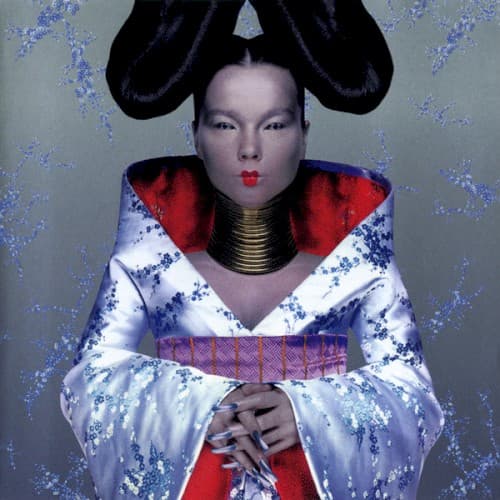
The composition isolates the figure against a spattered backdrop, creating museum-quality portraiture that feels ethnographic yet futuristic.
Symbols
Gold neck coils
The stacked brass rings elongate and constrain, suggesting both adornment and the physical price of transformation.
Geometric hair sculpture
The severe black sculptural headpiece replaces natural hair with architecture, proposing identity as deliberate construction.
Red inner collar lining
The crimson lining erupts from white porcelain surfaces like volcanic heat beneath Iceland's glacial crust.
Where Sound Meets Image
The rigid geometric costume mirrors the album's precisely programmed beats, while the human face beneath suggests the emotional strings and vocals that soften the electronics. The ceremonial quality reflects Homogenic's sense of ritual and drama, particularly on tracks exploring romantic devastation and national identity. The neck coils' constraint echoes the album's exploration of emotional restriction and volcanic release. The color scheme directly maps to the music's hot-cold dynamic, where icy beats meet molten orchestration.
This image established the template for art-pop album covers as high-fashion editorial shoots, influencing everyone from Lady Gaga to FKA twigs. The fusion of ethnic costume elements into futuristic contexts became a visual language for experimental pop throughout the 2000s. Fashion photographers adopted its stark, centered portraiture style for magazine covers seeking artistic gravitas. The cover proved pop musicians could present themselves as living sculptures rather than accessible celebrities.