Style & Context
Influences
Classic Hollywood glamour shots, Vogue editorial style, Vegas showmanship
Location
This cover emerged when Black artists fought for rotation on MTV and mainstream radio acceptance.
Visual Language
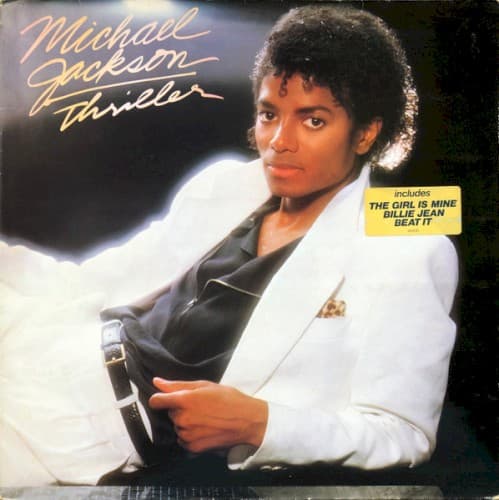
The clean composition prioritizes Jackson's face and posture with theatrical lighting that sculpts his features.
Symbols
White suit jacket
The pristine suit represents Jackson's careful construction of crossover appeal and mainstream accessibility.
Tiger cub lapel pin
This small feline detail foreshadows the album's wildness and Jackson's fascination with exotic animals.
Direct eye contact
Jackson's unflinching gaze asserts confidence and challenges the viewer to meet his ambition head-on.
Where Sound Meets Image
The cover's duality matches Thriller's musical range from the funky swagger of 'Wanna Be Startin' Somethin' to the horror-movie narrative of the title track. Jackson's composed expression reflects the album's tight production and his meticulous vocal control. The sophisticated styling mirrors Quincy Jones's lush arrangements while the subtle edge in his gaze hints at tracks like 'Beat It' that pushed into rock territory. The white suit became visual shorthand for the album's clean yet powerful sound.
This cover established the template for pop star portraiture throughout the 80s and beyond—minimal props, maximum presence, lighting as character. The white suit became one of music's most recognized garments, replicated in tributes and Halloween costumes for decades. Its influence appears in everything from Janet Jackson's Control era imagery to contemporary artists like The Weeknd. The cover proved that simplicity and star power could outperform elaborate concepts.