The scorecard
7.2/10 · Good
- Songwriting25%
- 7.0
- Production25%
- 8.0
- Performance15%
- 7.0
- Cohesion15%
- 6.0
- Originality10%
- 7.5
- Replay value10%
- 7.5
The title track and '(You Drive Me) Crazy' deliver hooks that justify a multi-decade shelf life, but half the tracklist leans on formulas that were already well-worn in 1999.
Max Martin and Rami Yacoub built singles from bass slaps and synth stabs that made the record instantly audible on radio; Eric Foster White's ballads sound expensive but rarely surprise.
Spears commits fully to the material, from the breathless verses on the opener to the controlled belt on 'Born to Make You Happy,' though the duet with Don Philip exposes her inexperience with harmony work.
The album front-loads its four best songs, then scatters ballads and filler across the second half with no clear arc; the Sonny & Cher cover lands like a non sequitur.
Martin and Yacoub refined the Cheiron formula they had already applied to the Backstreet Boys and Robyn, but Spears sold it with a sharper edge than her predecessors managed.
The singles remain compulsively listenable a quarter-century later; the album tracks fade on repeat, revealing how much of the record was built to launch a career rather than sustain one.
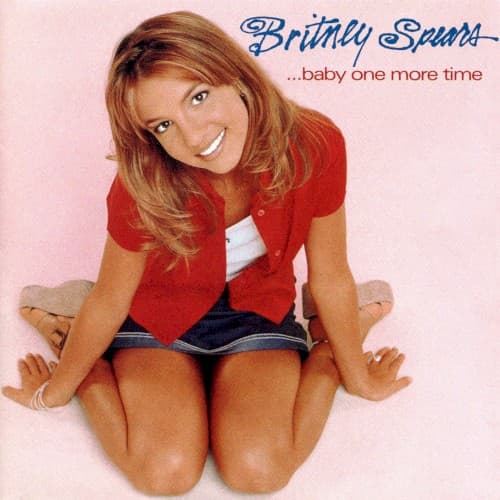
Britney Spears …Baby One More Time — The Blueprint for the Teen-Pop Single as Album Anchor
The case for this album rests on four songs recorded in Stockholm in May 1998. Everything Max Martin and Rami Yacoub contributed to the tracklist—the title track, '(You Drive Me) Crazy,' 'Sometimes,' 'Born to Make You Happy'—sounds like it was engineered to dominate top-forty radio and justify a tour, which is exactly what happened. The rest of the record, completed earlier with Eric Foster White in sessions that yielded nearly a dozen tracks, fills the space between singles with ballads that range from competent to forgettable.
The album works because the highs are high enough to carry the rest, and because Spears, seventeen at the time of release, commits to the material with a focus that makes even the filler sound intentional. This is not a front-to-back statement or a cohesive artistic vision. It is a star-making vehicle, built to launch a career on the strength of a handful of hard to argue with hooks, and it succeeds on those terms completely.
The question is whether the album tracks earn the runtime or whether the record would work better as an EP of singles.
The answer depends on how much tolerance you have for mid-tempo ballads that were clearly written to fill out a tracklist rather than to stand on their own. What matters is that the singles justify the project, and that Spears delivered them with enough conviction to make the whole enterprise feel bigger than the sum of its parts.
The Cheiron Machine Meets a Voice Built for It
The songwriting splits into two camps. The Cheiron material—Martin, Yacoub, and contributions from the late Denniz Pop—operates on a formula the team had refined with the Backstreet Boys and Robyn: verses that build tension, pre-choruses that lift, choruses that explode with hooks designed to lodge in memory on first listen. The title track opens with a three-note bass motif that announces itself in one second, then lands a chorus that alternates between pleading and defiant in a way that should not work but does. '(You Drive Me) Crazy' applies the same logic to a slower tempo, layering synthesized stabs over an R&B-inflected melody that gives Spears room to play with phrasing.
'Sometimes' is the outlier, a euro-dance ballad with a melody that earns its lift rather than forcing it. 'Born to Make You Happy' stretches her range across more than an octave and delivers the album's second-best chorus, a soaring line that justifies the verse build.
These four tracks are the argument for the record.
They sound expensive, precise, and built to last, which they have. The production on the Cheiron material foregrounds clarity: every element sits exactly where it needs to in the mix, from the wah-wah guitar lines on the opener to the synth swells on 'Born to Make You Happy'. Martin and Yacoub understood that teen pop lives or dies on the first listen, and they engineered every second for maximum impact.
The Eric Foster White material, which makes up the majority of the tracklist, takes a different approach. White shaped Spears's voice from a lower, less poppy delivery into the tone that became her signature, and his ballads—'From the Bottom of My Broken Heart,' 'I Will Be There,' 'E-Mail My Heart'—foreground that voice with spare arrangements and slow tempos. The problem is that the songs themselves rarely justify the treatment.
'From the Bottom of My Broken Heart' is a competent slow-tempo ballad that stretches past five minutes without adding a second hook. 'E-Mail My Heart' is a piano ballad built around a lyrical conceit that was already dated in 1999. 'I Will Be There' cribs its guitar riff from Natalie Imbruglia and never justifies the theft. The duet 'I Will Still Love You,' featuring Don Philip, exposes Spears's inexperience with harmony work; her voice gets lost in the mix, and the track sounds like a Céline Dion B-side.
The one outlier is 'Soda Pop,' a bubblegum-ragga hybrid with background vocals from co-writer Mikey Bassie that tries something different and mostly pulls it off. The cover of 'The Beat Goes On' adds bossa nova and trip-hop influences to a 1967 Sonny & Cher single and sounds like it was included to meet a quota.
Spears herself is the record's strongest asset. She sells every line, even when the writing does not deserve it. On the title track, she moves from breathy verses to a full-throated chorus without losing the thread of the performance. On '(You Drive Me) Crazy,' she plays with the phrasing in a way that suggests she understood the assignment.
On 'Born to Make You Happy,' she commits to a belt that a more cautious singer would have pulled back from. The weaknesses are audible: the duet exposes her limitations with harmony, and the ballads reveal that her voice works best when it has momentum rather than space. But the performance is never the problem. The problem is that half the album was written to fill time rather than to justify repeated listens.
An Album Front-Loaded to Sell a Star
The sequencing makes the record's priorities clear: the four Cheiron singles open the album and establish the standard, then the Eric Foster White ballads scatter across the second half with no clear logic. The album peaks in its first thirteen minutes. The opening stretch announces itself, sustains the momentum, shifts the tempo without losing energy, and then tries something different.
After that, the record sags. The fifth track delivers the album's last plain hook. Everything after that is filler or near-filler: ballads that sound expensive but go nowhere, a duet that does not work, a cover that feels like an afterthought.
The sequencing does not build to anything. It front-loads the singles, then coasts. The issue is not that the album is too long—at forty-two minutes, it is shorter than most of its peers—but that the second half does not earn its runtime. A tighter tracklist that cut three or four of the weaker ballads would have made the case for cohesion, but Jive clearly wanted a full-length album to support a tour and a rollout, and the filler was the cost of that decision.
The pacing never recovers from the front-loading. Once the fifth track lands its chorus, the record has nowhere left to go, and the remaining six tracks feel like they are running out the clock.
The Debut That Proved the Single Could Carry the Album
This is the best debut by a teenage artist in the teen-pop era, and it is not close. The singles alone justify the project: the title track is one of the greatest pop songs of the 1990s, and the three follow-ups are strong enough to have launched careers on their own. The problem is that the album tracks do not hold up. Half the record was built to fill space, and it shows.
The ballads are competent but rarely memorable, and the sequencing makes no attempt to build a cohesive arc. What saves the album is Spears herself. She sells every line, even when the writing does not deserve it, and the Cheiron material is strong enough to make the whole project feel like an event rather than a product.
The record has aged better than it was received. Critics in 1999 dismissed it as silly and premature, but the singles have outlasted most of the albums that topped the charts that year, and the production still sounds sharp. The weaknesses are real—too much filler, no cohesion, a second half that sags—but the highs are high enough to make the record essential for anyone interested in late-90s pop.
This is the album for fans of Max Martin production, for listeners who want to hear the blueprint for the teen-pop single as album anchor, and for anyone who wants to understand how Britney Spears became the defining pop star of her generation. Start with the title track, '(You Drive Me) Crazy,' and 'Sometimes.' If those three songs work for you, the album is worth owning, even if you end up skipping half of it.
Skip it if you need cohesion or if ballads that do not justify their length annoy you. For next steps, the logical move is her second album, which tightened the formula and cut the filler, or Max Martin's work with the Backstreet Boys, which applied the same production approach to a different voice.
Track by track
Track Listing
…Baby One More Time
StandoutThe opening three-note bass motif announces the record in one second, then the track builds through a verse that alternates between breathy restraint and rhythmic precision before landing a chorus that became unavoidable in 1999 and remains compulsively listenable. Max Martin and Rami Yacoub engineered every element for maximum impact: the wah-wah guitar lines, the EKG-machine bass slaps, the synth stabs that punctuate the pre-chorus. Spears moves from the breathy verses to a full-throated chorus without losing the thread of the performance, selling a lyric about longing for an ex-boyfriend with enough conviction to make it feel urgent rather than trivial. The track was originally written for TLC, who rejected it, and it is impossible to imagine anyone else delivering it with this much focus. This is the greatest teen-pop single of its era, and it justifies the entire project. Rolling Stone named it the greatest debut single of all time in 2020, and the claim holds up.
(You Drive Me) Crazy
StandoutA moderately slow dance beat with an R&B melody and edgy synthesized instrumentals, built on the same Cheiron formula as the opener but applied to a different tempo. Spears plays with the phrasing in the verses, stretching certain syllables and clipping others, which gives the track a sense of personality that some of the ballads lack. The chorus is not as immediate as the title track, but it earns repeated listens, and the production is sharp enough to keep the slower tempo from dragging. The remix for the Drive Me Crazy soundtrack added a stanza where Spears yells "Stop!" and the sound cuts out, which improved the pacing; the album version is slightly more restrained but still delivers.
Sometimes
StandoutThe album's best ballad, a euro-dance track with a melody that lifts without forcing it and a chorus that justifies the verse build. Spears opens with a lyric about pushing away a love interest—"every time you come too close I move away"—and the performance sells the ambivalence without overplaying it. The production foregrounds the hook, and the track has enough momentum to avoid the sag that drags down some of the later ballads. This is the template for what the slower material on the record could have been: a song that uses space and tempo shifts to build tension rather than to fill time.
Soda Pop
SolidA bubblegum-ragga hybrid with background vocals from co-writer Mikey Bassie that tries something different and mostly pulls it off. The production is busier than the Cheiron material, with layered vocals and a rhythm that shifts between pop and ragga influences without fully committing to either. The track feels like an experiment, and while it does not reach the heights of the singles, it justifies its place on the tracklist by offering a sound that nothing else on the record attempts.
Born to Make You Happy
StandoutThe last undeniable hook on the album, a soaring chorus that stretches Spears's range across more than an octave and delivers a line—"I don't know how to live without your love"—that should sound overwrought but instead sounds earned. The production is classic Cheiron: a verse that builds tension, a pre-chorus that lifts, a chorus that explodes. The lyric gestures toward a relationship the narrator does not understand how to fix, and Spears sells the confusion with a vocal that commits fully to the belt. This is the album's second-best track, and it is the last moment where the record feels like it is operating at full strength.
From the Bottom of My Broken Heart
SolidA sentimental slow-tempo ballad that stretches past five minutes without adding a second hook. Eric Foster White's production foregrounds Spears's voice with a spare arrangement, but the song itself does not justify the length. The lyric is competent but unremarkable, and the performance, while committed, cannot make the material feel urgent. This was released as the fourth North American single and peaked at number fourteen on the Billboard Hot 100, which suggests it connected with some listeners, but it is the weakest of the singles by a considerable margin.
I Will Be There
WeakA pop-rock track with a guitar riff that sounds like Natalie Imbruglia's 'Torn' and a chorus about standing by your man, your best friend, or your house pet. The production is competent, but the songwriting never justifies the theft of the riff, and the track feels like filler. Spears sells the performance, but the material does not give her much to work with.
I Will Still Love You
WeakA duet with Don Philip that sounds like a Céline Dion B-side and exposes Spears's inexperience with harmony work. Her voice gets lost in the mix, and the track never finds a reason to exist. This is the album's weakest moment.
Deep in My Heart
WeakA mid-tempo track that appeared on some international editions. Forgettable filler.
Thinkin’ About You
WeakAnother Eric Foster White ballad that does not justify its runtime. The production is competent, but the songwriting offers nothing that the earlier ballads did not already cover, and the track feels like it was included to meet a quota.
E‐mail My Heart
WeakA piano ballad built around a lyrical conceit—"e-mail me back and say our love will stay alive"—that was already dated in 1999 and has not aged well. The production is spare, and Spears's vocal is committed, but the song itself is pure filler.
The Beat Goes On
SolidA cover of the 1967 Sonny & Cher single with bossa nova and trip-hop influences, produced with contributions from All Seeing I. The track sounds like it was included to add variety to the tracklist, but it lands like a non sequitur. The production is competent, but the song does not fit the rest of the album, and it feels like an afterthought.