
The Voice That Launched a Pop Era
When Britney Spears' voice first cut through radio in late 1998, it carried something beyond innocence or manufactured appeal. That distinctive nasal tone, caught somewhere between breathiness and precision, became the sonic calling card for an entire generation's relationship with pop music. Born in McComb, Mississippi and raised in Kentwood, Louisiana, she arrived in the industry with extensive performance training from The Mickey Mouse Club, but what she brought to late-90s pop was less about technical perfection than absolute commitment to the moment.
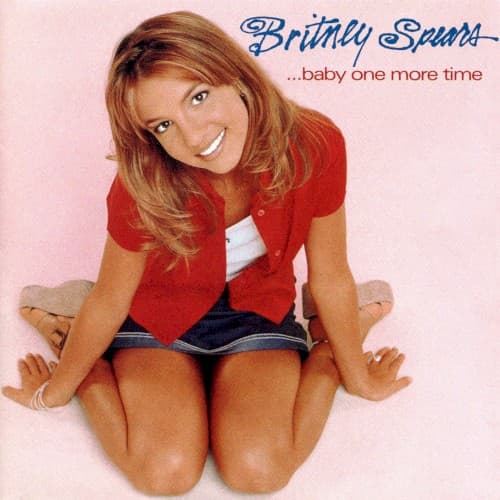
Her 1999 debut "…Baby One More Time" didn't just succeed commercially — it redrew the map for how pop stardom could function in the late 90s. The album moved nearly 11 million units in its first year, establishing Spears not as another teen singer but as a cultural phenomenon whose influence would ripple through two decades of pop production. The combination of Max Martin's Swedish precision and her peculiar vocal delivery created a template that artists still reference today.
What sets Spears apart in pop history is the gap between perception and reality. While critics initially dismissed her as a manufactured product, her discography reveals an artist who consistently pushed toward riskier sonic territory. From the Neptunes-produced experiments of "In the Zone" to the electro-house embrace of "Blackout," she operated as both a mirror for pop's evolution and an active participant in its direction. Her career encompasses the transition from TRL-era teen pop through the EDM explosion, making her catalog a roadmap of mainstream pop's transformation across two decades.
Britney's Sonic Signature: Breathiness Meets Precision
The Britney Spears vocal approach operates in a narrow but distinctive range. She rarely belts, almost never runs, and builds her performances around mid-register phrases delivered with that signature breathy quality. What sounds like limitation is actually her greatest asset — that compressed, slightly nasal tone became instantly recognizable across any production style. Listen to the way she phrases "my loneliness is killing me" on "…Baby One More Time" versus the staccato delivery on "Womanizer" — the voice is the same, but the rhythmic placement shifts to match evolving production trends.
Max Martin understood this early. His production for her debut album played to her strengths: simple melodic phrases, repetitive hooks that embedded themselves through sheer catchiness rather than complexity, and a sonic brightness that matched her voice perfectly. The formula worked so well they repeated it across three albums. But the interesting evolution comes later, when producers like The Neptunes ("I'm a Slave 4 U") and Danja ("Gimme More") stripped away the pop-rock guitars and pushed her voice into spaces surrounded by sparse, hard-hitting beats.
"Blackout," her 2007 album, represents her most sonically adventurous work. Tracks like "Piece of Me" and "Freakshow" use heavy processing, vocoder effects, and aggressive electro-house production that was ahead of mainstream pop's curve. Her voice becomes another instrument in the mix rather than the focal point — a production choice that influenced how artists like Lady Gaga and Charli XCX would later approach vocal treatment. The album sounds closer to underground dance music than typical pop radio fare, yet it worked precisely because her voice could cut through the heaviest production.
From Teen Pop Phenomenon to Dance-Pop Pioneer
The trajectory starts with "…Baby One More Time" in January 1999, an album that moved 10.6 million copies in its first year and established her as the commercial force of late-90s pop. The iconic music video, the VMAs performance with the python, the omnipresent media coverage — these moments created a celebrity template that reality TV and social media would later amplify. But beneath the spectacle, the album itself was Max Martin operating at peak efficiency: "(You Drive Me) Crazy," "Sometimes," and the title track all became radio staples, each built around simple hooks and that distinctive Britney phrasing.
"Oops!... I Did It Again" (2000) doubled down on the formula, moving 1.3 million units in its first week. The production stayed in Max Martin's Swedish-pop wheelhouse, but tracks like "Stronger" showed her experimenting with a harder edge. Critics still dismissed her as a teen product, yet the numbers told a different story — she was outselling established artists and defining what mainstream pop sounded like at the millennium's turn.
The real artistic shift came with "Britney" (2001), where she co-wrote several tracks and pushed toward a more mature sonic identity. The Neptunes' production on "I'm Not a Girl, Not Yet a Woman" pointed toward the risk-taking that would define her next phase. Then "In the Zone" (2003) arrived, featuring "Toxic" — arguably her most enduring single. The Bollywood strings, the surf-rock guitar break, the relentless forward momentum: it was pop perfection that transcended the teen-idol framework.
"Blackout" (2007) dropped during her most publicized personal crisis, yet it remains her most critically acclaimed work. The album was recorded in fragments, often with her spending minimal time in the studio, yet the Danja-produced tracks sound cohesive and forward-thinking. "Gimme More" introduced dubstep wobbles to mainstream pop before dubstep had crossed over. "Piece of Me" became an anthem precisely because it addressed her tabloid coverage while delivering an undeniable dance-floor banger. The album influenced the electro-pop wave that would dominate the next five years.
Her later albums — "Circus" (2008), "Femme Fatale" (2011), "Britney Jean" (2013), and "Glory" (2016) — showed her adapting to EDM's rise and pop's increasing reliance on producer-driven sounds. "Femme Fatale" particularly embraced dubstep and electro-house influences, with tracks like "Till the World Ends" capturing the festival-pop moment. The Las Vegas residency that followed (2013-2017) marked a shift from album cycles to live performance as her primary mode, though "Glory" demonstrated she could still deliver compelling pop records when given creative space.
The Blueprint for Modern Pop Stardom
Britney Spears' influence operates on two levels: sonic and cultural. Sonically, her willingness to embrace cutting-edge production choices — particularly on "Blackout" — gave other pop artists permission to experiment with heavier electronic sounds. The vocal processing, the sparse arrangements, the club-oriented aesthetics: these elements became standard in pop production. Artists from Lady Gaga to Charli XCX have cited her as an influence, specifically pointing to how she used her voice as texture rather than showcasing traditional vocal ability.
Culturally, she navigated celebrity in the internet age before social media existed, becoming a case study in how public perception and artistic output can exist in separate spheres. Her conservatorship battle, which became public knowledge in the 2010s and reached resolution in 2021, reframed conversations about artist autonomy and industry exploitation. The #FreeBritney movement demonstrated her enduring cultural relevance beyond music, though it also complicated how we understand her artistic choices during that period.
Her commercial impact remains undeniable: over 150 million records sold worldwide, 33.6 million albums in the United States alone, and a string of number-one singles that defined multiple eras of pop radio. But perhaps her most significant legacy is proving that pop music didn't require traditional vocal prowess to achieve artistic credibility. She succeeded by committing fully to the production, by understanding her voice as one element in a larger sonic picture, and by consistently working with producers who pushed boundaries. In that sense, she paved the way for an entire approach to pop stardom — one where sonic identity and production choices matter as much as raw talent.