The scorecard
7.5/10 · Great
- Songwriting25%
- 7.0
- Production25%
- 8.0
- Performance15%
- 7.5
- Cohesion15%
- 8.0
- Originality10%
- 6.5
- Replay value10%
- 7.5
Hooks like the handclap-backed stomp of "As It Was" and the yearning melody of "Late Night Talking" show real craft, but several songs drift on vibe without earning their choruses.
Kid Harpoon and Tyler Johnson build a soft-focus synth-pop world with warm analog textures and careful restraint, from the funk strut of "Music for a Sushi Restaurant" to the fingerpicked intimacy of "Matilda".
Styles sings with more nuance and less showboating than before, especially in the tender conversational phrasing on "Little Freak" and "Boyfriends", though the falsetto leans on charm over range.
The city-pop palette and muted energy hold thirteen tracks together, but the album sags in the middle with "Cinema" and "Daydreaming" feeling like sketches, and at forty-two minutes the length is just past earned.
The Japanese city-pop influence is deliberate and well-executed, but the soft-rock template and the introspective singer-songwriter mode are well-worn paths in 2022 pop, and nothing here rewrites them.
The production rewards headphone listens and the singles hold up, but the album's sameness in tempo and mood means the deep cuts blend together after multiple passes.
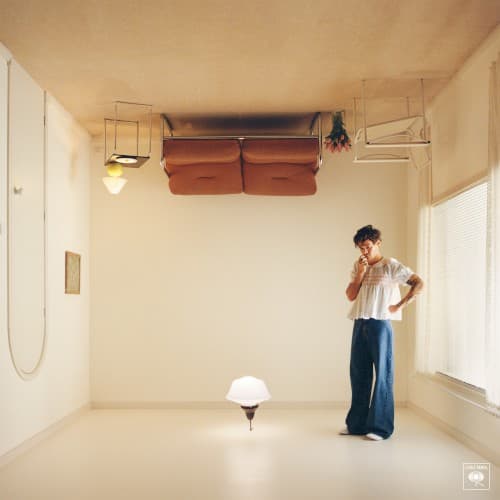
Harry Styles Harry's House — The Playlist Star Makes a Proper Album
Harry's House is the sound of a pop star stepping off the treadmill. Where Fine Line chased radio with big gestures and varied styles, this third album commits to one idea: forty-two minutes of warm, mid-tempo synth-pop inspired by Japanese city pop, recorded mostly at Shangri-La in Malibu with the same production team throughout. The thesis is in the title, borrowed from a Haruomi Hosono record: this is meant to feel like a day inside Styles' head, not a greatest-hits audition. It works more often than not, but the commitment to vibe over hooks means the album delivers a solid mood piece where it could have been a statement.
The best moments prove Styles can write songs that work as songs, not just as vehicles for his persona. The singles prove he can do both; the album shows he did not always choose to. The problem is that too much of the rest settles for texture over structure, and the city-pop influence becomes an excuse for songs that coast on a nice sound without building to anything. These strongest tracks are well-made pop songs that would survive a cover version, built on simple melodies that develop instead of circling, lyrics that listen instead of performing empathy, and vocals that resist the urge to oversell.
Soft Focus, Tight Frame
Kid Harpoon and Tyler Johnson produced every track, and their work is the album's greatest asset. They build a sound world that borrows the warmth and the analog shimmer of Japanese city pop without turning it into pastiche: live drums mixed to breathe, synth pads that sit in the back instead of announcing themselves, bass that anchors without thumping. The opener establishes a funk strut that nods to Hosono and Tatsuro Yamashita, horns punctuating without crowding, the groove locked in but never stiff. Another track layers a clean Fender Rhodes under a lyric about wine and heartbreak, the arrangement spare enough that the small details register. The production choices are consistently smart: John Mayer's guitar adds texture without turning the tracks into highlight, and the sample from the Brothers Johnson is integrated cleanly instead of being flipped for obvious effect.
The problem is not the sound but what it is asked to carry. Styles writes melodies that work in the verses, conversational and unhurried, but several choruses drift instead of lifting. One track was written in an all-nighter to finish it in time, and it sounds like it: the verse about chasing troubled things has a nice ache, but the chorus just repeats the title over a synth swell that does the work the melody should be doing. Another lists images without shaping them into a hook, the two-minute-nineteen runtime feeling like a fragment that got promoted to a proper track. A third started as an idea Styles had on a treadmill, and the song never gets off it; the groove is fine, but the chorus is just the word repeated until the track ends. When the writing is sharp, the production elevates it. When the writing is vague, the production can only make it sound expensive.
Styles sings with more restraint than on his first two albums, and it mostly suits the material. On several tracks he sounds like he is talking to someone instead of performing for a room, the phrasing conversational and the falsetto used for color instead of climax. One song works because he underplays it, letting the lyric about listening to a friend's pain do the emotional work. The only feature is Ben Harper playing guitar, and the decision to keep the album mostly solo is the right one; this is not a record built for guest verses or vocal run trades. The weakness is that the falsetto is more about texture than about range or control, and on the back half the sameness in his delivery starts to flatten the songs. A record this committed to one mood needs more dynamic range in the performance to hold interest across thirteen tracks.
The Album Runs Out of Ideas Before It Runs Out of Time
The sequencing front-loads the strengths and then meanders. The opening run establishes the sound and delivers three of the four singles in four tracks, a confident start that says the album knows what it is. Then it shifts into the introspective middle section, and the pacing stalls. The two best deep cuts are both built on small moments and performed with care, but they sit next to sketches that never became songs. The energy never varies enough to create a sense of movement, and by the time a two-minute fragment arrives, the album feels like it is marking time.
The back half rallies slightly with a track that has a chorus that actually lifts, and another that was written during the Fine Line sessions and sounds like it: more direct, more shaped, less committed to the haze. The closer works as a love letter to England, and it gives the album a destination, even if the song itself is more about sentiment than craft. The problem is the sag in the middle, where four or five tracks in a row offer the same tempo, the same warm synth wash, the same conversational vocal, and no real hooks to separate them. An album this committed to mood needs either more ruthless editing or more variety in the pacing. At forty-two minutes it is not bloated, but it is not tight either.
A Good Album That Could Have Been Great
Harry's House is Styles' most consistent album because it is his most focused, but the focus comes at the cost of the peaks. Fine Line had higher highs and lower lows; this one plays it safer and sounds better doing it. The production is the best of his career, the writing is more specific when it works, and the decision to make an album instead of a collection of singles is admirable. But admirable is not the same as essential, and too many of these songs settle for sounding nice instead of doing something with that sound. The singles prove he can write hooks that last; the deep cuts prove he can write songs that feel personal and small. What the album does not prove is that he can do both at once for a full record.
This is the album for listeners who want Styles to grow up and make a capital-A album, and it will frustrate listeners who want him to keep chasing the pop thrills of Watermelon Sugar. Start with "As It Was", "Late Night Talking", and "Matilda"; if those three work for you, the rest of the album offers more of the same with diminishing returns. Skip it if you need more energy or more hooks than soft-focus synth-pop typically delivers. For context, play Tatsuro Yamashita's For You to hear the city-pop source material done with more variety, or Haim's Women in Music Pt. III to hear another album from this era that successfully blends seventies influences with modern pop craft. Harry's House is a good album that plays like a very expensive demo for a great one.
Track by track
Track Listing
Music for a Sushi Restaurant
StandoutThe album opens with its strangest and most confident moment, a city-pop funk strut with horns, a locked-in groove, and a vocal melody that moves through actual changes instead of circling one idea. The title came from Styles hearing his own music in a Los Angeles sushi restaurant and joking about it, and the song leans into the absurdity: the lyric is about infatuation as performance, the arrangement is busy without being cluttered, and the whole thing sounds like nothing else in his catalog. Kid Harpoon and Tyler Johnson layer the production with small details that reward repeat listens, from the way the horns punctuate without dominating to the way the bass stays locked even when the vocal goes into falsetto. It was almost the album title, and the song earns that consideration. This is Styles writing a song that works as a song, not just as a vehicle for his voice or his charm, and it is one of the few tracks on the record that could survive a cover version intact. The risk is that it sets a bar the rest of the album does not consistently meet.
Late Night Talking
StandoutThe first song written for the album sessions, tracked the day the team arrived at Shangri-La, and it sounds like a room of people who know exactly what they are doing. The synth bassline anchors the whole track, the verse melody develops instead of repeating, and the chorus lifts without overselling. The lyric is simple: late-night phone calls, the small intimacy of staying up talking, the wish that the conversation could be in person. Styles sings it conversationally, resisting the urge to belt, and the production stays out of the way. This is as close as the album gets to a pure pop song, and it was the right choice for the second single. The track reached the top five in multiple countries, and it holds up because the hook is strong enough to carry the lightweight lyric. If the rest of the album had hooks this clean, it would be a different record.
Grapejuice
SolidA Fender Rhodes, a fingerpicked guitar, and a lyric about drinking wine to cope with a breakup. The production is spare and the melody is nice, but the song does not build to anything; it just cycles through the same idea until it ends. The chorus lands on the title and then moves on, and there is no moment that justifies why this needed to be a full track instead of a verse in something else. It is pleasant, and it fits the album's mood, but it is filler.
As It Was
StandoutThe lead single and the album's commercial peak, and it earns both. The song opens with a child's voice saying stay in this moment, then drops into a verse about loneliness and change, and then lands a chorus built on a simple descending melody and a handclap-backed stomp. The production is minimal: synth bass, a clean drum pattern, and small details that register without announcing themselves. The lyric is about trying to hold on to something that is already gone, and Styles sings it with just enough ache to sell it without overdoing it. The song debuted at number one in the US and the UK, and it became one of the biggest global hits of 2022 because the hook is undeniable and the production knows when to get out of the way. This is the best song on the album, the best single of Styles' career, and proof that he can write a pop song that works on any terms.
Daylight
WeakWritten in an all-nighter because Styles worried it would not get finished otherwise, and the song feels rushed. The verse about chasing troubled things has a nice ache, but the chorus just repeats the title over a synth swell that does the work the melody should be doing. The production is warm and the vocal is fine, but there is no hook here, just a vibe that lasts two minutes and forty-five seconds and then ends. A music video directed by James Corden was filmed in a fan's apartment and released on YouTube, but the video does not fix the problem that the song is underwritten.
Little Freak
StandoutOriginally written in Tokyo in 2019, produced and mixed for Fine Line but pulled because it did not fit, and then reworked for this album. The final version was worth the wait. The production is built on fingerpicked guitar, subtle synth pads, and space; the lyric is specific and strange, full of small images that feel personal without being explained. Styles sings it quietly, almost conversationally, and the melody moves through real changes instead of circling. The song is about longing and distance, and it never oversells either. This is the best deep cut on the album, the track that proves Styles can write something that feels genuinely introspective instead of performing introspection. The only weakness is that it sits next to weaker songs in the sequence, and the sameness in tempo means it does not stand out as much as it should.
Matilda
StandoutNamed after the Roald Dahl character, written for a friend going through difficulty, and performed with more restraint than almost anything else in Styles' catalog. The song is built on fingerpicked acoustic guitar, a careful vocal, and a lyric that listens instead of offering solutions. Styles described it as showing someone that he was paying attention, and the song works because it does not try to do more than that. The production stays minimal, letting the melody and the words carry the weight, and the vocal never belts or climbs into falsetto for effect. The chorus is just the name Matilda repeated with a slight lift, and it works because the verses have earned it. The song reached number nine on the Billboard Hot 100 without being released as a single, which says something about how well it connected. This is Styles at his best: writing something small and specific, performing it with care, and trusting the song to do the work.
Cinema
WeakStarted as an idea Styles had while on a treadmill, and the song never gets off it. The groove is fine, the production is clean, and John Mayer plays guitar, but the chorus is just the word cinema repeated until the track ends. There is no melody to speak of, no hook, no reason for this to exist beyond filling out the tracklist. It is four minutes of a nice sound with nothing underneath.
Daydreaming
WeakBuilt from a voice note Tyler Johnson sent Styles while driving from Palm Springs to Los Angeles, the track samples the Brothers Johnson and features John Mayer on guitar. The production integrates the sample cleanly and the groove is solid, but the song does not go anywhere. The verse melody is fine, the chorus does not exist, and by the time Mayer's guitar arrives it feels like a distraction from the fact that there is no song here. This is the second consecutive track that coasts on texture without building to anything, and the album's weakest stretch.
Keep Driving
WeakTwo minutes and nineteen seconds of images listed without a hook: sushi, a bad blowjob, cocaine, a black dog. The production is minimal and the vocal is conversational, but the song feels like a fragment that got promoted to a full track because the album needed the length. There is no chorus, no structure, just a verse that repeats until it stops. It is the shortest track on the album and it still feels too long.
Satellite
StandoutThe album's fourth single, released almost a year after the album, and it is one of the few deep cuts with a real chorus. The production builds from a clean verse into a lift that actually earns the word, and the melody has shape. The lyric is about orbiting someone, waiting for a chance, and the song sells it without overplaying. This should have been sequenced earlier in the album, where it could have broken up the sag in the middle. Instead it arrives after three weak tracks in a row, and by then the momentum is gone. Still, this is proof that Styles and his team can write a hook when they choose to.
Boyfriends
StandoutWritten during the final week of Fine Line sessions and held back because it was not ready, the song went through many versions before landing here. Ben Harper plays guitar after Styles asked to borrow the instrument Harper had gifted his daughter. The final version is built on acoustic guitar, a conversational vocal, and a lyric about how people treat each other poorly in relationships, drawn from watching Styles' sister and friends date and from his own experience. The song is tender and direct, more shaped than most of the deep cuts, and it works because it does not try to do too much. Billie Eilish called it beautiful and vulnerable, and she was right. The only issue is that it was written for a different album, and it sounds like it; the structure and the directness feel like they belong to an earlier version of Styles, before he committed to the haze of this record.
Love of My Life
SolidThe closer, written at Sony Music CEO Rob Stringer's house, is a love letter to England. The production is minimal, the vocal is quiet, and the lyric is sentimental without being maudlin. Styles sings about home and belonging, and the song works as a closer because it gives the album a destination. The track features Stringer's ringtone in the background during Styles' One Night Only concert for Apple Music, a detail that underlines how personal the song is meant to feel. The melody is simple, the arrangement is spare, and the whole thing ends the album on a note of resolution. It is more about sentiment than craft, but it serves its purpose. The audio from the album trailer was revealed to be this song played backwards, and that detail is more interesting than the song itself.