The scorecard
7.3/10 · Good
- Songwriting25%
- 7.5
- Production25%
- 8.0
- Performance15%
- 7.0
- Cohesion15%
- 6.5
- Originality10%
- 6.0
- Replay value10%
- 7.5
The hooks are built to outlast their moment: the title track's chorus lift, the step-by-step verse structure in Last Friday Night, and the precision of The One That Got Away's bittersweet bridge all use melody and chord movement to earn their repetition instead of relying on it.
Max Martin and Dr. Luke's arrangements serve the songs without drowning them: the house pulse under Firework's strings, the new-wave synth work in California Gurls, and the drum-and-bass undercurrent in E.T. all add texture without clutter, and the mix keeps Perry's voice front even when the track gets dense.
Perry's phrasing is stronger on the self-empowerment tracks than the come-ons: she sells the defiance in Circle the Drain and the longing in The One That Got Away, but the vocal on Peacock leans on the hook's innuendo instead of character, and the ballads expose her limited range in the quieter moments.
The first half is all tempo and the second half collapses into ballads: the pacing sags after E.T., with Who Am I Living For, Pearl, Hummingbird Heartbeat and Not Like the Movies stacking softer tracks that could have been spread across the sequence to give the album breathing room.
The disco-pop template and the Max Martin formula were already well-established by 2010, and Perry's take is confident but not inventive: the retro sound in Teenage Dream and California Gurls recalls Madonna and new wave without adding much, though the gothic-rock tinge in Circle the Drain is a departure from the pop-rock of One of the Boys.
The singles hold up because the songwriting is specific enough to survive familiarity: California Gurls, Teenage Dream, and Firework still sound purposeful rather than dated fifteen years later, even as the club beats and production sheen place them firmly in the early 2010s mega-pop moment.
Katy Perry Teenage Dream — Pop Learns to Build a Suite of Singles
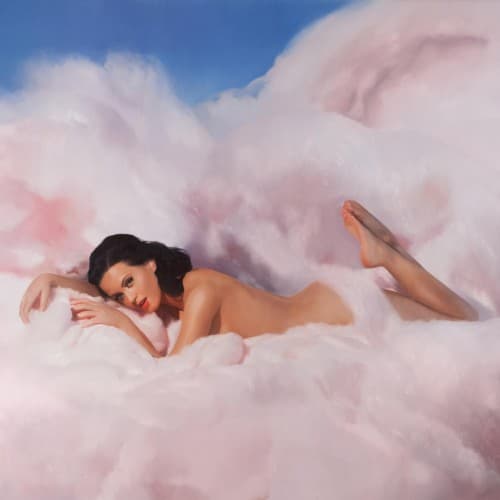
Teenage Dream is a record built on one wager: that a pop album could work as a sequence of standalone hits without sacrificing the craft that makes individual songs last. Katy Perry and her producers—Max Martin, Dr. Luke, Stargate, Benny Blanco—constructed twelve tracks where the hooks are specific enough to survive repetition and the arrangements varied enough to keep the formula from flattening. The result is a pop album that reached commercial saturation (five number-one singles, twelve million copies sold worldwide, Diamond certifications in the US and Canada) while maintaining structural integrity at the song level. The question is whether the album holds together as more than a playlist, and whether the songwriting can carry the weight of its own ambition.
The claim: Teenage Dream succeeds as a singles machine because the writing is strong enough to let each track stand alone, but it fails as an album because the sequencing prioritizes tempo over flow and the second half collapses under the weight of four ballads that could have been spread across the runtime. The production is immaculate—Martin and Luke know how to layer a chorus and how to let a vocal breathe—but the record is front-loaded with the hits and back-loaded with the filler, and the pacing never recovers from that divide. What makes the album worth hearing is the precision of the singles themselves: the verse-to-chorus lift in the title track, the new-wave synth work in California Gurls, the house pulse under Firework's self-empowerment anthem. What keeps it from greatness is the lack of a unifying thread beyond "young love and partying," and the sense that Perry and her team prioritized radio dominance over album craft. This is pop songwriting at a high level, but it is not an album that earns its length or its ballad pile-up.
The Max Martin Formula Applied to Disco-Pop
The songwriting on Teenage Dream follows a template: verse builds tension, pre-chorus signals the lift, chorus delivers the hook with melodic and harmonic contrast, then repeat with minor variation. That structure is not new, but Perry and her team execute it with enough specificity to make the songs feel purposeful rather than generic. The title track opens with a synth line that recalls 1980s new wave, then moves into a verse that uses short phrases and conversational phrasing before the chorus opens up with a major-key lift and a melody that steps upward instead of circling the same notes. The hook is simple—"you make me feel like I'm living a teenage dream"—but the chord progression under it adds tension by holding the dominant longer than expected, which makes the resolution feel earned.
California Gurls uses a similar structure but swaps the new-wave synth for a funk-pop bass line and a Snoop Dogg feature that adds rhythmic variation without disrupting the song's momentum. The verse melody is minimal, almost spoken, which gives the chorus room to expand, and the hook is built on a two-note motif that repeats but varies in phrasing each time. The production—handled by Dr. Luke, Max Martin, and Benny Blanco across most of the album—serves the songs without overwhelming them. The mix keeps Perry's vocal front even when the track gets dense, and the arrangements add layers (strings under one anthem, drum-and-bass undercurrent in another, house beat in a third) without cluttering the space around the melody.
The production is at its best when it uses texture to reinforce the song's thesis. One self-empowerment anthem layers strings over a house beat, which gives it a sense of scale without pushing it into bombast, and the mix keeps the verses sparse so the chorus can explode. Another track uses gothic-rock guitar tones and a disco-rock rhythm to underscore the lyric about a self-destructive ex-boyfriend, and the contrast between the dark verses and the brighter chorus mirrors the push-pull dynamic Perry describes. The album's most sonically adventurous track features a drum-and-bass rhythm, rave synths, and a techno influence that gives the song a colder, more mechanical feel than the rest of the record, which fits the lyric about falling for an outsider. The weakness is the ballads, which rely on the same stainless-steel production and chilly reverb that works on the uptempo tracks but drains the emotion from the quieter songs.
One ballad aims for vulnerability but the melody is too static and the mix too polished to land, and another suffers from the same problem: the arrangement is competent but the song never builds, and Perry's vocal does not have the range or character to carry the track without stronger melodic support.
Perry's performance is strongest when the material gives her something to push against. She sells the defiance in one track and the longing in another because the melodies give her room to phrase around the beat, and her delivery on the self-empowerment anthem has conviction even when the lyric veers toward self-help cliché. The come-ons expose her limited range: the vocal on one track leans on the hook's innuendo instead of adding character, and another's hard-rock arrangement demands a vocal with more grit than Perry can deliver.
The ballads are the weakest link. Her phrasing is confident on the uptempo tracks, but the quieter moments reveal a voice that lacks the control for sustained notes and the nuance for emotional subtility. One ballad aims for Britney Spears' Everytime but the vocal never commits, and another is undercut by a performance that sounds careful rather than lived-in. The album is best when Perry is in her comfort zone—mid-tempo pop with a strong hook and a clear premise—and weakest when it asks her to carry a song on vocal performance alone.
An Album Divided by Tempo
Teenage Dream is front-loaded with singles and back-loaded with ballads, and the sequencing never recovers from that split. The first stretch maintains momentum by alternating between club tracks and mid-tempo bangers, and the variety in production style (disco-pop, funk-pop, house, gothic rock) keeps the formula from wearing thin. The opening establishes a specific thesis about nostalgia for teenage freedom, the party anthems follow, then comes a pivot to self-empowerment, and finally a darker edge enters. The pacing works because each track has a clear purpose and the transitions are clean.
The back half collapses. The One That Got Away is the album's best ballad—the bittersweet lyric is specific, the melody has a strong hook, and the arrangement keeps the tempo up enough to maintain energy—but it is followed by a stretch that stacks four softer tracks in a row and drains the album of momentum. One uptempo outlier works as a standalone single with its distinct rhythm and techno influence, but as part of the album sequence it signals the beginning of the sag. The subsequent power ballads offer minimal melodic variation, and one track's hard-rock guitars feel like an attempt to revive the tempo that arrives too late.
The closing track ends the album on a down note, and the sequencing gives the impression that the album is running out of ideas. A smarter arrangement would have spread the ballads across the runtime—place the strongest one earlier, move the uptempo outlier to the front half, cut one or two slower tracks—but the album prioritizes radio strategy over album flow. The result is a record that peaks early and never recovers.
A Singles Collection That Almost Justifies the Album Format
Teenage Dream ranks as a landmark in 2010s pop not because it breaks new ground but because it executes the Max Martin formula at a level that few albums match. The writing is strong enough that the singles still sound purposeful fifteen years later, and the production—immaculate, layered, precisely mixed—gives each track room to breathe without losing the thread. The weakness is the album as a whole: the sequencing is lopsided, the ballads are filler, and the second half sags under the weight of too many slow tracks. Perry's vocal is confident on the uptempo material and limited on the quieter songs, and the record is best when it stays in her comfort zone—mid-tempo pop with strong hooks and clear premises.
The gothic-rock turn in one track is the album's most interesting departure, and one ballad is the only slower song with a melody strong enough to justify its runtime. The rest of the quieter tracks are competent but not necessary, and the album would be stronger at nine or ten tracks.
Teenage Dream is essential for pop fans who want to understand the 2010s singles boom, and the five number-one hits are all worth owning. The album is less essential: the front half is strong, the back half is weak, and the sequencing prioritizes radio strategy over album craft. For casual listeners, the singles are enough. For Perry fans, the album is worth hearing for the deeper cuts and for the production craft on display across the twelve tracks.
It has aged well in the sense that the songs still work, but it has also aged in the sense that the club beats and sheen place it firmly in the early 2010s mega-pop moment. The album sits somewhere in the middle of Perry's catalog: stronger than the pop-rock of One of the Boys because the songwriting is tighter and the production more confident, but not as cohesive as an album that prioritizes flow over hits. Start with the title track and the two biggest party anthems. If those land, move to the gothic-rock departure and the self-empowerment anthem. Skip the ballad pile-up unless you are a completist.
Track by track
Track Listing
Teenage Dream
StandoutThe title track is the album's thesis statement and its strongest opener. The verse uses short, conversational phrases over a new-wave synth line that recalls Madonna's Like a Virgin, then the pre-chorus signals the lift with a half-step modulation before the chorus opens up with a major-key melody that steps upward instead of circling. The hook is simple but the chord progression holds tension by delaying the resolution, which makes the payoff feel earned. Perry's vocal is confident and the production is layered but not cluttered: the synth work adds texture without overwhelming the melody, and the mix keeps the vocal front. The retro sound is deliberate and well-executed, even if it does not add much to the disco-pop template that was already established by 2010. The song works as a single and as an album opener because it establishes the album's thesis—nostalgia for teenage freedom—and delivers a hook strong enough to carry that weight.
Last Friday Night (T.G.I.F.)
SolidThe verse builds the story step-by-step—waking up with a hangover, piecing together the night before—before the pre-chorus shifts the perspective to anticipation and the chorus delivers the hook with a Hi-NRG beat and a melody that bounces between two notes. The structure is formulaic but the specificity of the lyric (streaking in a park, dancing on tables) gives the song character, and the production uses disco and indie-rock influences to keep the club beat from flattening. The weakness is the vocal: Perry's delivery is serviceable but the performance does not add personality beyond what the lyric already provides, and the song leans on the hook's repetition instead of finding variation in the phrasing. The track works as a party anthem and the melody is catchy, but it is not as strong as the title track or California Gurls because the writing does not give Perry much room to phrase around the beat.
California Gurls
StandoutThe bass line is the song's foundation: a funk-pop groove that anchors the new-wave synth work and gives the track a looser feel than the title track's tighter electropop structure. The verse melody is minimal, almost spoken, which gives the chorus room to expand, and the hook is built on a two-note motif that repeats but varies in phrasing each time through. The production is immaculate: the mix keeps the bass and synth in balance, the transitions are clean, and Snoop Dogg's feature adds rhythmic variation without disrupting the song's momentum. The lyric is lightweight—a tribute to California's beach lifestyle written as an answer song to Empire State of Mind—but the melody and production are strong enough that the song works as more than a novelty. The retro sound recalls new wave without adding much to it, but the execution is confident and the hook is built to last. The song is the album's commercial peak and one of its strongest tracks, even if it does not break new ground.
Firework
StandoutThe production layers strings over a house beat, which gives the self-empowerment anthem a sense of scale without pushing it into bombast. The verse is sparse—Perry's vocal over minimal instrumentation—which makes the chorus explosion feel earned, and the melody uses a step-wise upward motion that reinforces the lyric's message about rising above self-doubt. The hook is built on repetition, but the chord progression adds tension by holding the dominant longer than expected, which keeps the resolution from feeling cheap. The weakness is the lyric, which veers toward self-help cliché ("you just gotta ignite the light and let it shine"), but Perry's vocal has conviction and the production is strong enough that the song works despite the generic phrasing. The track is the album's most successful empowerment anthem because the writing and production align to support the thesis, and the melody is specific enough to survive familiarity. The comparisons to Coldplay are not unfounded—the string arrangement and the chorus structure recall Viva la Vida—but the house beat and Perry's delivery give the song its own identity.
Peacock
WeakThe hook is the song's only idea: a double entendre built on a common slang term, repeated over an uptempo house beat. The verse is minimal and the melody does not develop, which leaves the song feeling one-dimensional. The production is competent—the drum hook recalls Hollaback Girl and the mix keeps the energy up—but the writing does not give Perry anything to work with beyond the innuendo, and her vocal leans on the hook instead of adding character. The track is filler: it works as a club track but it does not develop its premise and it does not add anything to the album's thesis. The rhythm is strong enough to keep the song from collapsing, but the melody is static and the lyric is thin.
Circle the Drain
StandoutThe album's darkest track and one of its most interesting. The verse uses gothic-rock guitar tones and a disco-rock rhythm to underscore the lyric about a self-destructive ex-boyfriend, and the contrast between the dark verses and the brighter chorus mirrors the push-pull dynamic Perry describes. The melody is strong—short phrases in the verse that build tension, a pre-chorus that signals the lift, a chorus that opens up with a melodic hook that steps upward—and Perry's vocal is committed. The production is the album's most guitar-driven, with hard-rock and glam-metal influences that give the track a heavier feel than the rest of the record, and the mix keeps the vocal front without losing the guitar's bite. The lyric is specific ("all the possibilities I know I could be / are ruining my life because you're draining me") and the writing does not flinch from naming the ex-boyfriend's addiction and its toll on the relationship. The track is a departure from the album's disco-pop and electropop formula, and it is one of the few moments where Perry sounds like she has something at stake.
The One That Got Away
StandoutThe album's best ballad and one of its strongest songs. The verse builds tension with a melody that moves in small intervals, the pre-chorus signals the lift with a shift in dynamics, and the chorus delivers a bittersweet hook with a melody that steps upward and a lyric that names the regret directly ("in another life I would make you stay"). The production keeps the tempo up—this is a pop ballad, not a power ballad—which maintains momentum and prevents the song from sagging. Perry's vocal is confident and her phrasing adds nuance: she holds certain notes longer than expected and varies the delivery between the first and second chorus, which gives the performance character. The writing is specific ("summer after high school when we first met / we'd make out in your Mustang to Radiohead") and the melody is strong enough that the song works as more than a lyric sheet. The track is sequenced too late—it arrives after the album has already begun its sag—but it is the only ballad with a melody and production strong enough to justify its place in the runtime.
E.T.
SolidThe album's most sonically adventurous track. The production uses drum-and-bass rhythms, rave synths, and techno influences to create a colder, more mechanical sound than the rest of the record, which fits the lyric about falling for an outsider. The verse is minimal—Perry's vocal over sparse instrumentation—and the chorus builds with a melody that uses wider intervals than the album's other tracks. The Kanye West remix is the single version, but the solo album version works on its own: the production is distinct enough that the track does not need a feature to justify its place, and Perry's vocal is controlled. The weakness is the melody, which is less developed than the title track or The One That Got Away, and the song leans on the production's texture instead of building a strong hook. The track works as a standalone single—the drum-and-bass rhythm gives it a specific identity—but as part of the album sequence it signals the beginning of the second-half sag.
Who Am I Living For?
WeakA power ballad with a self-help lyric and a static melody. The verse does not build tension and the chorus does not deliver a strong hook, which leaves the song feeling like filler. Perry's vocal is careful but not committed, and the production is competent but generic: the same stainless-steel reverb and polished mix that works on the uptempo tracks drains the emotion from the quieter material. The track is not actively bad but it is not necessary, and the album would be stronger without it.
Pearl
WeakAnother power ballad with minimal melodic development. The verse is sparse and the chorus does not lift, which leaves the song feeling underwritten. Perry's vocal does not have the range or character to carry the track without stronger melodic support, and the production is too polished to let any vulnerability through. The lyric is vague ("she is a pearl") and the writing does not give the listener a reason to care. The track is filler and the sequencing is poor: placing two slow, underdeveloped ballads back-to-back drains the album of momentum.
Hummingbird Heartbeat
SolidA hard-rock track with 1980s glam-metal guitar tones and a lyric that compares the feeling of being in love to the speed of a hummingbird's heartbeat. The production is louder and heavier than the rest of the album, which gives the track some energy, but the melody is static and Perry's vocal does not have the grit the arrangement demands. The track arrives too late in the sequence to revive the album's momentum, and the writing is not strong enough to justify the harder sound. The song is not filler but it is not essential, and the album would work just as well without it.
Not Like the Movies
WeakThe album's closing ballad aims for vulnerability but the melody is too static and the production too polished to land. The verse does not build and the chorus does not deliver a strong hook, and Perry's vocal is careful rather than lived-in. The lyric is vague ("waiting for the man of her dreams") and the writing does not give the listener a specific image to hold onto. The comparisons to Britney Spears' Everytime are not unfounded—the piano arrangement and the structure are similar—but Perry's performance lacks the emotional commitment that made Everytime work. The track is filler and a weak closer: it ends the album on a down note and leaves the impression that the record is running out of ideas.