From Gospel Roots to Pop Superstardom: Katy Perry's Rise
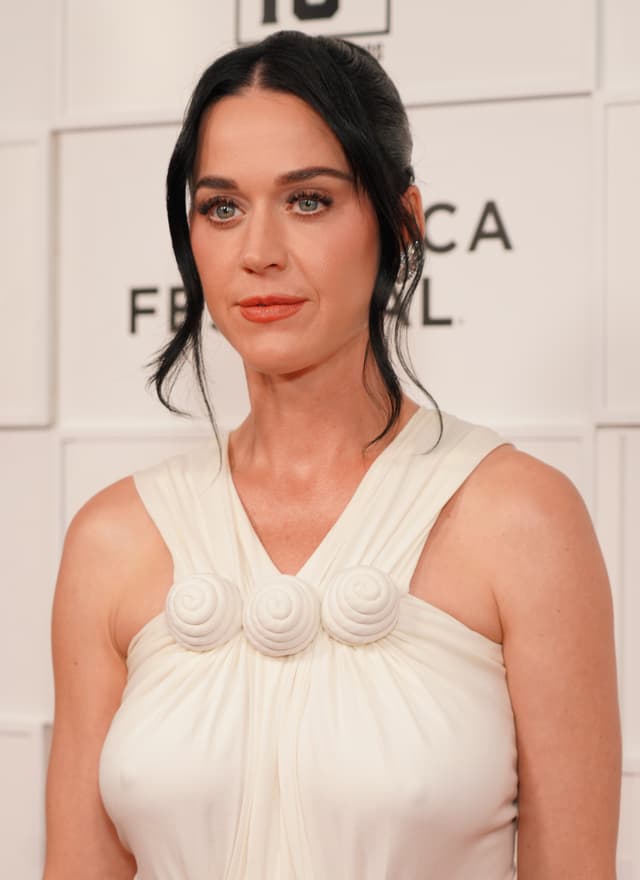
Katy Perry emerged in the late 2000s as pop music shifted toward brighter, brasher, more theatrical expressions of desire and ambition. Born Katheryn Elizabeth Hudson in Santa Barbara, California, she grew up immersed in gospel music, the daughter of Pentecostal pastors who restricted her early listening to Christian artists. That contained childhood created a tension that would define her artistic identity: the push-pull between wholesomeness and provocation, between the girl-next-door and the pin-up fantasy.
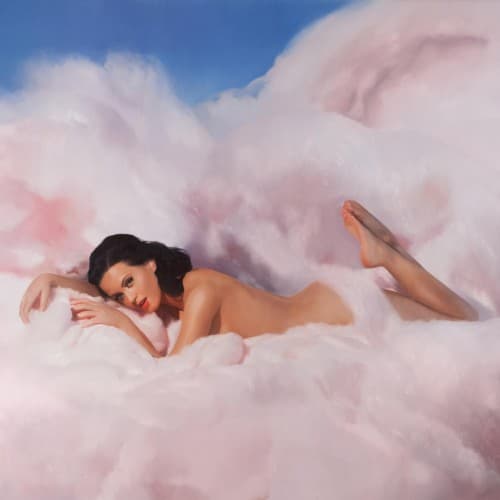
Her breakthrough arrived with 2008's "I Kissed a Girl," a song that weaponized controversy into commercial dominance. But it was her third studio album that cemented her cultural position. The record spawned five number-one singles on the Billboard Hot 100, matching Michael Jackson's record from Bad and establishing Perry as the defining female pop voice of the early 2010s. Where her contemporaries pursued authenticity or edge, Perry leaned into fantasy—candy-colored worlds, oversized props, whipped cream cannons. She understood pop as spectacle, as permission to be larger than life.
Perry's significance extends beyond chart statistics. She represented a specific moment when pop embraced unabashed maximalism, when bigger was always better, when subtlety felt like a concession. Her music soundtracked a pre-streaming era when radio still crowned winners, when a single could dominate for months, when pop stars were still expected to be everywhere at once.
Maximalist Pop Production and Vocal Theater
Perry's sonic identity rests on Dr. Luke's signature production architecture: layers of synthesizers that glitter and pulse, drums programmed for maximum impact, melodies engineered for instant recall. Her vocals carry a theatrical quality—she doesn't whisper confessions like an indie artist mining vulnerability. She belts, she punches consonants, she performs with the confidence of someone who grew up projecting to the back row of a church. That gospel foundation shows in her phrasing, the way she approaches peaks and holds notes just long enough to make you feel the climax.
The production choices favored bright, saturated sounds. Electropop frameworks with dance-pop rhythms, occasionally pulling from disco's celebratory energy or rock's power chords. Her early work with Dr. Luke, Max Martin, and Benny Blanco created songs that felt like candy—sweet, immediate, occasionally overwhelming in their intensity. The arrangements rarely breathed. They stacked hooks on hooks, pre-choruses as memorable as choruses, bridges designed as secondary peaks. This wasn't music for contemplation. It was music for movement, for singing at full volume, for feeling invincible.
Where some pop stars cultivated mystery or emotional complexity, Perry offered clarity. Her vocal delivery matched her lyrical approach: direct, literal, unambiguous. When she sang about fireworks, she meant fireworks. When she sang about roaring like a tiger, she meant exactly that. This literalism became her signature—pop as uncomplicated pleasure, as permission to feel big emotions without ironic distance or intellectual justification.
Chart Domination, Cultural Saturation, and the Cost of Ubiquity
Perry's commercial ascent began with One of the Boys in 2008, an album that positioned her as pop-rock with an edge—"I Kissed a Girl" courted controversy while "Hot n Cold" offered relatable relationship drama set to new wave-influenced guitars. The record established her persona: playful, provocative, aware of her own cartoonishness. But it was a preview, not the main event.
Teenage Dream arrived in August 2010 and redefined what commercial dominance looked like. The album generated five consecutive number-one singles: "California Gurls," "Teenage Dream," "Firework," "E.T.," and "Last Friday Night (T.G.I.F.)." Each song felt designed for a different emotional register—summer anthem, nostalgic romance, empowerment ballad, alien-themed club track, party recovery narrative. The album wasn't cohesive in a traditional artistic sense. It was a greatest-hits collection released as a debut statement, each track competing for radio supremacy. The strategy worked. Perry became inescapable, her music the soundtrack to every grocery store, every car radio, every wedding reception. She performed at the Super Bowl halftime show in 2015, watched by 118.5 million viewers, with Left Shark becoming an accidental meme that demonstrated her cultural penetration.
Prism followed in 2013, continuing the hit-making formula with "Roar" and "Dark Horse," though the cultural conversation had begun to shift. Critics started questioning the formula's sustainability. Witness, released in 2017, marked a commercial downturn. The album attempted to engage with political themes and personal evolution but felt disconnected from both Perry's strengths and the cultural moment. Streaming had fractured radio's gatekeeping power. Spotify's algorithm didn't favor maximalism. Younger listeners gravitated toward Billie Eilish's whispered intimacy or Charli XCX's experimental hyperpop. Perry's approach—loud, literal, expensive—suddenly felt dated.
The subsequent years revealed an artist wrestling with relevance. Smile in 2020 and subsequent singles struggled to recapture her early momentum. Yet her legacy remained secure: those Teenage Dream singles still dominate nostalgic playlists, still fill dance floors, still represent a specific era when pop could be unabashedly huge. Perry's career demonstrated both the power and the limitation of commercial perfectionism—when you design music for maximum impact, you also design music with a shelf life.
Perry's Influence on 2010s Pop Maximalism and Star Image
Perry's impact manifests less in direct musical descendants and more in her normalization of pop as pure spectacle. She proved a female pop star could be cartoonish, overtly sexual, and massively successful without apologizing for any of it. Where Madonna weaponized controversy through transgression and Lady Gaga used it for artistic provocation, Perry wielded it as marketing—calculated enough to generate headlines, safe enough to maintain mainstream appeal. That balance influenced how subsequent pop stars managed their public images, understanding provocation as brand differentiation rather than artistic necessity.
Her Teenage Dream era established benchmarks that still haunt pop artists. Five number-ones from one album remains a metric by which commercial success is measured. When Taylor Swift pursued similar dominance or when Sabrina Carpenter chased chart records, they operated in Perry's shadow, whether acknowledged or not. The album also demonstrated streaming's eventual disruption: it succeeded in radio's final moment of absolute power, just before algorithms fragmented the monoculture Perry helped create.
Culturally, Perry represented a specific strain of millennial optimism—bright, uncomplicated, determinedly fun even as the economy collapsed and political discourse darkened. Her music offered escapism without depth, pleasure without guilt. That approach aged poorly as pop audiences demanded greater authenticity, as they valued vulnerability over invincibility. Yet for those who experienced her peak, Perry remains synonymous with a particular feeling: being young enough to believe fireworks might actually live inside you, before irony made such sincerity impossible.