The scorecard
8.2/10 · Great
- Songwriting25%
- 8.0
- Production25%
- 9.0
- Performance15%
- 7.5
- Cohesion15%
- 8.5
- Originality10%
- 7.0
- Replay value10%
- 8.0
The hooks on Blinding Lights and Save Your Tears are precision-built for anthems, though several verses coast on mood rather than memorable lines.
Max Martin's synth architecture on Blinding Lights and the Metro Boomin-Illangelo collaborations like Faith create an immersive neon world that serves every song.
The Weeknd's falsetto carries real remorse on After Hours and Scared to Live, but the detached persona limits emotional range across fourteen tracks.
The sequencing from Heartless through Until I Bleed Out tracks a single night's decline with deliberate pacing, though the 56-minute runtime tests patience.
The synthwave revival and dream pop textures mark a clear departure from Starboy, but the sound arrives years into the retro-80s wave.
Blinding Lights proved its staying power as a multi-year chart presence; the deeper album cuts retain their atmosphere on repeated listens.
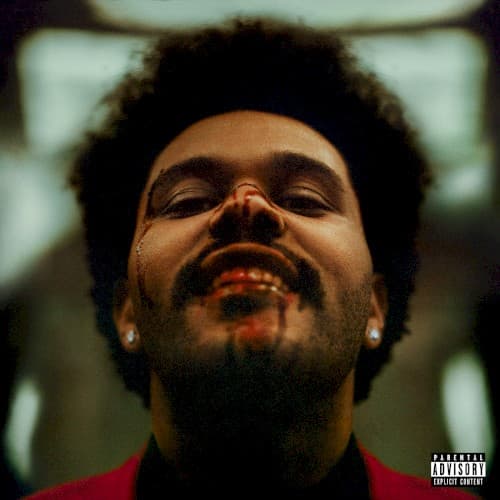
The Weeknd After Hours — Pop Builds a Night Out of Self-Destruction
After Hours is the sound of the Weeknd finally committing to the 80s revival he had been circling for years, and the commitment pays off because he uses it to chart a single night's spiral rather than as retro decoration. The album opens with Alone Again, a track that sets the terms immediately: the synths are cold, the bass is sub-heavy, and the Weeknd is already regretting decisions he has not yet made. By the time the title track arrives six songs and thirty-five minutes later, the neon has burned out and the regret has curdled into self-loathing. This is not the conflicted hedonism of his early work or the playlist-ready gloss of Starboy; it is a concept album about overindulgence and its aftermath, and it works because the production team—Max Martin, Metro Boomin, Illangelo, and Oneohtrix Point Never—builds a sound world that is as immersive as it is oppressive. The stakes are whether the Weeknd can sustain a 56-minute arc without guest features or genre shifts, and whether the emotional palette he is working with—loneliness, regret, promiscuity, self-loathing—can carry an album this cohesive without becoming monotonous. The answer is mostly yes, with the caveat that the album is best experienced as a single listen rather than mined for individual tracks, and that the runtime is longer than the narrative strictly requires.
Synth Architecture and Metro's Low End
The production on After Hours is the album's clearest strength, and it works because the team around the Weeknd understood that the 80s textures had to serve the darkness of the material rather than brighten it. Max Martin handles the four tracks that became singles—Blinding Lights, In Your Eyes, Save Your Tears, and Scared to Live—and his work here is more restrained than his usual approach, layering arpeggiated synths and gated reverb without letting them overwhelm the vocal. Blinding Lights is the obvious centerpiece, a synthwave anthem built on a bassline that drives forward without stopping, but Save Your Tears is the subtler achievement: the production lifts just enough in the chorus to suggest euphoria without ever delivering it, which mirrors the lyric's depiction of a breakup the narrator caused and still mourns.
Metro Boomin and Illangelo collaborate on the darker tracks—Heartless, Faith, and the closing Until I Bleed Out—and their work is about sub-bass and empty space, with Metro's trap-influenced drums sitting low in the mix and Illangelo's synth pads filling the background without cluttering it. Faith is the clearest example of their chemistry: the first half is sparse and menacing, with a drum pattern that barely registers, and then the second half shifts into a liquid funk breakbeat that feels like the night accelerating out of control. Oneohtrix Point Never contributes to the closing tracks, and his presence is audible in the way the synths on Until I Bleed Out feel alien and destabilized, as if the sound itself is collapsing. The Weeknd himself is credited as a producer on every track, and while it is impossible to say from the outside what that means in practice, the album sounds like the work of someone who knew exactly what atmosphere he wanted and had the collaborators to execute it.
The songwriting is more variable. The choruses on the Max Martin tracks are expertly constructed, with Blinding Lights and In Your Eyes delivering hooks that justify their chart performance, but the verses across the album often prioritize mood over melody. Tracks like Snowchild and Escape from LA build effectively as atmospheres, but the writing in the verses does not give you much to hold onto beyond the general sense of regret and excess.
The Weeknd's vocal performance is consistent—his falsetto is controlled and his phrasing is precise—but the emotional range is narrow by design, and across fourteen tracks the detachment starts to feel like a limitation rather than a choice. The album also has a specific weakness in its lack of dynamic contrast: nearly every track operates in the same tempo range and the same emotional register, which makes the sequencing crucial and also makes the album exhausting if you are not in the mood for its particular atmosphere.
One Night, Fourteen Tracks, and the Sag in the Middle
The album is sequenced as a narrative arc, and the structure is deliberate: the first half tracks the night out, the middle is the peak and the crash, and the second half is the aftermath. The opening run establishes the world and accelerates into it, with each track bleeding into the next and the tempo staying consistent. The sequence works because it mirrors the experience it is depicting: the night starts already damaged, and by the time the first stretch concludes the Weeknd is in full hedonist mode. The production underscores this with hard drums and minimal melody.
The middle of the album is where the pacing stumbles. The peak arrives both musically and in terms of the narrative, and it is followed by two more strong singles that do not advance the arc. The album would have been tighter if one of those tracks had been cut, because by the time the brief interlude arrives the momentum has slowed and the emotional territory feels redundant.
The second half recovers with the title track, a six-minute song that shifts from minimalist synth-pop into a distorted breakdown and serves as the album's emotional low point. The closing run then delivers the sound of the narrator too exhausted to keep spiraling. The sequencing is more effective than the Weeknd's previous albums, and the decision to release a standard edition with no features keeps the focus on the atmosphere, but the 56-minute runtime is longer than the concept requires and the lack of tonal variation makes the middle stretch feel like filler even when the individual songs are solid.
Where It Lands in the Weeknd's Catalog and Who It's For
After Hours is the most cohesive album the Weeknd has released and the one with the clearest vision, which makes it a strong entry point for listeners who found Starboy too scattered or who want to hear what the synthwave revival sounds like when it is used for something other than nostalgia. It does not reinvent the Weeknd's persona—he is still singing about regret and excess, and the emotional palette is narrow—but it refines the execution and it proves that he can sustain an album-length concept without relying on features or genre shifts to maintain interest. The production is the main reason to return to the album, and the Max Martin tracks in particular hold up as some of the best pop songwriting of 2020. The deeper cuts are more situational: they are worth hearing in context, but they do not stand alone as well as the singles.
The album's main limitation is its lack of dynamic range, both musically and emotionally, which means that it works best as a single front-to-back listen rather than as a collection of individual songs. For listeners who want the Weeknd at his most accessible, start with the three tracks that translate outside the album's specific atmosphere. For listeners who want to hear the album as it was intended, start at the beginning and play straight through to the end, ideally late at night when the oppressive synth-pop aesthetic will feel appropriate rather than exhausting. The Weeknd has made darker albums and more experimental albums, but After Hours is the one where the concept, the production, and the sequencing all align, and it is the record that proved he could build an entire album around a single mood without losing the thread.
Track by track
Track Listing
Alone Again
SolidThe opener sets the album's atmosphere with cold synths and a bassline that pulses without offering any warmth. The production by the Weeknd, Illangelo, DaHeala, and Frank Dukes is minimal by design, with most of the sonic space left empty so the regret in the vocal can sit front and center. The song works as an introduction because it establishes the emotional state—isolated, self-aware, already damaged—before the night has even started. The writing is more impressionistic than specific, but the mood is clear and the sequencing choice to open with this rather than a more immediate track signals that the album is going to prioritize atmosphere over accessibility.
Too Late
SolidThe Illangelo and Ricky Reed production keeps the tempo steady and the synths minimal, with the drums staying in the background and the vocal carrying the melody. The song continues the narrative of regret from the opener, with the Weeknd singing about a relationship that has already ended even as he tries to salvage it. The chorus has a lift, but it is not enough to make the track feel triumphant, which is the point. The song works in context but does not distinguish itself from the tracks around it, and the writing does not offer much beyond the general sense of damage and longing that defines the album.
Hardest to Love
StandoutThe first Max Martin production on the album, and the difference is audible immediately: the synths are brighter, the drums are crisper, and the chorus has a hook that actually resolves. The Weeknd is singing about being difficult and self-sabotaging, which is familiar territory, but the production gives the track enough forward momentum that it works as a shift in energy after the slower opening two songs. Oneohtrix Point Never is credited alongside Martin, and his influence is subtle but present in the way the synths in the verses feel slightly off-kilter. The track is solid but not essential, and it serves mainly to set up the stronger Max Martin tracks that follow later in the sequence.
Scared to Live
StandoutAnother Max Martin production, this time with an interpolation of Elton John's Your Song, which gives the track a melodic foundation that the Weeknd's original writing sometimes lacks. The production is lush and the vocal is more vulnerable than usual, with the falsetto pushed higher and the delivery less detached. The song is about fear of commitment and the regret that follows, and the writing is more direct than on the surrounding tracks. The interpolation works because it is integrated into the melody rather than tacked on, and the track stands as one of the album's quieter emotional peaks. It was performed on Saturday Night Live with Oneohtrix Point Never, which suggests the Weeknd saw it as a centerpiece, and the performance was strong enough to justify that choice.
Snowchild
SolidThe Illangelo and DaHeala production is built around a looped synth arpeggio and a steady four-on-the-floor beat, and the track works as an interlude more than a full song. The Weeknd is singing about his rise and the lifestyle that came with it, and the writing is more autobiographical than usual, but the track does not develop much beyond its initial atmosphere. It is effective as a bridge between the more emotionally direct tracks around it, and the production is immersive, but the song does not offer much reason to return to it outside the album's sequence.
Escape From LA
StandoutThe longest track on the album at nearly six minutes, and the Metro Boomin and Illangelo production uses the space to build slowly, with the first half staying sparse and the second half layering in more synths and a more insistent bassline. The Weeknd is singing about a relationship in Los Angeles that went wrong, and the writing is specific enough to feel like a real story rather than a generic sketch. The track works because it takes its time, and the production shifts just enough in the second half to justify the length. It is one of the deeper cuts that rewards attention, and it serves as a turning point in the album's narrative, where the night out starts to tip into something darker.
Heartless
SolidThe lead single and the album's most straightforward banger, with Metro Boomin's production leaning into hard trap drums and a minimal synth line that leaves room for the vocal. The Weeknd is singing about excess and numbness, and the delivery is detached in a way that matches the lyric. The track was a number-one hit and it works as a statement of intent for the album's hedonistic side, but it is also one of the least interesting songs on the record because the writing does not offer much beyond the surface-level depiction of partying and regret. The production is clean and the hook is effective, but the track feels like it was built for radio rather than for the album's narrative, and it disrupts the pacing slightly by being more immediate than the tracks around it.
Faith
StandoutThe Metro Boomin and Illangelo collaboration at its best, with a first half that is almost oppressively minimal—just a kick drum, a sub-bass, and the vocal—and a second half that shifts into a liquid funk breakbeat that feels like the night accelerating out of control. The Weeknd is singing about faith in a higher power and the lack of it, and the track works as the album's darkest moment, both lyrically and sonically. The production shift in the second half is jarring in the best way, and the track stands as one of the album's clearest examples of how the sound serves the concept. It is not a single and it does not work outside the album's context, but within the sequence it is essential.
Blinding Lights
StandoutThe second single and the album's global breakthrough, a synthwave anthem built on an arpeggiated bassline and a chorus that is engineered for maximum impact. The Max Martin production is pristine, with every element—drums, synths, vocal—mixed to hit as hard as possible without cluttering the track. The Weeknd is singing about desperation and longing, and the contrast between the lyric's darkness and the production's brightness is what makes the song work. The track became the number-one song of all time on the Billboard charts, and the success is earned: the hook is undeniable, the production is immaculate, and the song translates across contexts in a way that most of the album does not. It is the album's peak, both in terms of quality and in terms of the narrative arc, and the sequencing choice to place it in the middle of the album rather than at the end is smart because it gives the second half somewhere to fall from.
In Your Eyes
StandoutAnother Max Martin production, this time with a disco-influenced bassline and a chorus that builds toward a release that never quite arrives. The Weeknd is singing about seeing himself through someone else's perspective and not liking what he sees, and the writing is more self-aware than on some of the earlier tracks. The production is lush and the hook is strong, but the track suffers slightly from following Blinding Lights in the sequence, because it operates in a similar sonic space without reaching the same heights. The song was a top-20 hit and it works as a single, but within the album it feels like a slight retread of ground already covered.
Save Your Tears
StandoutThe third Max Martin synthwave track in a row, and the one that benefits most from restraint. The production is built around a pulsing synth arpeggio and a chorus that lifts just enough to suggest euphoria without delivering it, which mirrors the lyric's depiction of a breakup the narrator caused and still mourns. The track became a number-one hit after a remix with Ariana Grande, but the original album version is the stronger one because it does not dilute the melancholy with a feature. The writing is more specific than on most of the album, and the chorus is one of the Weeknd's best: the melody is memorable, the production serves it perfectly, and the emotional register is more complex than the surface-level sadness that defines some of the weaker tracks. It is the best of the Max Martin collaborations and one of the album's clear highlights.
Repeat After Me (interlude)
SolidA three-minute interlude produced by Kevin Parker of Tame Impala and Oneohtrix Point Never, and the album's clearest example of a track that works as a mood piece but not as a song. The production is hazy and psychedelic, with layered synths and a minimal drum pattern, and the Weeknd's vocal is more conversational than melodic. The track serves as a palate cleanser before the title track, and it works in that context, but it does not offer much on its own.
After Hours
StandoutThe title track and the album's emotional centerpiece, a six-minute song that starts as minimalist synth-pop and builds into a distorted breakdown that feels like the sound of the narrator's self-control collapsing. The production by the Weeknd, Illangelo, DaHeala, and Mario Winans is the album's most dynamic, with the first half staying quiet and the second half erupting into distortion and noise. The Weeknd is singing about regret and self-destruction, and the vocal performance is more raw than on the rest of the album, with the falsetto pushed to its limit in the breakdown. The track works as the album's low point, both in terms of the narrative and in terms of the sound, and it justifies its length because the shift from the quiet first half to the chaotic second half needs time to land. It is one of the album's best tracks and the one that most clearly demonstrates what the Weeknd was trying to do with the concept.
Until I Bleed Out
SolidThe closer, produced by Metro Boomin, Oneohtrix Point Never, and others, and the sound of the narrator too exhausted to keep spiraling. The production is sparse and cold, with a drum pattern that barely registers and synths that feel alien and destabilized. The Weeknd is singing about wanting to feel nothing, and the track works as the album's final statement because it does not try to resolve anything or offer any hope. The song fades out rather than ending cleanly, which mirrors the emotional state it is depicting. It is not a strong closer in the traditional sense—it does not provide catharsis or a sense of completion—but it is the right closer for this album, because the concept does not allow for resolution. The track is effective in context but does not work outside it.