The scorecard
8.9/10 · Essential
- Songwriting25%
- 9.0
- Production25%
- 9.5
- Performance15%
- 9.0
- Cohesion15%
- 7.5
- Originality10%
- 8.5
- Replay value10%
- 9.0
From the spare title track to the aching Adore, the songwriting moves across funk sketches, pop hooks and bedroom confessions with a melodic ease that few double albums can sustain
The Linn drum on Sign O the Times sounds like a drum machine; the live horns on It's Gonna Be a Beautiful Night sound like a party, and both choices serve the song perfectly
Prince shifts from the falsetto croon of If I Was Your Girlfriend to the rock howl of I Could Never Take the Place of Your Man without ever losing the thread of character
Sixteen tracks is a lot to ask, and while the sequencing is deliberate the album sags slightly in the middle stretch before recovering with The Cross
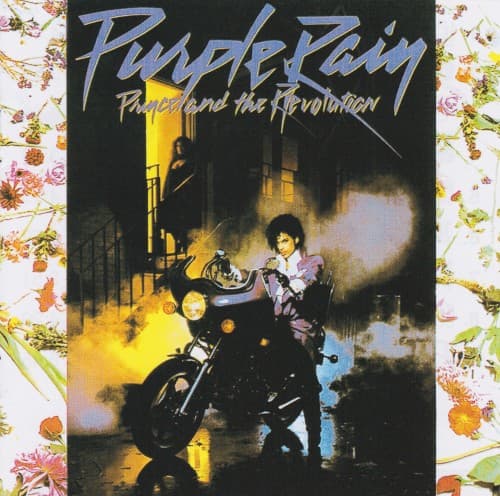
After Purple Rain proved the formula, this album dismantles it: no band, no stadium sound, just Prince alone in the studio playing every instrument and chasing every tangent
The title track and Adore have aged into standards, and the deep cuts like Housequake and Ballad of Dorothy Parker reveal more on each return
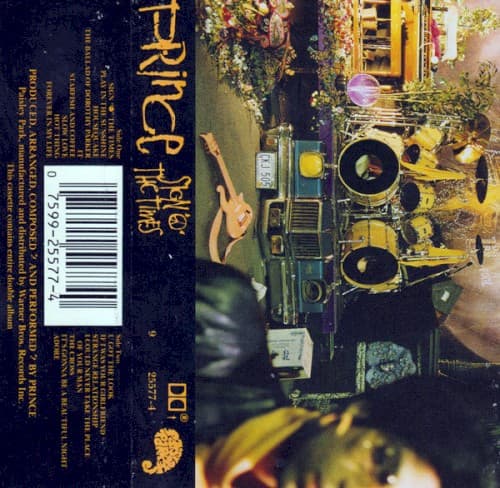
Prince Sign O the Times — The Double Album as One-Man Studio
Three years after Purple Rain built an empire out of arena rock and synth-pop, Prince returned with a double album that sounds like he fired the band, locked himself in the studio and decided to see how many genres he could master in one sitting. Sign O the Times is the auteur move: sixteen tracks, almost every instrument played by Prince himself, no concessions to the stadium or the radio beyond the handful of songs that became hits anyway. The album opens with a drum machine and a newspaper, closes with a sixteen-minute live recording, and in between moves from funk to pop to soul to rock with the ease of someone who has stopped caring whether the audience can follow. The thesis is in the title track: the world is a mess, and the only response is to keep making music. The album proves it by refusing to settle into any one mode long enough to become comfortable.
The stakes are commercial and artistic. Purple Rain sold thirteen million copies and made Prince a crossover star; this album risked that audience by doubling the length, stripping the sound and chasing ideas that do not always resolve into singles. It is not a concept album in the narrative sense, but it works as a sustained argument about what pop can be when the artist controls every part of the process. The production is immaculate, the performances are committed, and the sequencing is deliberate enough that the sprawl feels like a choice rather than a failure of editing. The question is whether the ambition is earned by the music, and whether a double album of this range can hold together as more than a collection of great tracks.
Drum Machines, Drum Kits and Everything Between
The production on Sign O the Times is built on control: Prince plays almost everything himself, and the sound reflects the freedom and the limitations of that approach. The drum programming is precise and cold on the title track, where the Linn LM-1 lays down a skeletal beat that leaves room for the vocal and the lyric. On Housequake the same machine gets pushed into a funky stutter that sounds like a party breaking out in a too-small room. On It's Gonna Be a Beautiful Night the drums are live, recorded with a full band, and the difference is obvious: the track breathes and sweats in a way the programmed songs do not.
The choice is never arbitrary; the sound serves the song, and the songs demand different textures. The songwriting moves across modes without losing coherence. The title track is a stripped funk sketch, barely two minutes long, built on a verse melody that stays in the pocket and a lyric that catalogs disasters with a shrug. Play in the Sunshine is a guitar-pop confection with a chorus that lifts without effort.
If I Was Your Girlfriend is a bedroom soul song, sung in falsetto over a drum machine and a bass that sounds like it was recorded in a closet, and the melody is as sticky as anything Prince has written. I Could Never Take the Place of Your Man is a rock song with a guitar solo that earns its length. The range is wide, but the voice and the melodic sense hold it together: every song sounds like Prince, even when the genre shifts.
The weaknesses are in the pacing and the filler. Slow Love is a ballad that does what ballads do, without adding much to the album's argument. Hot Thing is a funk track that repeats its hook without developing it, and at five minutes it overstays. Strange Relationship has a strong verse but the chorus does not lift enough to justify the repetition.
The album is sixteen tracks long, and not all of them earn their place; the middle stretch sags before The Cross pulls it back. The sequencing is deliberate, but the length asks more patience than the material always rewards. The production cannot fix a weak hook, and a few of these songs have weak hooks.
How Eighty Minutes of Music Holds a Line
The album's sequencing is built on contrast: a two-minute funk sketch next to a six-minute ballad, a rock song next to a soul whisper. The opening run establishes the range early, and the album spends the rest of its length proving that the range is not a gimmick. The pacing works best in the first half, where the short songs keep the momentum and the longer songs feel earned. The middle stretch is where the album tests patience: four songs in a row that are good but not great, and the cumulative effect is a sag.
The recovery is deliberate. The back half delivers the best rock song on the album, with a guitar solo that justifies the five-minute runtime, and it leads into a gospel-rock ballad that sounds like Prince decided to end the album early and then kept going. The live recording works as a victory lap, stretching over sixteen minutes of stage energy. The closing ballad is the final word: a quiet, aching piece that strips the sound back to voice and keys and earns every second of its six-minute length.
The album is too long, but the length is part of the argument: this is what happens when an artist has no one to tell him no, and the result is uneven greatness instead of controlled perfection.
The Album That Proves Purple Rain Was Not the Peak
Sign O the Times ranks just below Purple Rain in the catalog, but it is the more interesting album: less focused, more ambitious, and willing to risk the audience for the sake of the idea. Purple Rain is the crossover achievement; this is the auteur statement, the album that proves Prince did not need the band or the producer or the hit formula to make something that lasts. It is not for casual listeners: the length and the sprawl demand attention, and the weaknesses are real. But for anyone willing to meet the album on its terms, it is a demonstration of range and control that few pop artists have matched. The production is a clinic in how to make a drum machine and a bass guitar sound like a full band, and the songwriting proves that Prince could write a hook in any genre he chose.
Start with the title track, U Got the Look and Adore: those three songs show the range and the quality. If those tracks work, move to If I Was Your Girlfriend and I Could Never Take the Place of Your Man. Skip Slow Love and Hot Thing unless you are committed to hearing the whole album in order. For the next album, go back to Purple Rain if you have not heard it, or forward to Lovesexy if you want to hear where the auteur impulse leads next. Sign O the Times is not perfect, but it is the sound of an artist at the height of his powers, chasing every idea and landing most of them. The ambition is earned.
Track by track
Track Listing
Sign "☮︎" the Times
StandoutThe opening track is a two-minute funk sketch built on a Linn drum pattern and a bassline that stays in the pocket while Prince catalogs disasters: AIDS, gang violence, drug addiction, all delivered in a conversational tone that never tries to solve what it describes. The production is deliberately sparse, just drums, bass, keys and voice, and the space makes the lyric land harder. The melody is minimal, almost spoken, but the chorus hook is sticky enough to carry the song. It works as an opener because it establishes the album's range immediately: this is not Purple Rain, and it is not trying to be. The song became a hit anyway, proof that Prince could strip the sound down and still connect.
Play in the Sunshine
SolidA guitar-pop song with a chorus that lifts on the first listen, bright and major-key in a way that contrasts deliberately with the title track. The production is fuller here, with layered guitars and a drum pattern that pushes the tempo, and the vocal is high and sweet. It feels like a palate cleanser after the darkness of the opener, and it works in that role without adding much to the album's argument. The hook is strong but the song does not develop beyond it.
Housequake
StandoutA funk track built on a drum machine stutter and a bassline that locks into a groove and refuses to move. The production is dense, with horns and keys stacked over the rhythm, and the vocal is half-sung, half-chanted, more about rhythm than melody. The hook is the beat itself, and the song works as a dance track without trying to be anything more. It is one of the album's most propulsive moments, proof that Prince could program a drum machine to sound as funky as a live kit. The track does not overstay; it makes its point and exits.
Ballad of Dorothy Parker
SolidA strange, dreamy track that floats on a synth pad and a drum pattern that feels like it is underwater. The vocal is conversational, almost spoken, and the melody is minimal, more about mood than hooks. The production is hazy and deliberately lo-fi, with a sound that feels like a demo that Prince decided to leave unpolished. The song is a narrative sketch, a story about a woman in a restaurant, and it works as atmosphere more than as a standout track. It is one of the album's odder moments, and it benefits from its brevity.
It
SolidA funk workout built on a bass riff that repeats for five minutes while Prince layers vocals, horns and keys over the top. The production is busy, almost chaotic, with every element fighting for space in the mix, and the result is a track that feels like a jam session that went on too long. The hook is the bass riff itself, and it is strong enough to carry the first two minutes, but the song does not develop beyond the groove. It works as a dance track but it is one of the album's weaker moments, more filler than statement.
Starfish and Coffee
SolidA bright, childlike pop song with a melody that sounds like a nursery rhyme and a lyric about a girl named Cynthia Rose who brings starfish and coffee to school. The production is clean and simple, with a drum machine, bass and keys supporting a vocal that is high and sweet. The song is charming in its own right, but it feels like an interlude, a moment of lightness that does not add much to the album's argument. It is short enough that it does not overstay, and the melody is sticky enough to work on its own terms.
Slow Love
SolidA slow jam built on a quiet groove and a vocal that stays in the lower register, crooning over a bassline and a synth pad. The production is smooth and polished, and the melody is pretty, but the song does not take any risks. It is competent adult contemporary soul, and it works as a breather in the album's sequence, but it is filler: the kind of track that any number of artists could have made in the late eighties. Prince has written better ballads, and the album has better ballads later.
Hot Thing
WeakA funk track with a bass riff that repeats for over five minutes and a vocal that chants the hook without developing it. The production is dense, with layers of synths and percussion, but the song does not go anywhere: it establishes the groove in the first minute and then repeats it for four more. The hook is catchy on the first listen but wears thin on repeat, and the track feels like it could have been cut to three minutes without losing anything. It is one of the album's clearest examples of a good idea stretched past its natural length.
Forever in My Life
StandoutA gospel-inflected ballad with a vocal that moves from a whisper to a shout and a melody that builds gradually over a simple chord progression. The production is spare, just keys, bass and drums, and the space lets the vocal performance carry the song. The lyric is a devotional, a promise of commitment, and the melody earns the sentiment without tipping into cliché. It is one of the album's strongest ballads, proof that Prince could write in the church mode without losing his own voice. The track benefits from its restraint; the arrangement never overplays.
U Got the Look
StandoutA rock-pop hybrid with a guitar riff that drives the song and a vocal melody that jumps between registers. The production is fuller than most of the album, with live drums, guitars and a guest vocal that adds energy to the chorus. The hook is immediate, the kind of chorus that works on the first listen and does not fade on repeat, and the song became one of the album's biggest hits. It is one of the few tracks that could have fit on Purple Rain, but it works here as a reminder that Prince had not abandoned the stadium sound entirely, just chosen when to deploy it.
If I Was Your Girlfriend
StandoutThe album's strangest and best song, a bedroom soul track sung in falsetto over a drum machine and a bass that sounds like it was recorded in a closet. The production is deliberately lo-fi, with a thin, claustrophobic sound that makes the vocal feel intimate and voyeuristic. The melody is circular, almost hypnotic, and the lyric is a series of questions about intimacy and boundaries that never resolve. The song works because the production and the performance match the discomfort of the lyric: this is not a love song, it is a song about the fantasy of erasing boundaries, and the music sounds as uneasy as the idea. It is one of Prince's best vocal performances, and one of the album's clear peaks.
Strange Relationship
SolidA funk-rock track with a verse that works and a chorus that does not quite lift. The production is busy, with guitars, keys and drums fighting for space, and the vocal is half-sung, half-shouted. The hook is repetitive without being sticky, and the song feels like a sketch that needed another draft. It is not bad, but it is one of the album's weaker moments, the kind of track that could have been cut without losing much. The groove is solid but the song does not develop beyond it.
I Could Never Take the Place of Your Man
StandoutThe album's best rock song, built on a guitar riff that drives the verse and a chorus that lifts without effort. The production is clean and direct, with live drums, bass and guitars, and the vocal is strong and clear. The song is a narrative, a story about a one-night stand that does not turn into more, and the lyric is specific enough to make the scenario feel real. The guitar solo in the final two minutes is the album's longest, and it earns every second: Prince shreds without showboating, and the solo serves the song instead of taking over. It is one of the album's clearest highlights, proof that Prince could write a rock song as strong as anything on Purple Rain.
The Cross
StandoutA gospel-rock ballad that builds slowly over five minutes, starting with a quiet vocal and keys and ending with a guitar solo that sounds like a sermon. The production is deliberate, with each element entering at the right moment, and the vocal performance moves from a whisper to a howl without losing control. The lyric is religious in imagery but not in doctrine, more about faith as a feeling than as a set of beliefs, and the melody supports the intensity without tipping into bombast. It is one of the album's most ambitious tracks, and it works because the performance and the production earn the scale. The guitar solo at the end is cathartic, a release after eighty minutes of tension.
It's Gonna Be a Beautiful Night
StandoutA sixteen-minute live recording that works as a victory lap, with a full band, horns, crowd noise and a setlist of snippets and jams. The production is raw, with a mix that sounds like a board tape, and the energy is high. The track is not a song so much as a document of a performance, and it works in that role: proof that Prince could lead a band and command a stage, even on an album that mostly strips the band away. It is too long to work as anything other than a closing statement, but in that role it succeeds. The track is a reminder that the auteur can also be a bandleader when he chooses.
Adore
StandoutThe album's final word, a quiet ballad that strips the sound back to voice, keys and bass and lets the melody and the lyric carry the weight. The production is minimal, with a synth pad that floats under the vocal and a bassline that barely moves, and the vocal performance is aching and controlled. The melody is circular, almost hypnotic, and the lyric is a devotional that earns its sentiment through specificity and restraint. The song is six minutes long, and every second is earned: the arrangement never overplays, the vocal never pushes too hard, and the melody never wears thin. It is one of Prince's best ballads, and it works as a closing track because it answers the sprawl of the album with focus and intimacy. After sixteen tracks and eighty minutes, Adore is the proof that the auteur knows when to stop.