From Boy Band Blueprint to Solo Architect
Harry Styles emerged from One Direction's 2016 dissolution not as a manufactured pop product seeking reinvention, but as an artist who'd been quietly studying classic rock architecture while the cameras followed elsewhere. Born in Redditch, England in 1994, Styles spent his boy band years absorbing influences that had nothing to do with the bubblegum precision that made him famous. His solo career, launched in 2017, revealed an artist more interested in Fleetwood Mac's emotional sprawl and David Bowie's genre fluidity than maintaining the polished pop machinery that built his initial fanbase.
What distinguishes Styles from his peers isn't virtuosic vocal ability or groundbreaking production innovation—it's his willingness to prioritize feel over perfection. His three solo albums trace a clear trajectory from tentative classic rock homage to confident pop-rock synthesis, each release shedding more of the expected and embracing more of the eccentric. By the time Harry's House arrived in 2022, Styles had established himself as pop's most visible ambassador for 70s album rock aesthetics, repackaged for streaming-era consumption.
His cultural footprint extends beyond music into fashion, film, and a carefully cultivated public persona that challenges traditional masculinity without didacticism. This broader cultural positioning has made his artistic choices feel like statements even when they're simply musical preferences. The tension between his massive commercial reach and his relatively adventurous sonic palette defines his unique position in contemporary pop.
Retro Soul Filtered Through Modern Pop Production
Styles' sonic signature is built on vintage textures processed through contemporary clarity. His voice—a warm, mid-range instrument with occasional falsetto flights—sits in mixes that favor analog warmth over digital precision. Reverb-drenched guitars, Wurlitzer electric piano, and live drum kits dominate his arrangements, creating a sonic palette that intentionally evokes 1970s Laurel Canyon and British glam rock. What prevents this from feeling like costume drama is the underlying pop structure: verses that establish melody quickly, choruses engineered for memorability, and production restraint that never fully commits to either pastiche or modernization.
Vocally, Styles works within a comfortable range rather than pushing technical boundaries. His delivery prioritizes emotion and phrasing over power, often pulling back where other pop vocalists would push forward. This creates intimacy even on arena-sized productions. Listen to how he handles the verses on tracks from Harry's House—the microphone feels close, the performance conversational, even as the arrangement builds toward festival-stage grandeur. His British accent surfaces selectively, adding character without overwhelming the melodic line.
Production-wise, Styles has worked primarily with Kid Harpoon (Tom Hull) and Tyler Johnson, a partnership that's defined his solo sound. Their approach favors live instrumentation over programming, layered vocal harmonies over single-line hooks, and space over density. The mix philosophy leans warm rather than bright, privileging low-mid frequencies that give his records a lived-in quality. This sonic approach positions Styles adjacent to rather than inside mainstream pop—close enough to access pop radio, distinct enough to feel like an alternative.
Three Albums, Three Distinct Identities
Styles' self-titled 2017 debut announced his intentions clearly: this would not be a continuation of One Direction's teen-pop precision. Recorded primarily in Jamaica with producer Jeff Bhasker, the album leaned into classic rock tropes with almost academic devotion. "Sign of the Times" opened with six minutes of piano-driven prog-pop that could've soundtracked a 1973 concept album. "Kiwi" delivered garage rock intensity. "Sweet Creature" offered acoustic vulnerability. The album's commercial success—debuting atop charts globally—proved that a massive existing fanbase would follow him into significantly different territory, but the creative identity still felt borrowed rather than owned.
Fine Line arrived in 2019 with greater confidence and tighter songwriting. Working extensively with Kid Harpoon and Tyler Johnson, Styles refined his retro influences into something more distinctly his. "Watermelon Sugar" became his signature hit—a sun-soaked funk-pop confection that radio embraced despite its 70s architecture. "Adore You" paired yacht rock smoothness with modern pop momentum. The album's title track stretched past six minutes of psychedelic exploration, proving Styles wasn't interested in playing it safe even as his commercial stock rose. Fine Line sold over five million copies globally and established Styles as a legitimate album artist, not just a singles-driven pop star.
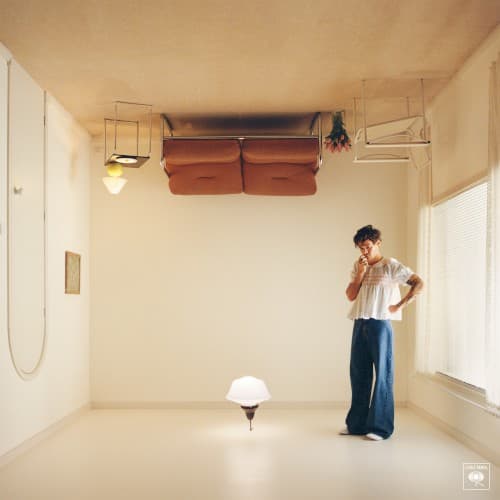
Harry's House (2022) marked his most cohesive artistic statement. The production palette narrowed—more synthesizers, more space, less obvious guitar heroics—while the songwriting sharpened. The album's 13 tracks flow as a complete listen, a rarity in playlist-era pop. Lead single "As It Was" became his biggest hit, a new wave-influenced track built on synth arpeggios and melancholic nostalgia that topped charts worldwide for months. The album showcased growth in restraint rather than expansion—fewer ideas executed with greater conviction. Our review noted the album's "emphasis on texture and mood over hooks" while praising its "confident maturity," awarding it a 7.3 that acknowledged both its artistic coherence and its occasional tendency toward tasteful predictability.
Throughout this trajectory, Styles has maintained complete creative control while leveraging major label resources—a balancing act that few artists manage successfully. His ability to operate within the pop machine while maintaining artistic credibility speaks to both his commercial leverage and his team's strategic intelligence. He's never strayed far enough from accessibility to alienate casual listeners, but he's never pandered to trends either.
His live performances evolved from tentative solo debuts to confident arena spectacle. The Love On Tour production elevated his catalog with extended arrangements, expanded band instrumentation, and staging that emphasized connection over spectacle. His concerts became known for celebratory atmosphere and audience interaction rather than choreographed precision—another signal of his distance from boy band origins.
Redefining Male Pop Stardom for a New Generation
Styles' most significant contribution may be atmospheric rather than musical—he's recalibrated what male pop stardom can look like in the 2020s. His embrace of gender-fluid fashion, his refusal to define his sexuality in interviews, and his general comfort with ambiguity have made him a figurehead for younger audiences seeking representation beyond traditional masculine archetypes. This cultural positioning enhances rather than overshadows his music, creating a complete artistic package that resonates across identity lines.
Musically, his influence is already visible in emerging artists who blend retro aesthetics with modern pop accessibility. His success proved that streaming-era audiences would embrace album-oriented rock structures if packaged with enough melodic immediacy and visual appeal. He's created space for guitar-driven pop at a moment when production trends favored electronic minimalism and hip-hop hybridization. Whether this represents a lasting shift or a temporary detour remains to be seen, but his commercial dominance made the path viable for others.
Compared to his contemporaries like Beyoncé's genre-redefining experimentation or Rihanna's cultural omnipresence, Styles operates at a different register—less revolutionary, more evolutionary. His strength lies in synthesis rather than innovation, in making the past feel present rather than inventing the future. This approach has limitations—his albums rarely surprise, and his artistic growth follows predictable arcs—but it's also built a sustainable career model that values longevity over flash. Whether his catalog will endure beyond this moment depends on whether his taste-making proves timeless or simply timely.