The scorecard
7.5/10 · Great
- Songwriting25%
- 7.5
- Production25%
- 8.5
- Performance15%
- 6.5
- Cohesion15%
- 7.0
- Originality10%
- 7.0
- Replay value10%
- 8.0
The title track and 'Material Girl' built hooks designed to outlast the singles chart, though 'Stay' and 'Shoo-Bee-Doo' feel padded out with repetition instead of development.
Nile Rodgers replaces the thin synth arrangements of the debut with live drums from Tony Thompson and bass from Bernard Edwards, giving every track physical weight and room to move.
Madonna stays mostly in her breathy upper register; the performance works when she leans into the irony on 'Material Girl' but sounds insubstantial next to Rose Royce's original on 'Love Don't Live Here Anymore'.
The sequencing front-loads the hits and back-loads the filler, and at 39 minutes the album sags in the final third when 'Shoo-Bee-Doo' and 'Stay' repeat their hooks without earning the length.
The fusion of Chic's disco-funk precision with new wave synth-pop was timely rather than pioneering, but the choice to center irony and self-awareness in pop songwriting was still unusual for 1984.
The two lead singles remain inescapable, and the Rodgers production has aged far better than most mid-80s dance-pop, but the ballad and the album tracks rarely justify a return.
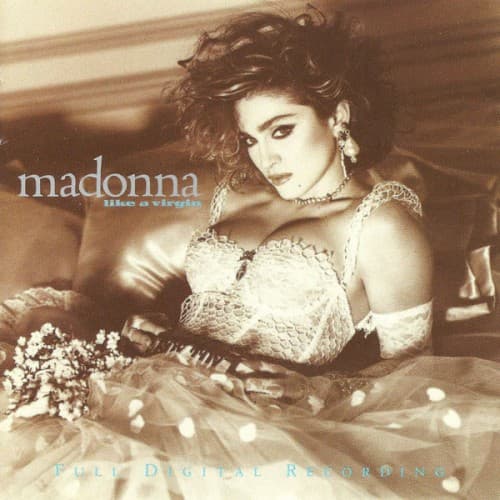
Madonna Like a Virgin — When the Singles Were Better Than the Album
Like a Virgin succeeds as a delivery system for two of the most durable pop singles of the 1980s and fails as a front-to-back album experience. The title track and Material Girl work because they are built around hooks designed to outlast the chart cycle and because Madonna sings them with just enough irony to make the provocation feel intentional rather than accidental. The rest of the record is competent dance-pop arranged by a producer who understood how to make a groove land on a club floor, but it is also padded with album tracks that repeat their central ideas without developing them and a ballad that Madonna was not yet equipped to sell. The thesis is that Nile Rodgers gave Madonna a sound that worked for singles but could not carry nine tracks, and that the album's reputation rests almost entirely on the two songs that became cultural touchstones rather than on the quality of the whole.
The stakes in 1984 were whether Madonna could repeat the success of her debut without being dismissed as a one-hit wonder. She chose Rodgers because she wanted a producer who could make her records sound fuller and more physical than the thin, sequenced arrangements on her first album. Rodgers delivered that sound by replacing drum machines with Tony Thompson and synth bass with Bernard Edwards, and the result was a record that sounded bigger and more expensive than anything else on dance radio at the time, rivaling even Michael Jackson's production standards. The problem was that only two of the songs were strong enough to justify the upgrade. The rest of the album coasts on the production without offering hooks or ideas that demand attention, and the sequencing makes the imbalance obvious by clustering the singles at the front and leaving the filler to pile up at the back.
How Chic Rhythm Rescued Thin Songwriting
Nile Rodgers understood that Madonna's demos, co-written with Stephen Bray, were too similar to her debut: sequenced, synthesizer-led tracks that worked in clubs but sounded thin on radio. He stripped out the drum machines and brought in the rhythm section from Chic—Bernard Edwards on bass, Tony Thompson on drums, himself on guitar—and recorded the album live at Power Station with a Sony 3324 digital tape deck that engineer Jason Corsaro believed was the future of recording. The result was a set of arrangements that gave every track physical weight. Thompson's drums on the title track hit harder than a drum machine ever could, and the bass-line rework of the Four Tops' I Can't Help Myself gave the song a melodic anchor that the lyric alone could not provide. Edwards' bass on Material Girl turned a satire of materialism into a groove that worked whether or not you caught the joke, and Rodgers' pizzicato guitar on Angel added a nervous energy that the ascending hook needed to stay airborne.
The production is consistent across the album, which means that even the weaker tracks benefit from the same attention to rhythm and space. Dress You Up has a nu-disco beat that could carry a better song, and the drum programming on Stay keeps the triple rhythm tight even when the hook wears thin from repetition. Robert Sabino's keyboard work on the Prophet-5 and Rhodes added texture without cluttering the mix, and Rodgers' decision to record Madonna's vocals in a small wooden room at the back of the studio gave her voice clarity and presence even when the performance itself was limited. The problem is that the production cannot fix songs that do not have enough material to sustain their running times. Shoo-Bee-Doo begins as a stripped-down piano ballad and then shifts into a doo-wop pastiche that repeats the same melodic phrase for over five minutes without developing it. Over and Over is built around a single hook about determination that the production makes sound more substantial than it is, and Stay repeats the phrase "stay, darling" until the repetition becomes a liability rather than a feature.
The one track where the songwriting matches the production is Into the Groove, which was not part of the original album but was added to the 1985 international reissue. Written and produced by Madonna and Bray at Sigma Sound Studios, the track has a bumping synth-bass line and a double-tracked vocal that feels more confident than anything else on the record. The lyrics about dancefloor escapism are specific enough to feel lived-in, and the arrangement leaves room for the hook to breathe. It is the clearest example of what the album could have been if the songwriting had kept pace with Rodgers' production. The ballad Love Don't Live Here Anymore, a cover of a Rose Royce track, shows the opposite problem: the arrangement is lush and soulful, with acoustic guitar and synth strings that build into a climax, but Madonna's vocal is breathy and angsty where the song needs power and control. She strains for the final note and ends up panting for breath, which works as a kind of performance art but does not sell the emotion the lyric is asking for.
When the Hits Run Out Halfway Through
The album front-loads the singles and back-loads the filler, which makes the quality drop-off feel more pronounced than it would have if the sequencing had spread the strong tracks across both sides. The first stretch delivers three of the album's four singles in a row, building momentum that carries through the opening ballad even though it's the weakest of the promoted tracks. The shift in tempo and tone provides contrast that disguises the material's limitations.
The problem emerges on side two, which begins with a solid dance track but not a peak, then immediately sags into five minutes of doo-wop pastiche that repeats the same melodic idea without variation. The closing run relies on repetition to fill out running times rather than developing hooks. The effect is that the album feels like two singles surrounded by filler, which is a fair assessment of the material but a weakness in how it is presented.
The international reissue improves the sequencing by placing a strong track in the middle of side two, but it also makes the original album's weaknesses more obvious by comparison. The pacing issue is less about length—at 39 minutes the album is shorter than most pop records of the era—and more about the fact that half of the tracks do not justify their inclusion. The album would have been stronger as a six-track EP built around the singles and the three or four tracks that could stand next to them, but in 1984 the format required nine songs and Rodgers made them all sound as good as the production could make them. The result is an album that works as a demonstration for two great singles and a reminder that great production cannot fix weak songwriting.
A Singles Album That Defined an Era by Accident
Like a Virgin ranks below Ray of Light in Madonna's catalog because Ray of Light was conceived as an album with a unified sound and a sustained argument, whereas Like a Virgin was a collection of singles and filler that happened to produce two songs that became cultural events. The title track and Material Girl are essential pop history, and the Nile Rodgers production set a new standard for how dance-pop could sound on mainstream radio, but the album as a whole is a mixed set of tracks that coasts on the strength of its two best songs. It is a record for listeners who want to hear how Madonna and Rodgers built the sound that would dominate the rest of the decade, and for anyone who wants to understand why the title track became her first number-one single and her first signature song. It is not a record for listeners who expect every track to justify its place or who want an album that works as a sequence rather than a playlist.
The album has aged better than most mid-80s dance-pop because the live rhythm section keeps the tracks from sounding as dated as the drum machines and sequenced synths that defined the era, but the vocal performances and the weaker songwriting have not held up as well. Madonna's breathy delivery works on the singles because the irony and the hooks do most of the work, but on the album tracks the performance feels thin and the lyrics feel underwritten. Start with the title track and Material Girl, then move to Into the Groove if you can find the international reissue, and skip the rest unless you are a completist. For what to hear next, go to Ray of Light to hear Madonna working with a producer who understood how to build an album, or go back to her debut to hear the raw energy that Rodgers polished into a radio-ready sound. Like a Virgin is the sound of an artist and a producer who understood how to make singles that would last, but not yet how to make an album that would justify the journey from start to finish.
Track by track
Track Listing
Material Girl
StandoutA synth-pop satire of 1980s materialism that works because the groove is strong enough to survive whether or not the listener catches the irony. Madonna sings in a shrill voice about rejecting men who cannot provide wealth and luxuries, and the robotic male voice repeating "living in a material world" reinforces the joke. The hook is designed to be inescapable, and Bernard Edwards' bass-line and Tony Thompson's drums give the track physical weight that most synth-pop of the era lacked. The production is dense but not cluttered, and the melody is simple enough to stick after one listen. The song became an icon because it sounds like a critique and a celebration at the same time, and because the arrangement makes the satire feel intentional rather than accidental.
Angel
SolidA new wave track built on an ascending three-chord hook that serves for both the verse and the refrain. The song opens with twinkling synths and giggles, and Nile Rodgers provides pizzicato guitars that add nervous energy. The hook is strong enough to carry the track, but the lyric about heavenly love is thin and the performance does not add much character. The track works as a single because the production makes it sound bigger than it is, but it does not justify repeated listens.
Like a Virgin
StandoutA dance-rock track that became Madonna's first number-one single because the hook is simple, durable and built around a phrase that sounded provocative in 1984. The bass-line reworks the Four Tops' I Can't Help Myself, and Tony Thompson's drums give the track far more wallop than a drum machine ever could. Madonna sings in a "little girl lost" voice about how true love can make a girl feel shiny and new, and the performance works because she leans into the irony just enough to make the provocation feel intentional. The production is full and physical, and the arrangement leaves room for the hook to breathe. The song has aged better than most mid-80s pop because the rhythm section keeps it from sounding as dated as the synth-led tracks that dominated the era, and because the hook is strong enough to survive the cultural baggage that has accumulated around it.
Over and Over
SolidA track about determination and picking yourself up from disappointments, built around the refrain "I get up again, over and over." The production is sparse, featuring silky guitar and not much else, and the hook is repeated enough times to fill out the running time without developing the idea. The track is competent but forgettable, and the lyric does not offer enough specificity to make the message land.
Love Don’t Live Here Anymore
WeakA cover of a Rose Royce track that showcases the album's weaknesses more than its strengths. The arrangement is lush and soulful, with acoustic guitar and synth strings that build into a climax, but Madonna's vocal is breathy and angsty where the song needs power and control. She sings in a tearful tone and belts the final "anymore" until she is literally panting for breath, which works as a kind of performance art but does not sell the emotion the lyric is asking for. The track is the only ballad on the album, and it makes the case that Madonna was not yet equipped to handle material that required vulnerability and vocal strength. The production is strong enough to make the track listenable, but the performance is a liability.
Dress You Up
SolidA drum machine-driven dance song with a nu-disco beat that could carry a better lyric. Madonna sings about clothes she would like to drape over her lover so that she can cover him with "velvet kisses," and the hook is built around a two-chord verse that repeats without much variation. The track features a guitar solo on the bridge that adds some energy, and the production is dense and full, but the songwriting is thin and the lyric feels underwritten. The track works as a single because the beat is strong and the hook is catchy enough to stick, but it does not justify repeated listens.
Shoo-Bee-Doo
WeakA five-minute track that begins as a stripped-down piano ballad and then shifts into a doo-wop pastiche reminiscent of the Shirelles and the Ronettes. The lyric deals with relationship problems and Madonna trying to get through to a confused lover, but the melody repeats the same phrase for the entire running time without developing it. The production makes the track sound bouncy and full, but the songwriting does not justify the length and the track feels like filler.
Pretender
WeakA synth-pop track about seduction and insecurity, built around a refrain that leads into the opening verse. The lyric deals with letting things happen too fast with a man who is not what he seems, but the hook is not strong enough to carry the track and the performance does not add much character. The production is competent, but the track feels like an album track designed to fill out the running time rather than a song that demanded inclusion.
Stay
WeakA closing track that features a fast triple rhythm with synths and a hook built around the phrase "stay, darling" repeated over and over. The track includes the noise of someone slapping a microphone and a spoken sequence toward the end, but the repetition wears thin and the song does not develop its central idea. Filler.