The scorecard
8.1/10 · Great
- Songwriting25%
- 8.0
- Production25%
- 9.0
- Performance15%
- 8.5
- Cohesion15%
- 6.5
- Originality10%
- 7.5
- Replay value10%
- 8.0
The hooks are patient and refined—'Your Love Is King' and 'Smooth Operator' build their choruses through restraint rather than volume—but half the album runs long without earning the length.
Robin Millar's analog recording captures the warmth of real piano and Fender Rhodes in seamless sync, and the lack of automation forces deliberate choices that give even six-minute tracks like 'Cherry Pie' textural depth instead of clutter.
Adu's voice is controlled to the point of aloofness, turning what could be standard torch songs into something measured and adult—the deliberate coolness on 'Hang On to Your Love' makes the plea feel earned rather than desperate.
The first four tracks set a consistent nightclub mood, but the sequencing sags through the middle stretch where 'When Am I Going to Make a Living' and 'Cherry Pie' overstay their welcome, and the album runs ten minutes longer than its best ideas.
The fusion of Steely Dan's jazz-rock precision with quiet storm atmospheres and British sophisti-pop polish was new enough in 1984 to spawn a wave of imitators, though the cover of 'Why Can't We Live Together' and the reliance on familiar soul forms keep it from feeling radical.
The two singles hold up as foundational sophisti-pop, and the production remains a reference for warmth in the digital era, but the album tracks that work as mood pieces on first listen reveal their thinness on repeat.
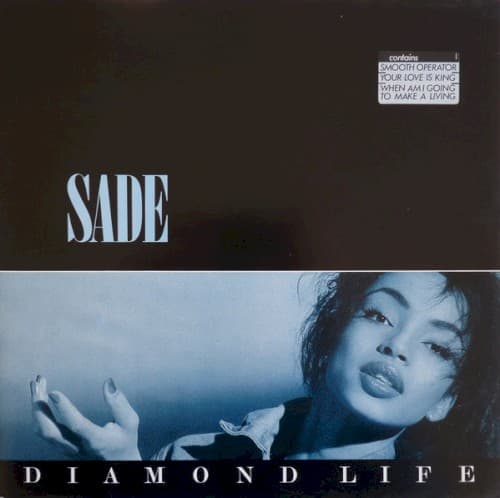
Sade Diamond Life — The Debut That Made Restraint a Commercial Formula
Diamond Life succeeded because it solved a problem the singles market had in 1984: how to make adult contemporary soul feel like an event without resorting to the synthesizer excess dominating British pop or the overproduced bombast of American R&B. Sade Adu and her band—guitarist and saxophonist Stuart Matthewman, bassist Paul Denman, drummer Paul Anthony Cook—recorded fifteen songs in six weeks at Power Plant Studios with producer Robin Millar, then selected nine that shared a consistent temperature. The album opens with its thesis: the slow build and patient groove of 'Smooth Operator', a track that proved you could score a top-five US hit without a key change or a climax. The rest of Diamond Life attempts to sustain that mood across forty-four minutes, and the attempt mostly works because the production is immaculate and Adu's delivery never oversells. The risk is that restraint as a house style leaves little room for variation, and by the back half the album starts to feel like expensive wallpaper.
The commercial stakes were high. Epic signed Adu in October 1983 after her solo performances of 'Smooth Operator' in Pride's sets attracted label interest, and the UK release in July 1984 was preceded by two charting singles and heavy press coverage. The album needed to justify the campaign, and it did: it peaked at number two in the UK, won the 1985 Brit Award for Best British Album, eventually sold over ten million copies worldwide, and became the template for a generation of neo-soul and quiet storm acts. The question is whether the album itself justifies that influence, or whether two or three exceptional songs carried a mood piece that runs longer than its ideas.
The Sound of Six People at the Mixing Desk
The production is what separates Diamond Life from the sophisti-pop records that followed it. Millar recorded in 1983 before studio automation, which meant every effect and level change required a human hand. For 'Cherry Pie', the band had six people at the mixing desk simultaneously, one handling echo, another delay, another a fader, and Millar edited between the different takes. The result is a record that sounds analog in the best sense: warm, dimensional, responsive to the players rather than built in a grid. The piano and Fender Rhodes on 'Your Love Is King' were synced manually, a painstaking process that gives the track a lived-in quality no MIDI sequencer could replicate. The brass enters sparingly, the drums sit in the pocket without fills for the sake of fills, and the guitar work from Matthewman is so understated it takes three listens to notice how much space it creates.
The songs were rehearsed in detail before recording, which shows in the tightness of the arrangements but also in a certain stiffness. Everything is controlled, nothing is left to chance, and the band's collective approach means no one element dominates. That discipline serves the singles: 'Smooth Operator' builds its hook on a bassline and a saxophone motif that never rush, and 'Your Love Is King' lets the chorus arrive without fanfare, trusting the melody to do the work. But the same approach flattens the album tracks. 'I Will Be Your Friend' and 'Sally' are competent mid-tempo soul, well played and well recorded, but neither offers a hook or a turn strong enough to justify their five-minute runtimes. The writing is consistent in craft but narrow in range—every song is a variation on the same jazzy bassline and muted rhythm, and by track seven the template starts to feel like a limitation.
Adu's vocal is the album's defining instrument and also its most divisive element. She sings with what critics at the time called deliberate iciness: aloof, deadpan, emotionally measured even on songs about longing and heartbreak. On 'Hang On to Your Love', that coolness makes the plea feel adult rather than desperate, and on 'Smooth Operator' it matches the lyric's detachment. But the same delivery on 'Frankie's First Affair' and 'When Am I Going to Make a Living' robs those songs of urgency, and the lack of dynamic range means the album has one emotional register from start to finish. The sophistication is real, but so is the monotony. Millar's production gives the band room to breathe, but Adu never raises her voice enough to make the breath feel necessary.
A Front-Loaded Album That Runs Out of Moves
The sequencing front-loads the strengths and buries the weaknesses in the middle, which works as a listening strategy but exposes the thinness of the material. The first stretch establishes the mood and delivers the hooks, and if the album ended at eighteen minutes it would be airtight. Instead it continues for another twenty-six, and the middle section sags under its own length.
The middle portion includes a one-idea song written on the back of a cleaning ticket after Adu had no money for her dry cleaning, running three and a half minutes without development. Another track stretches to six minutes of groove with no chorus, saved only by the production detail that makes the extended runtime bearable rather than essential. The first album track recorded sounds like exactly that: a sketch that was never sharpened into a song.
The pacing picks up with 'Why Can't We Live Together' at the close, which benefits from being someone else's composition and from the five-minute runway the original provides. But by that point the album has spent too long coasting on atmosphere, and the closing track feels like a relief rather than a culmination. The decision to include nine tracks instead of cutting to seven suggests the label wanted a full-length product to match the campaign, but the album would have been stronger as a tight thirty-minute statement. The length is not earned, and the sequencing cannot hide it.
The Blueprint for a Genre That Outgrew the Album
Diamond Life ranks as one of the most influential debut albums of the 1980s, and the production remains a reference point for warmth and analog craft in an era dominated by digital gloss. Its influence on neo-soul acts like D'Angelo, Jill Scott and Alicia Keys is audible in the preference for restraint over flash and in the willingness to let a groove sit without a payoff. But influence and quality are not the same measure, and the album itself is a case of two or three exceptional songs establishing a template that the rest of the tracklist cannot quite fill. The first half is essential listening for anyone interested in sophisti-pop or quiet storm, and 'Smooth Operator' and 'Your Love Is King' justify the reputation on their own. The back half is filler dressed in immaculate production, and the monotony of Adu's delivery becomes a liability over forty-four minutes.
This is an album for listeners who want adult contemporary soul that sounds expensive and lived-in, and who value mood and texture over hooks and variety. It is not for anyone expecting dynamic range or surprises—every song operates in the same emotional key, and the sequencing does not offer relief. Start with 'Smooth Operator' and 'Your Love Is King', then 'Hang On to Your Love' if the first two connect. If those three tracks feel like enough, the album has given you what it does best. If you want more, Promise, the 1985 follow-up, tightens the songwriting and cuts the runtime. Diamond Life is the foundation, but it is not the peak.
Track by track
Track Listing
Smooth Operator
StandoutThe opening track is the album's thesis and its best song, a five-minute groove built on a bassline that never rushes and a saxophone motif from Matthewman that repeats without wearing out. The hook is patient to the point of understatement—Adu sings the title as a statement of fact rather than a chorus, trusting the melody to carry the weight—and the arrangement supports the restraint with subtle brass and Rhodes accents that enter and exit without announcement. The lyric about a charming, emotionally unavailable man matches the cool delivery, and the production gives every element room to breathe without ever feeling sparse. The song combined rhythm and blues, jazz, adult contemporary, pop and dance in a way that sounded new in 1984, and it remains the clearest example of what the band could do when every piece locked in. It peaked at number five on the Billboard Hot 100 and topped the Adult Contemporary chart, proving that restraint could sell as well as bombast. The album's high point and the reason the rest of it was given a chance.
Your Love Is King
StandoutThe second single and the album's other essential track, a smooth ballad that builds its hook on Adu's controlled phrasing and a saxophone solo from Matthewman that arrives exactly when the song needs it. The Rhodes and piano were synced manually in the studio, a painstaking process that gives the track a warmth no digital production could match, and the restraint in the arrangement lets the melody do the work without distraction. The chorus lifts without a key change or a volume increase, trusting the writing to earn the moment, and Adu's delivery stays measured even as the lyric leans into longing. The song peaked at number six in the UK and became a template for the quiet storm style that Sade would refine over the next decade. It holds up as a reference for how to write a ballad that sounds expensive without overproduction, and it justifies the hype that preceded the album's release. One of the two tracks that carry the record.
Hang On to Your Love
StandoutA five-minute plea that benefits from Adu's aloof delivery, which makes the appeal feel adult rather than desperate. The bassline and drums sit in a relaxed groove, the brass enters sparingly, and the song takes its time reaching the hook, trusting the atmosphere to hold interest. The restraint works here because the lyric matches the mood—this is not a breakup song but a negotiation, and the measured vocal sells the stakes without melodrama. The production is immaculate, with the same analog warmth that defines the album, but the song runs a minute longer than it needs to and the groove does not develop enough to justify the length. Released as the fourth single overall and the first US single in September 1984, it charted modestly and remains a solid album track that works better in sequence than on its own. Not essential, but strong enough to sustain the momentum from the first two tracks.
Frankie’s First Affair
SolidA mid-tempo track about infidelity that coasts on the production's polish without offering a hook strong enough to anchor it. The groove is clean, the arrangement is tasteful, and Adu's vocal is controlled as always, but the song runs four and a half minutes without a memorable chorus or a turn that justifies the runtime. The lyric is observational rather than emotional, and the detached delivery that worked on the singles here feels like a mismatch—the subject matter would benefit from more urgency, but the band's house style does not allow for it. The bassline and Rhodes carry the track, and the brass adds texture, but by the second verse it is clear the song has one idea stretched to album length. A competent piece of sophisti-pop that would have been stronger at three minutes, and the point where the sequencing starts to reveal the album's limitations. Filler dressed in expensive production.
When Am I Going to Make a Living
WeakWritten on the back of a cleaning ticket after Adu had no money to pay for her dry cleaning, and the anecdote is more interesting than the song. The title is the hook and the question is the lyric, but the track does not develop the idea beyond the first verse, and the three-and-a-half-minute runtime feels padded. The groove is pleasant, the production is clean, and the bassline does its job, but the song has no bridge, no climax, and no reason to exist beyond filling out the tracklist. Released as the second UK single in May 1984, it charted at number 36 and fared better in the Netherlands, peaking at number 12, but the commercial performance does not make the song any stronger. The weakest of the album's singles and the first track that sounds like an obligation rather than an idea. Skip it.
Cherry Pie
SolidSix minutes of groove with no chorus, saved only by the production detail that makes the extended runtime bearable rather than essential. The band had six people at the mixing desk for this track, each handling a different effect or level change, and Millar edited between the different mixes to create a textured, dimensional sound. The process is admirable and the result is sonically impressive, but the song itself is a sketch—a bassline, a rhythm, some Rhodes accents, and Adu singing a melody that never resolves. The lack of a hook might work as an interlude, but at six minutes the track tests patience, and the sequencing does it no favors by placing it after two other mid-tempo grooves. The production is the album's best, but production alone does not make a song worth returning to. Interesting as a technical achievement, but skippable in sequence.
Sally
WeakThe first album track recorded, a song about the Salvation Army that sounds like a rehearsal demo that was never developed. The groove is competent, the arrangement is tasteful, and the production has the same warmth as the rest of the album, but the song runs five minutes without offering a memorable melody or a lyrical turn that justifies the subject. Adu's vocal is restrained to the point of disinterest, and the lack of dynamic range means the track blends into the background rather than holding attention. The bassline and drums do their job, but by this point in the sequence the formula has worn thin, and the listener is waiting for something to break the pattern. Nothing does. Filler that should have been cut to tighten the album to thirty minutes.
I Will Be Your Friend
WeakAnother mid-tempo groove that coasts on atmosphere without delivering a hook. The production is clean, the arrangement is professional, and the band plays with the same tightness that defines the record, but the song has no chorus worth remembering and no lyrical idea beyond the title. Adu's delivery is as measured as ever, which here feels like a liability—the promise of friendship might benefit from warmth or vulnerability, but the vocal stays aloof and the listener is left with a well-recorded mood piece that does not earn its four-and-a-half-minute runtime. The sequencing places it after three consecutive album tracks that already tested patience, and by this point the lack of variety in tempo, tone and emotional register has become the album's defining weakness. Competent filler that would work as background music but does not justify active listening.
Why Can’t We Live Together?
SolidA cover of Timmy Thomas's 1972 song, and the decision to close the album with someone else's composition is telling—it is the strongest track in the back half because the writing is sharper and the five-minute runtime is inherited rather than padded. The arrangement stays faithful to the original's quiet storm atmosphere, with subtle organ, restrained drums and Adu's vocal staying in the same measured register as the rest of the album. The production is warm and dimensional, and the song benefits from the groove that Thomas built into the structure rather than relying on the band's house style to carry it. It works as a closing statement because it breaks the monotony of the preceding three tracks, but it also underscores the thinness of the original material—when the best song in the second half is a cover, the album has revealed its limitations. A solid finish that feels like a relief rather than a culmination.