The scorecard
7.1/10 · Good
- Songwriting25%
- 7.0
- Production25%
- 8.0
- Performance15%
- 6.5
- Cohesion15%
- 6.0
- Originality10%
- 7.5
- Replay value10%
- 7.5
Umbrella and Don't Stop the Music deliver hooks built to last, but the ballads lean on platitudes and several uptempo tracks repeat their choruses without earning the lift.
Stargate's synth layers and Timbaland's boom-bap beats give the album a unified club sound, though Sell Me Candy and Lemme Get That push chaos past purpose.
Rihanna's voice carries the hooks with precision but lacks the character to sell the emotional stakes on Rehab and Question Existing; Jay-Z's verse on Umbrella does more work than it should.
The front half sequences four straight club bangers without breathing room, and the back half sags under three Timbaland experiments that stop the momentum cold.
The pivot from Caribbean rhythms to Europop and dance-floor R&B was a calculated risk that paid off commercially and separated her from the Beyoncé comparisons that dogged A Girl Like Me.
Umbrella and Don't Stop the Music hold up as standards; the filler tracks and weaker ballads make the full album a front-loaded listen, but the singles still sound current.
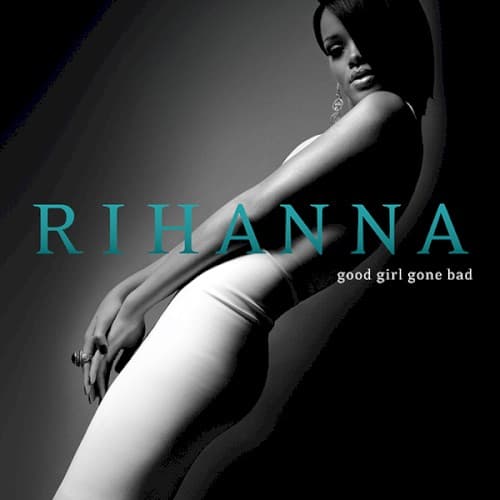
Rihanna Good Girl Gone Bad — The Singles Strategy That Built a Superstar
Good Girl Gone Bad is the sound of a label betting the house on crossover and a young artist willing to sand off every edge that might limit radio reach. Released in mid-2007 after two Caribbean-leaning albums that sold modestly and drew constant Beyoncé comparisons, the record pivots hard into Europop synths, disco samples and new wave guitar, with producers brought in to deliver tracks that could work as standalone singles rather than album cuts. The strategy worked: Umbrella topped charts in seventeen countries, Don't Stop the Music became a club standard, and Rihanna's newly edgy image—the asymmetrical bob, the leather, the goodbye to the island ingenue—gave the campaign a visual hook to match the sonic one. The album itself is less cohesive than its singles suggest, front-loaded with four straight bangers and back-loaded with Timbaland experiments that never found an audience, but the rollout was ruthlessly efficient and the singles hold up as some of the decade's sturdiest pop craft.
The thesis of Good Girl Gone Bad is that an artist can reinvent on command if the right producers and the right A&R budget align. Def Jam CEO L.A. Reid secured Umbrella after Britney Spears' label passed, paired Rihanna with Timbaland during the FutureSex/LoveShow tour, and brought in Stargate and Tricky Stewart to build a sound that could work in American clubs and European discos simultaneously. The result is a record that chases ubiquity over identity, and for a 19-year-old singer whose previous albums had struggled to define her lane, that was the correct call. The album's weakness is that it mistakes four great singles for an album's worth of material, and the deeper cuts reveal how thin the concept gets when the hooks don't land.
How the Singles Machine Works: Stargate, Timbaland and the Math of Crossover
Good Girl Gone Bad is built by committee, and the seams show in the production splits. Stargate handles the album's three strongest tracks—Umbrella, Don't Stop the Music, and Hate That I Love You—with a formula that layers bright synths over four-on-the-floor kicks and leaves just enough space for Rihanna's voice to carry the melody without demanding range she doesn't have. Umbrella opens with thundercloud synth stabs and a drum pattern that sounds like it's clearing the room for the hook, then lands the "ella ella eh eh" chant that turned a weather metaphor into a summer anthem. The verse melody is minimal, the pre-chorus builds incrementally, and the chorus pays off with a lift that feels earned because the arrangement holds back everywhere else. Don't Stop the Music samples the "mama-say mama-sa" line from Michael Jackson's Wanna Be Startin' Somethin' and builds a techno groove around it, using the familiar hook as the foundation rather than the climax. Stargate's touch is evident in how cleanly the elements lock: the kick, the clap, the synth swell, the vocal, all timed to keep a dancefloor moving without ever peaking too early.
Timbaland produced three tracks—Rehab, Sell Me Candy, Lemme Get That—during sessions with Justin Timberlake in Chicago and New York, and the results are uneven. Rehab is the strongest, built around tambourine shakes and acoustic guitar swirls that give it an organic warmth the rest of the album lacks, though the lyrics Timberlake improvised are vague relationship metaphors that never get specific enough to justify the four-minute runtime. Sell Me Candy is chaos by design, with jumbled beats and noisy production that might have worked as an interlude but drags as a full track. Lemme Get That tries for a boom-bap throwback and ends up sounding like a Timbaland B-side from the FutureSex/LoveSounds sessions, competent but redundant on an album already heavy with beats-first production. The gap between Stargate's clarity and Timbaland's clutter is the album's central tension, and the sequencing never resolves it.
The writing is strongest when it stays simple. Umbrella's hook works because the metaphor is concrete and the "ella ella" chant is rhythmically satisfying; Don't Stop the Music works because it doesn't try to be about anything beyond the dancefloor command of the title. The ballads are where the lyrics buckle. Hate That I Love You, written with Ne-Yo, is competent R&B-by-numbers, but the storytelling never moves past the title's obvious contradiction.
Question Existing tries for emotional weight with lines about doubt and fear, but the verses are too abstract to land, and Rihanna's delivery doesn't have the grit to sell desperation. The album's title track closes with acoustic guitar and click tracks, aiming for a vulnerable confession, but the lyrics are clichés about breaking rules and finding yourself, and the stripped-back arrangement only exposes how thin the material is. Breakin' Dishes, co-written and produced by Tricky Stewart, is the one lyrical bright spot outside the singles: the wronged-woman fury is specific enough—dishes breaking, threats issued—that the hook feels justified, and Stewart's production matches the aggression with staccato synth hits and a relentless snare.
Rihanna's voice is the album's most obvious limitation. She can carry a hook with precision, and her tone has enough edge to cut through dense production, but she doesn't have the range or control to modulate emotion within a verse or sell a lyric that requires subtext. On Umbrella, Jay-Z's rap verse does as much to establish the song's authority as the chorus does, because his delivery has the weight hers lacks. On Rehab, she sings about needing help but sounds detached, and the groove can't compensate. The album works best when it asks her to be a cool presence rather than a vulnerable one, and the sequencing front-loads those moments before shifting to ballads and experiments that expose her limits.
Four Bangers and a Long Tail: How the Album Loses Momentum
Good Girl Gone Bad opens with its four best tracks in a row, and the sequencing is a gift and a curse. The run establishes the album's club-forward identity immediately, each track distinct enough in tempo and tone to avoid redundancy, and the momentum carries through the first fifteen minutes without a sag. The second slot is the weakest of the four, a serviceable electro-pop track with echo claps and surging synths, but it works as a bridge between the opener's drama and the third track's dancefloor command. The fourth closes the run with the album's angriest moment, and the shift from celebration to fury keeps the energy high even as the mood pivots.
The problem is what comes next. Shut Up and Drive is a new wave pastiche that samples Blue Monday and aims for the quirky energy of a car-commercial sync, and it's charming enough as a novelty but too lightweight to sustain the album's momentum. The three tracks that follow pull the sequencing in three directions at once, and none of them deliver the hooks needed to justify the detour. By the time the album reaches the back half, the club energy of the opening is a memory, and the ballads that close the record feel like they belong to a different project. The closing remix is an odd choice, adding seven minutes of instrumental repetition to an album that already feels back-loaded with filler.
The ideal version of this record is a ten-track release that cuts the middle-section chaos and the closing remix, tightens the arc from opening to final ballad, and ends on a higher note. As sequenced, the album peaks in the first twenty minutes and spends the rest of its runtime chasing that high without the material to sustain it. The singles deserved better company, and the filler tracks suggest a rollout strategy that prioritized having enough songs for deluxe editions and remixes over having a lean, repeatable album.
The Pivot That Made Her a Superstar and the Album That Couldn't Keep Up
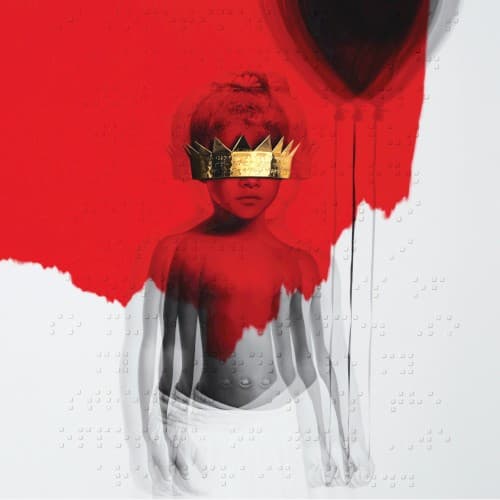
Good Girl Gone Bad ranks as Rihanna's commercial breakthrough but not her artistic peak. ANTI, released nine years later, is the stronger album—more cohesive, more willing to take risks that don't have a radio format in mind, more confident in letting Rihanna be a mood rather than a hook delivery system. Good Girl Gone Bad is the opposite: a singles collection with just enough filler to call it an LP, engineered to build a star rather than highlight one. It succeeded on those terms. The image pivot worked, the singles became ubiquitous, and the Good Girl Gone Bad Tour established Rihanna as a live draw capable of filling arenas. But the album itself is front-loaded and inconsistent, held up by four hard to argue with bangers and weighed down by six tracks that were there to fill space and justify a deluxe reissue.
This is an album for listeners who want the hits and are willing to skip past the filler. Start with Umbrella, Don't Stop the Music, and Breakin' Dishes, the three tracks that still sound vital nearly two decades later. Add Shut Up and Drive if you're in the mood for new wave pastiche, and Rehab if you want to hear what Timbaland and Timberlake thought an adult R&B track should sound like in 2007. Skip the rest unless you're a completist.
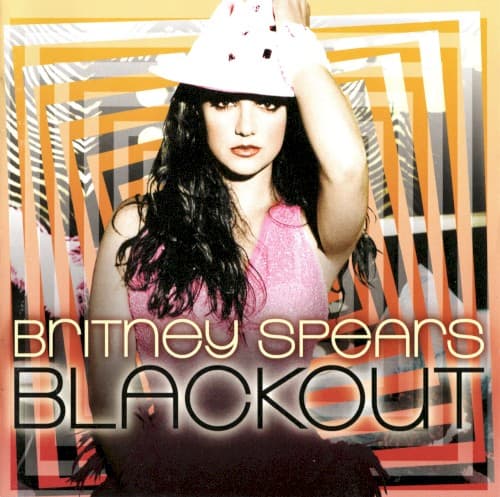
If you like Good Girl Gone Bad, the logical next step is ANTI, which takes the confidence Rihanna gained from this era and applies it to better songs. If you want more immaculately crafted 2000s pop that prioritizes singles over albums, try Blackout by Britney Spears, the album Umbrella was originally intended for, or FutureSex/LoveSounds by Justin Timberlake, the tour that led to the Timbaland sessions. Good Girl Gone Bad is the sound of a career pivot executed with precision and budget, and the singles justify the album's place in the decade's pop canon even when the deep cuts don't.
Track by track
Track Listing
Umbrella
StandoutThe song that bought Rihanna a decade opens with synth stabs that sound like a storm warning, then builds to the "ella ella eh eh" hook that made a weather metaphor into a summer anthem across seventeen countries. Stargate's production is immaculate: the verse is minimal, the pre-chorus teases the lift, and the chorus delivers without overplaying. Jay-Z's opening verse adds authority Rihanna's vocal can't quite muster on its own—his presence frames the song as a statement rather than a single—and the call-and-response structure between verse and hook keeps the track moving without ever feeling rushed. The lyrics are simple but concrete, the metaphor clear enough to work as both devotion anthem and dancefloor command. It's the album's best song by a significant margin and one of the decade's sturdiest pop constructions.
Push Up on Me
SolidA serviceable electro-pop track with echo claps and surging synths, competent enough to work as connective tissue between Umbrella and Don't Stop the Music but lacking the hook strength to stand alone. The production is clean but generic, and the lyrics are pure dancefloor instruction without the specificity that makes Don't Stop the Music memorable. It functions as a bridge in the sequencing but disappears from memory the moment it ends.
Don't Stop the Music
StandoutStargate samples the "mama-say mama-sa ma-ma-ko-ssa" line from Michael Jackson's Wanna Be Startin' Somethin' and builds a techno-pop groove around it, using the familiar hook as the foundation rather than the peak. The production is ruthlessly efficient: four-on-the-floor kick, synth swell, vocal chant, all locked into a loop designed to keep a dancefloor moving without ever breaking stride. The verses are minimal, the lyrics purely functional—stop talking, keep dancing—and the structure never tries to be more than a club command. It's the album's second-best single and the track that proved Rihanna could carry a song built entirely on rhythm and repetition without needing a big vocal moment or a rap feature to anchor it.
Breakin' Dishes
StandoutTricky Stewart's production matches the wronged-woman fury of the lyric with staccato synth hits and a relentless snare, and the hook is specific enough—dishes breaking, threats issued—to feel justified rather than theatrical. It's the album's angriest moment and the only deep cut that competes with the singles for immediacy. The verses build tension with concrete images, the chorus pays off with a shout rather than a melody, and Rihanna's delivery has just enough edge to sell the aggression. The song closes the album's opening run on a high note and makes the shift to Shut Up and Drive feel like a momentum killer.
Shut Up and Drive
SolidA new wave pastiche that samples Blue Monday and aims for quirky charm, with 1970s guitar riffs and 1980s synth flourishes stacked over a pop-rock framework. The car metaphor is obvious and the production is too busy, but the song has enough personality to work as a novelty single. It peaked at number five in the UK and number fifteen in the US, solid numbers for a third single, but it's too lightweight to sustain the album's momentum after the opening four tracks. The music video, shot in Prague, leaned into the camp, and the song found a second life in car commercials and gym playlists.
Hate That I Love You
SolidNe-Yo co-wrote and features on this folky R&B ballad, and the result is competent but predictable. The title's contradiction is the entire lyric, repeated in various forms across three verses and two choruses, and neither singer finds a melody strong enough to make the repetition feel purposeful. Stargate's production is warm and uncluttered, with acoustic guitar and light percussion, but the song never moves past its premise. It reached number seven on the Hot 100, a testament to Ne-Yo's commercial touch in 2007, but it's aged poorly compared to the uptempo singles.
Say It
SolidA mid-tempo track that samples Mad Cobra's Flex and aims for island-oriented groove, bringing back a hint of the Caribbean sound Rihanna had left behind on the previous two albums. The production is silky and warm, but the song feels like a concession to listeners expecting the old Rihanna rather than a confident reintroduction of that palette. It was never released as a single and functions as album filler, pleasant enough in the moment but with no hook strong enough to justify revisiting.
Sell Me Candy
WeakTimbaland's most chaotic production on the album, with jumbled beats and noisy layers that sound like he was experimenting in real time and decided to leave the rough draft as the final mix. The song has no discernible hook, the verses go nowhere, and the two-minute-forty-five-second runtime feels twice as long. It might have worked as a thirty-second interlude, but as a full track it's a momentum killer.
Lemme Get That
WeakA boom-bap throwback that tries for the swagger of a Timbaland A-side and ends up sounding like a leftover from the FutureSex/LoveSounds sessions, competent but redundant on an album already heavy with beats-first production. The hook is weak, the verses are generic, and Rihanna's delivery is too cool to sell the aggression the beat demands. Pure filler.
Rehab
SolidThe strongest of the three Timbaland tracks, built around tambourine shakes, acoustic guitar swirls, and a subtle backbeat that gives it an organic warmth the rest of the album lacks. Timberlake co-wrote and the structure recalls his own Cry Me a River, with a groove that builds slowly and never rushes the hook. The problem is the lyric, which Timberlake improvised during the session: vague metaphors about needing help and refusing to admit weakness, never specific enough to justify the four-minute-fifty-four-second runtime. Rihanna sounds detached rather than desperate, and the song ends up being more about the groove than the emotion. It was the album's fifth and final single, reaching number eighteen on the Hot 100, and Timberlake appeared in the music video. A solid track that needed a rewrite.
Question Existing
WeakAn attempt at emotional weight that collapses under abstract lyrics and a production that aims for eerie atmosphere but lands on lifeless. The song is described in the fact sheet as "smoky, destitute, emotional," but Rihanna's vocal is too flat to sell desperation and the verses never get specific enough to build stakes. It's the album's weakest ballad and a clear candidate for deletion in any tighter sequencing.
Good Girl Gone Bad
WeakThe title track closes the album with acoustic guitar and click tracks, aiming for a vulnerable confession about transformation and risk. The stripped-back arrangement exposes how thin the lyric is—clichés about breaking rules and finding yourself, delivered without the grit or nuance to make the sentiment land. It's the album's thesis statement in title only; the song itself adds nothing to the narrative the singles and the image campaign already established. A weak closer to an already back-loaded tracklist.
Umbrella (The Lindbergh Palace remix)
SolidA seven-minute instrumental remix that extends the original's synth stabs and beat into a club-length loop, adding nothing new to the song and serving only to pad the tracklist for international editions. Filler.