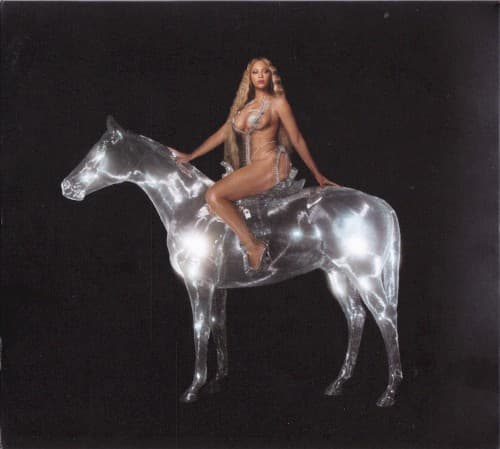
Style & Context
Influences
Hajime Sorayama robots, Studio 54 fashion photography, Grace Jones album aesthetics
Location
The cover speaks to Black queer ballroom scenes from 1970s Harlem to contemporary voguing culture's global influence.
Visual Language
The sculptural approach treats both horse and rider as art objects worthy of museum-quality lighting and presentation.
Symbols
Chrome horse
The metallic steed represents transformation through dance, echoing disco's escapist fantasy and ballroom's voguing poses.
Bodysuit transparency
The revealing garment celebrates Black female form while nodding to ballroom culture's body-positive performance aesthetics.
Rider's confident pose
Her upright posture and direct gaze reclaim space, mirroring house music's liberation politics and disco's bodily freedom.
Where Sound Meets Image
The reflective chrome mirrors the album's production polish across sixteen tracks of meticulously crafted dance music. The horse's stillness contrasts with RENAISSANCE's relentless rhythms, suggesting the calm center required before losing yourself on the floor. Her elevated position visualizes the album's mission to elevate forgotten contributors—she literally rides their legacy forward. The bodysuit's revealing nature matches lyrics across tracks like COZY and ALIEN SUPERSTAR that celebrate uninhibited self-expression and bodily autonomy within club spaces.
This cover reinvigorated interest in monochromatic album art and sculptural photography in pop music, moving away from the oversaturated aesthetic dominating 2020-2021 releases. The image spawned countless recreations in fashion editorials and established chrome as the visual shorthand for dance music's 2020s revival. Its museum-quality presentation elevated dance-pop packaging standards, proving commercial music could embrace art photography's sophistication while remaining accessible.