Style & Context
Influences
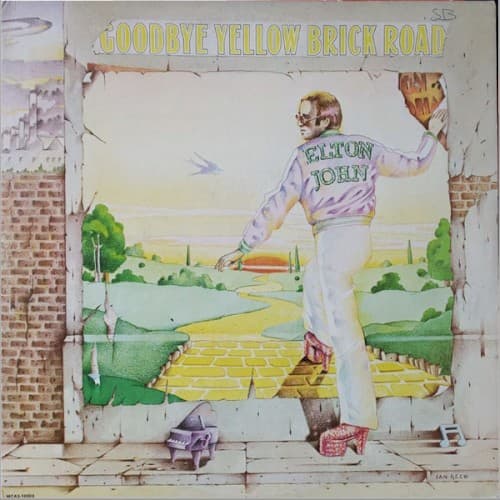
Wizard of Oz imagery, trompe-l'oeil murals, English pastoral painting, theater set design
Location
The pastoral English countryside contrasts sharply with Los Angeles music industry machinations and urban celebrity culture.
Visual Language
The trompe-l'oeil effect creates theatrical depth while maintaining illustrated softness throughout the composition.
Symbols
Crumbling brick wall
The deteriorating barrier represents the collapse of illusions separating fame from reality.
Yellow brick road
The path inverts Oz mythology, leading away from emerald cities toward humble countryside.
Name on jacket
The satin lettering turns identity into costume, reflecting celebrity as performance rather than essence.
Where Sound Meets Image
The cover perfectly mirrors the double album's thematic core about rejecting superficial success for authentic experience. Songs like the title track explicitly describe leaving behind mansions and stardom, which the image literalizes through Elton stepping away from constructed reality. The pastoral yellows and greens match the album's softer piano ballads, while the theatrical costume nods to showstoppers like 'Bennie and the Jets.' The crumbling wall suggests the album's emotional vulnerability beneath glam rock production.
This cover established album art as philosophical statement rather than mere promotional image, influencing how pop stars could critique their own celebrity. The painted illustration style offered an alternative to photography during an era dominated by glossy portraits. Countless artists later adopted similar metaphorical imagery to address fame's contradictions, from Pink Floyd to contemporary indie acts using surreal paintings to explore identity.