Style & Context
Influences
Old Hollywood publicity stills, Marilyn Monroe boudoir shoots, Italian neorealism postcards
Location
The Venetian setting references Madonna's Italian-American heritage while adding European sophistication to her street-smart New York persona.
Visual Language
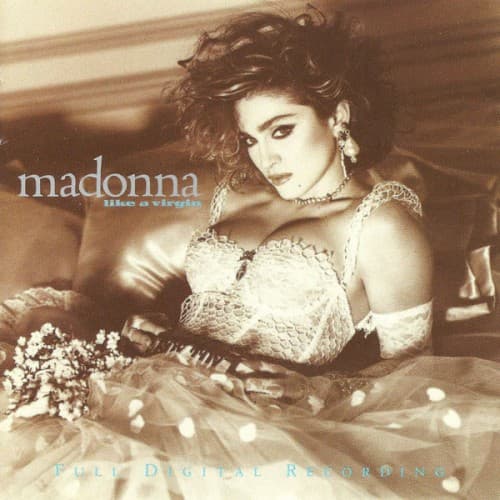
The deliberate blur and grain mimic vintage film stock, positioning Madonna as both contemporary provocateur and classic screen siren.
Symbols
Wedding dress and veil
The bridal costume subverts traditional purity symbols, reclaiming virginity as a renewable state of reinvention rather than loss.
Boy Toy belt buckle
The visible belt buckle declares sexual agency and objecthood on her own terms, flipping the script on male gaze.
Pearl choker and bracelets
Pearls traditionally symbolize innocence but layered abundantly they become armor, transforming demure adornment into bold statement jewelry.
Where Sound Meets Image
The cover's romantic sepia contradicts the album's synthesized dance production, creating the tension that defines tracks like the title song where traditional romance lyrics ride atop modern electronic beats. The visible Boy Toy belt and recumbent pose mirror the album's themes of sexual confidence and material desire explored in Material Girl and Dress You Up. The Venetian gondola setting prefigures the over-the-top romanticism Madonna would bring to the song's performance at the first MTV Video Music Awards, where she emerged from a wedding cake.
This cover established the template for pop stars using bridal imagery as rebellion rather than resolution, influencing everyone from Britney Spears to Lana Del Rey. The sepia treatment became shorthand for vintage sexuality in pop art, while the pearls-and-lace aesthetic dominated mid-1980s fashion. Most significantly, it proved album covers could generate controversy and conversation independent of the music, turning visual identity into a primary text rather than mere packaging.