Style & Context
Influences
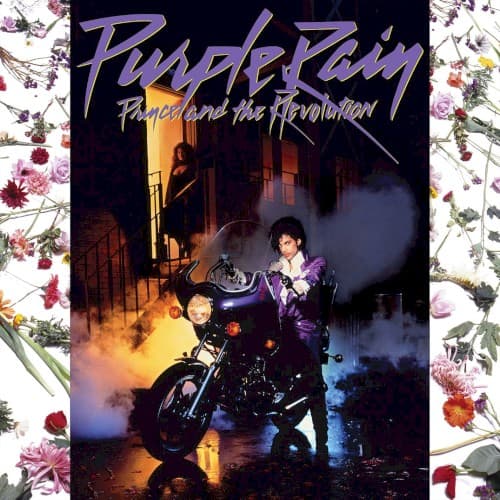
film noir posters, motorcycle magazine aesthetics, Victorian floral illustration
Location
The industrial backdrop and unpretentious motorcycle ground Prince's flamboyance in Minneapolis's working-class North Side reality.
Visual Language
The composition blends Hollywood glamour photography with Minneapolis street credibility through layered visual references.
Symbols
Honda CM400A motorcycle
The bike represents working-class rebellion, a cheaper alternative to Harley luxury that signals Prince's authenticity.
Floral border frame
These delicate blooms challenge rock machismo, asserting Prince's refusal to conform to masculine stereotypes.
Industrial architecture backdrop
The painted warehouse setting evokes Minneapolis's blue-collar neighborhoods where Prince honed his sound.
Where Sound Meets Image
The visual duality mirrors the album's sound—hard rock guitar on 'Let's Go Crazy' meets the tender balladry of 'The Beautiful Ones.' The motorcycle's rebel energy reflects funk-rock tracks like 'Baby I'm a Star,' while the soft floral frame suits 'Take Me With U' and the title track's emotional vulnerability. The theatrical smoke suggests the album's layered production and psychedelic textures. The purple-and-gold scheme directly connects to 'Purple Rain' itself, the nine-minute epic that blends Minneapolis bar-band rock with orchestral ambition.
This cover established purple as Prince's signature color in pop culture consciousness, influencing countless tributes after his 2016 death. The floral-frame technique became a template for albums mixing toughness with sensitivity. The decision to shoot a cinematic tableau rather than a standard portrait anticipated how pop stars would increasingly position albums as multimedia events. You can trace this cover's DNA through Lil Nas X's 'Montero' era visuals—the same fearless gender play and symbolic layering.