The scorecard
7.8/10 · Great
- Songwriting25%
- 7.5
- Production25%
- 9.0
- Performance15%
- 6.5
- Cohesion15%
- 7.0
- Originality10%
- 8.5
- Replay value10%
- 8.0
"Piece of Me" and "Gimme More" show genuine songcraft with hooks that work through distortion and vocal processing, though the ballad "Why Should I Be Sad" and the flamenco pastiche "Ooh Ooh Baby" reveal the limits when the production quiets.
Danja's clattering rhythms and Bloodshy & Avant's vocal distortion push dance-pop into dubstep wobbles and avant-disco interference, building an abrasive, futuristic sound that defines the record.
Spears works as texture rather than character, delivering gasps and syllables on "Get Naked (I Got a Plan)" and a spoken monotone on "Piece of Me" while the pitch-shifted performance on "Freakshow" erases her presence entirely.
The electropop attack holds through ten tracks with no ballad interruptions, though "Why Should I Be Sad" breaks the momentum and "Ooh Ooh Baby" feels like a different album trying to break through.
Dubstep wobbles on "Freakshow", the digital stutter of "Piece of Me", and the sonar synths on "Radar" bring sounds from London clubs and Berlin warehouses into American pop a full cycle ahead of the 2010s EDM wave.
The production remains startling and influential, though the hooks on "Perfect Lover" and "Hot as Ice" wear thin and the lack of vocal character reduces the stakes on repeat listens compared to her earlier work.
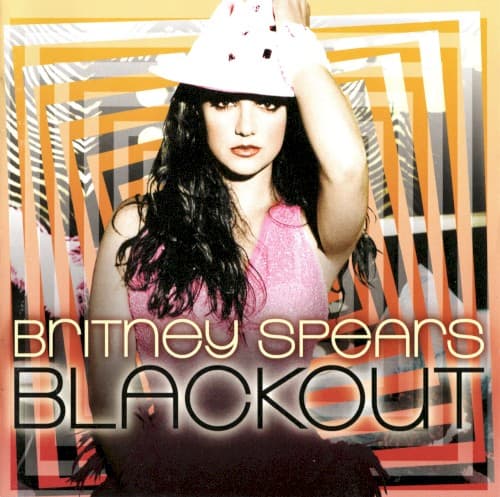
Britney Spears Blackout — The Tabloid Collapse That Built the Future
Blackout was marketed as nothing and sold as a spectacle. Jive Records rush-released it two weeks early in October 2007 after leaks, offered no proper press campaign, and sent Spears to the MTV Video Music Awards where she wandered through "Gimme More" in a black bikini looking lost. Reviewers spent more words on her custody battle and rehab stays than on the twelve tracks, and the initial reception split between critics who heard a progressive dance record and those who dismissed it as the soundtrack to a meltdown. What nobody predicted was that Blackout would define the next decade of pop production: the dubstep wobbles, the vocal distortion, the sonar synths, the abrasive electropop that refused to comfort the listener. By the time the 2010s arrived and every pop album chased EDM and every chorus was smeared with effects, Blackout had already done it cleaner and stranger, built by Danja and Bloodshy & Avant with a singer who showed up for three hours at a time between tabloid disasters and delivered syllables as raw material.
The thesis is that Blackout works because Spears is used as texture rather than character, and the production team understood that the chaos of 2007 was an opportunity to strip away the pop-star performance and build something colder and more mechanical. Her voice is pitched down on "Freakshow", split into digital fragments on "Piece of Me", reduced to gasps on "Get Naked (I Got a Plan)", and the result is a record where the hooks come from the synths and the rhythm section rather than from vocal melody. The writing holds when the production drives it, and it sags when the songs ask her to sell emotion she is not present to deliver. It is the only album she executive-produced, recorded in Las Vegas hotel rooms and her Los Angeles house with a team that worked around her schedule and her limits, and the final product sounds like it: efficient, impersonal, and ruthlessly modern.
When the Voice Becomes Another Synth Layer
The production pulls from London dubstep, Euro disco, and the clattering digital maximalism Timbaland had introduced on Nelly Furtado's Loose the previous year, and Danja translates that approach into something harsher and less playful. "Gimme More" builds around a skittering hi-hat and a bassline that never resolves, with Spears delivering the verses in a near-monotone and the chorus arriving as a chant rather than a release. "Piece of Me" fragments her voice into multiple registers simultaneously, a split-screen effect that makes it hard to locate the actual performance, while the beat lurches and stops in a way that was not yet standard on American radio. "Freakshow" brings the dubstep wobble into the chorus, a distorted low-end pulse that would not reach the Hot 100 in any serious way until 2010. "Radar" runs on sonar synth pulses that echo Soft Cell's "Tainted Love", a Eurodisco throwback filtered through digital processing. The production aesthetic is abrasive by design: no live instruments, no warmth in the mix, and vocals treated as one element among many rather than as the central event.
Danja, Bloodshy & Avant, and the Neptunes dominate the credits, with contributions from the Clutch and Kara DioGuardi. The writing works best when it leans into declarative phrases that survive the vocal distortion: "It's Britney, bitch" as an opening line, "You want a piece of me" as a tabloid taunt, "I got a plan" as a whispered promise on "Get Naked". When the songs ask for more conventional melody or emotional nuance, the limitations show. "Hot as Ice" tries for playful seduction with lines like "I'm just a girl with the ability to drive a man crazy", but Spears delivers it in a higher register that sounds disconnected from the track underneath. "Perfect Lover" sets a propulsive belly-dance beat against tick-tock chants that never develop into a full idea. "Ooh Ooh Baby" blends a flamenco guitar with a sample of Gary Glitter's "Rock and Roll" and the melody from the Turtles' "Happy Together", a chaotic pastiche that DioGuardi later claimed was inspired by watching Spears hold her infant son in the studio, though the lyric reads as generic slow-jam seduction.
The one ballad, "Why Should I Be Sad", is aimed directly at Kevin Federline over a midtempo Neptunes track, and it exposes the problem with asking Spears to perform intimacy in 2007: the production is too slick, the vocal is too processed, and the song has no detail specific enough to make the breakup real. The album works because most of it avoids that trap and builds hooks from rhythm and texture instead of from her presence as a singer. "Break the Ice" opens with the line "It's been a while / I know I shouldn't have kept you waiting / But I'm here now", a phrase that could be read as an apology for the chaotic rollout, and then moves into a propulsive track with Keri Hilson providing uncredited backing vocals that almost turn it into a duet. "Heaven on Earth" borrows the three-vocal-line structure from Donna Summer's "I Feel Love", a rare moment where the song asks her to sustain a melody and she delivers. "Toy Soldier" echoes the rhythm of Destiny's Child's "Lose My Breath" with a military drumroll and a lyric about needing a new lover, functional and forgettable.
Sequencing That Keeps the Chaos at Bay Until It Can't
The album sequences its ten best tracks in a row, front-loads the singles and the standouts, and then stumbles at the end when it tries to do something other than relentless dance-pop. The opening stretch establishes the aesthetic and the stakes immediately: digital, abrasive, and built for the club rather than for radio sentiment. The first plateau arrives as a melodic break from the rhythmic assault without slowing the momentum.
The middle section pushes back into the darkness, with distorted moans and dubstep wobble creating the album's most confrontational stretch. The solid singles that never happened arrive next, efficient and professional but without the strangeness that makes the peaks memorable.
The sag arrives at track ten, a flamenco pastiche that breaks the electropop attack and introduces live guitar and a retro sample that belong to a different record entirely. The next track tries to recover with a clattery beat, but the hook is underdeveloped and the track feels like an interlude stretched to three minutes. The closing track on the standard edition arrives as the only proper ballad, a breakup song aimed at Federline that lands too late in the sequence to reset the mood and too early in her public story to feel like closure rather than a wound still open. The Japanese edition adds three more tracks, including one that samples Eurythmics and works as a better closer, though none of the bonus material matches the core album.
The first nine tracks are ruthlessly paced, the momentum breaks at track ten, and the album does not recover. A tighter eleven-track version that cuts the flamenco pastiche and the ballad would fix the problem, but Jive was chasing the single count and the seventy-minute CD standard.
The Album That Taught 2010s Pop How to Sound Cold
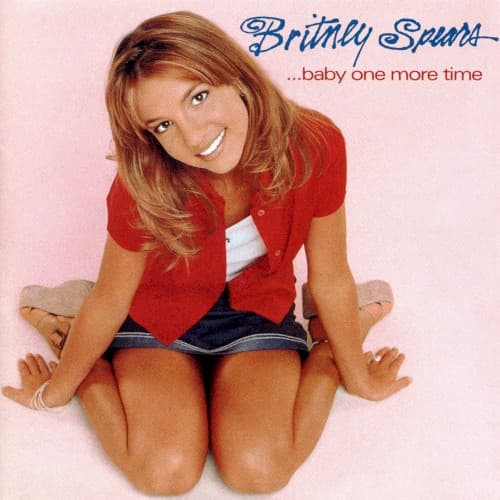
Blackout ranks as Britney Spears' most influential album and her least personal, a record that works because it uses her as raw material rather than as a character. It sits well ahead of her 1999 debut …Baby One More Time in terms of production ambition and sonic coherence, though it sacrifices the vocal hooks and teen-pop immediacy that made …Baby One More Time a more accessible entry point. The production is the argument: Danja and Bloodshy & Avant build a futuristic dance-pop record that brings dubstep, avant-disco, and electropop interference into the mainstream a full cycle ahead of the 2010s EDM wave, and the songs that trust the production over the performance are the ones that hold up. "Gimme More", "Piece of Me", "Radar", "Freakshow", and "Heaven on Earth" remain essential, with "Break the Ice" and "Get Naked (I Got a Plan)" as solid second-tier tracks. The back half sags with the flamenco detour of "Ooh Ooh Baby" and the Federline ballad "Why Should I Be Sad", and the lack of vocal character means the weaker tracks have nothing to fall back on.
This is for listeners who want to hear where Kesha, Robyn, and the 2010s pop-EDM crossover came from, and for fans of Spears who can accept an album where she is used as texture rather than as a star. Skip it if you need vocal performance or emotional presence, or if you prefer the teen-pop clarity of her earlier work. The chaotic 2007 rollout, the custody battle, and the panned VMA performance are now footnotes to an album that has been listed among the best of the 2000s by numerous publications and credited with reshaping the sound of pop radio. It won Best Album at the 2008 MTV Europe Music Awards, went platinum in seven countries, and has aged better than almost any pop album of its moment. Start with "Gimme More", "Piece of Me", and "Freakshow" to hear the production aesthetic at full strength, then move to "Heaven on Earth" for the rare moment where melody and processing align. For the next album, hear Circus, which takes the Blackout sound and sands down the abrasive edges for a more commercial result, or go back to In the Zone to hear the last album where Spears sounded like she was driving the sessions rather than serving them.
Track by track
Track Listing
Gimme More
StandoutThe lead single and the thesis statement, built around a skittering hi-hat, a bassline that never resolves, and the opening line "It's Britney, bitch" delivered as a flat declaration rather than a boast. The verses are near-monotone, the chorus is a chant, and the production does all the work of creating tension and release. The lyric is smarter than it first appears, with the cameras-flashin'-while-we're-dirty-dancin' lines turning the club anthem into a commentary on media surveillance. Danja's production was unlike anything on American radio in August 2007, and the song peaked at number three on the Billboard Hot 100, her highest chart position since her 1999 debut single. It remains her most forward-looking single and the clearest example of the album's strategy: use Spears as texture, build the hook from the production, and trust that the strangeness will connect.
Piece of Me
StandoutBloodshy & Avant fragment her voice into multiple registers simultaneously, creating a split-screen vocal effect where it is hard to locate the actual performance, and the beat lurches and stops in a way that was not yet standard. The lyric is a direct response to the tabloid narrative, written after Spears told the team she wanted a song that addressed her critics, and lines like "You want a piece of me" turn the media obsession into the hook. Klas Åhlund co-wrote it as an answer song, breaking the unwritten rule against addressing her personal life after Jive had rejected a Justin Timberlake response years earlier. The music video won Video of the Year, Best Female Video, and Best Pop Video at the 2008 MTV Video Music Awards, Spears' first VMA wins, and the song replicated the international success of "Gimme More" even as it stalled at number eighteen on the Hot 100. The production innovation here is using vocal distortion not as an effect but as the structure of the song.
Radar
StandoutRecorded at Sony Music Studios the day after she filed for divorce from Kevin Federline, with Ezekiel Lewis and Patrick M. Smith of the Clutch producing a track they described as "for the Britney Spears that we know and love" rather than one that addressed the chaos. The sonar synth pulses echo Soft Cell's "Tainted Love", a Eurodisco reference filtered through 2007 electropop processing, and the lyric is pure flirtation: she's got him on her radar, and she's listing his qualities. Both producers noted that Spears arrived late but worked with startling efficiency once in the booth, catching them off guard with her professionalism. The song was later added to Circus and released as that album's fourth single in 2009, where it became a minor hit, though it works better in the Blackout context where the clinical production aesthetic is the whole album rather than an outlier.
Break the Ice
StandoutOpens with "It's been a while / I know I shouldn't have kept you waiting / But I'm here now", a line that reads as an apology for the delayed album and the chaotic rollout, whether or not that was the intent. Keri Hilson provides uncredited backing vocals that nearly turn the track into a duet, and the choir arrangement gives it a scale the other songs avoid. The bridge includes Spears saying "I like this part", a direct lift from Janet Jackson's "Nasty", and the whole track feels like a conscious attempt to build a big pop moment within the abrasive electropop framework. It was released as the third single and peaked at number forty-three on the Billboard Hot 100, underperforming compared to the first two singles despite being more radio-friendly. Hilson explained the metaphor as romantic rather than procedural: "You're a little cold. Let me warm things up and break the ice."
Heaven on Earth
StandoutA Eurodisco love song with new wave influences, inspired by Donna Summer's "I Feel Love" and built around three vocal lines layered over the beat, a rare moment where the album asks Spears to sustain melody rather than deliver syllables. Nicole Morier wrote it from "a very dark place", thinking about someone who felt perfect while she cataloged her own imperfections, and the lyric captures that dynamic: "I think what's touching about it is that it's from the perspective of someone who feels like they really need this person just to feel safe and feel good." Spears named it her favorite track on Blackout at the time of release, and it remains one of the few moments where the production supports a vocal performance rather than replacing it. The Donna Summer homage is clear in the sequencing and the propulsive beat, though the writing is more vulnerable than the rest of the album allows.
Get Naked (I Got a Plan)
StandoutA duet between Spears and Danja, who sings the chorus with his voice distorted into a decaying moan, while Spears contributes gasps, sighs, chants, and fragments of melody. The track is explicitly about sex, with the whispered "I got a plan" and the stuttering rhythm creating a more confrontational version of the club seduction the album keeps returning to. Spears recorded it three weeks after giving birth to Jayden James, and Keri Hilson noted that "She gave 150 percent. I don't know any other mother that would do that." The production is pure Danja: clattering hi-hats, distorted vocals, and a rhythm that refuses to settle. It works because it does not ask Spears to perform character or intimacy; she is another sound in the mix, and the track is stronger for it.
Freakshow
StandoutBuilt around the wobbler effect of dubstep, the first time that sound appeared on a major American pop album, and still one of the most aggressive tracks in Spears' catalog. The lyric is about dancing and the spotlight, with lines like "Make them other chicks so mad / I'm 'bout to shake my ass / Snatch that boy so fast", and the bridge pitches her vocals down so low she sounds masculine, erasing her presence entirely in favor of the effect. Nearly a decade after release, Spears called it one of her favorite non-single tracks and described it as "sassy", though the production is more menacing than playful. Bloodshy & Avant co-wrote and co-produced it in late 2006, and the dubstep wobble would not become a pop-radio staple until Britney Jean and the EDM wave of the early 2010s, making this track a clear precursor. It is the album's most experimental moment and one of its best.
Toy Soldier
SolidAn upbeat dance-pop track with a military drumroll and a rhythm reminiscent of Destiny's Child's "Lose My Breath", though without the vocal interplay that made that song memorable. The lyric is about needing a new lover, functional and direct, and the production is efficient without being distinctive. Bloodshy & Avant co-wrote and co-produced it alongside "Radar" and "Freakshow", and it is the weakest of the three, a solid album track that does not add much to the sequence. It works as a bridge between the dubstep aggression of "Freakshow" and the lighter "Hot as Ice", but it is not a track anyone returns to.
Hot as Ice
SolidSpears sings in a higher register than most of the album, delivering lines like "I'm just a girl with the ability to drive a man crazy / Make him call me 'mama', make him my new baby" in a tone that aims for playful seduction but sounds disconnected from the track underneath. T-Pain co-wrote it and later said one of their three sessions finished a song in an hour, though he did not specify which track. The production is clean and propulsive, but the vocal performance does not sell the idea, and the hook never quite arrives. It is a competent album track that would have been stronger with a different melody or a more committed vocal.
Ooh Ooh Baby
WeakA flamenco guitar, a sample of Gary Glitter's "Rock and Roll", and the melody of the Turtles' "Happy Together" combine into a chaotic pastiche that belongs to a different album entirely. Kara DioGuardi co-wrote and co-produced it with a pregnant Spears and later claimed the inspiration was watching Spears hold her infant son in the studio, saying "I would look at the two of them, the way they looked at each other and the way she would hold the baby." The lyric, however, is generic slow-jam seduction: "Touch me and I come alive / I can feel you on my lips / I can feel you deep inside." The track breaks the electropop momentum at the exact moment the album needs to hold it, and the flamenco guitar and retro samples feel like a label compromise rather than an artistic choice. It is the album's clearest misstep.
Perfect Lover
SolidA propulsive belly-dance beat with tick-tock chants and a chorus built around "Tick-tock / Tick-tock / Come and get me while I'm hot", a hook that repeats without developing into a full idea. The production is strong, the rhythm is clattery and insistent, but the songwriting never gives it a melody or a lyric worth the effort. It feels like an interlude stretched to three minutes, competent but underwritten. Danja produced it alongside the stronger tracks on the album, and it is one of the few moments where his approach does not compensate for a weak song.
Why Should I Be Sad
WeakThe only ballad on the standard edition, aimed directly at Kevin Federline over a midtempo Neptunes production, and it exposes the problem with asking Spears to perform intimacy in 2007. The production is too slick, the vocal is too processed, and the lyric has no detail specific enough to make the breakup real. It closes the album on a sag, breaking the dance-pop momentum and arriving too late to reset the mood and too early in the public custody battle to feel like closure. The Neptunes deliver professional work, but the song does not earn its place in the sequence, and it would have been stronger as a bonus track or a B-side. The Japanese edition includes three additional tracks, and "Everybody" would have been a better closer.