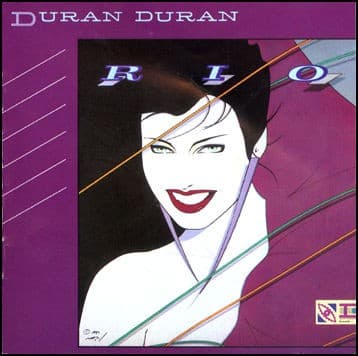
The scorecard
8.5/10 · Essential
- Songwriting25%
- 8.5
- Production25%
- 9.0
- Performance15%
- 7.5
- Cohesion15%
- 8.0
- Originality10%
- 8.5
- Replay value10%
- 9.0
The hooks are built to last: the chorus lift on "Hungry Like the Wolf" and the title track's melody both earn their repetition instead of leaning on it, while "Save a Prayer" proves Le Bon can write a lyric that lingers.
Colin Thurston and Nick Rhodes layer cigarette lighters, cracking ice and reversed piano strings into arrangements that sound expensive without sounding cluttered, giving every instrument room to move.
Le Bon's phrasing commits fully to lines that could collapse under scrutiny, selling the exoticism even when the words are obtuse, though his range narrows on the slower tracks.
The sequencing earns its length by frontloading seven uptempo tracks before dropping into two synth ballads that reset the pace without feeling like bonus material tacked on.
Duran Duran grafted American funk and disco onto British post-punk a year before the rest of new wave caught up, turning the synthesizer into a rhythm instrument instead of a texture.
The production choices that could have dated it—the Simmons hits, the saxophone solo, the gated reverb—instead became the template the decade copied, so the record still sounds like the original rather than a period piece.
Duran Duran Rio — New Wave Stops Apologizing for the Dancefloor
Rio is the record where British new wave decided it could be glamorous and still matter. Duran Duran's second album arrived in May 1982 with a thesis most of their post-punk peers were still too self-conscious to attempt: that synthesizers, funk basslines and expensive production belonged together, that a band could chase both the dancefloor and durability, that pop ambition was not surrender. The album opens with reversed piano strings and a saxophone solo, sounds that announced expertise rather than DIY purity, and it never flinches. Where the 1981 debut hedged between new wave credibility and chart pragmatism, Rio commits fully to both, building nine tracks that work as singles and as a sequence, no apologies offered.
The band recorded the album at AIR Studios in London across six weeks in early 1982, with Colin Thurston returning as producer. Nick Rhodes spent his studio time learning production techniques and experimenting with the facility's high-end equipment, adding vibraphone, marimba, and the sound of a lit cigarette to tracks that were already arranged before recording began. The rhythm section of John Taylor and Roger Taylor had sharpened since the debut: the bassist played fretless on "Lonely in Your Nightmare," while the drummer layered Simmons electronic hits over his acoustic kit instead of replacing it. Andy Hamilton's saxophone solo on the title track was carefully directed by Rhodes to function as melody rather than decoration. The album's optimism was a choice. John Taylor conceived the title during the band's first tour outside England, taken by the exoticism of cities he had only imagined, and the word became shorthand for the album's sound: expensive, foreign, endless.
Rio was a commercial argument that turned out to be correct. It peaked at number two in the UK and spent over two years on the chart. Capitol Records remixed five tracks for American radio, and that version reached number six in the US and stayed on the Billboard chart for 129 weeks. The music videos—shot in Sri Lanka and Antigua with budgets that EMI justified as an investment in a new medium—made Duran Duran the band that proved MTV could break records, not just promote them. The Second British Invasion that followed was possible because Rio demonstrated that a British synthesizer band could be as compelling on video as on vinyl, and more compelling than most of what American radio was offering in 1982.
How Duran Duran Made Funk Safe for Synthesizers
Rio works because the band understood that New Romantic synthesizers and American funk were solving the same problem: how to make a dancefloor move without a traditional rock arrangement. John Taylor's basslines do the work that rhythm guitar used to handle, locking with Roger Taylor's drums on "Hungry Like the Wolf" and "Hold Back the Rain" in grooves that owe more to Chic than to post-punk. Nick Rhodes adds synthesizer lines that function as countermelodies rather than washes, particularly on "New Religion," where the keyboard riff is as essential as the guitar. Andy Taylor's guitar brings the urgency without overwhelming the arrangement, flipping between staccato funk on "My Own Way" and sustained leads on "Save a Prayer." The production is expensive but not indulgent: every element has a function, and Thurston's mix is clear enough that you can follow each instrument across the stereo field.
The band recorded most of the album quickly, with full arrangements prepared in advance, then used studio time to refine performances and experiment with texture. Simon Le Bon added vibraphone to "New Religion" and marimba to "Last Chance on the Stairway"; Rhodes layered the sound of clinking glasses and a cigarette being lit onto the latter, details that add character without cluttering the mix. Roger Taylor's decision to layer Simmons electronic toms over his acoustic kit rather than replace it gave Rio a modern edge that didn't sacrifice human feel, a choice that kept the record from sounding like a drum machine demo. The saxophone solo on the title track was a risk that worked because Rhodes directed Andy Hamilton to play it as an integral melody, repeating it the same way in live performances instead of improvising each time. The result is a track that sounds indulgent but is actually tightly controlled.
The two ballads that close the album are sequencer-based, but they don't float: "Save a Prayer" uses a simple two-chord progression under Le Bon's melody, while "The Chauffeur" was built entirely in the studio by Rhodes and Le Bon, layering synthesizers, cracking ice cubes and an ocarina over a foundation that the other three Taylors never touched. The latter is the album's only genuine experiment, a track that Rhodes later described as entirely electronic, though its brooding atmosphere fits the album's arc. Both tracks prove the band could sustain interest at slower tempos, a necessary skill for an album this long.
The weakness is Le Bon's lyrics, which add personality but rarely withstand scrutiny. The title track's image of a girl with a "cherry ice cream smile" works because the music sells the exoticism, but "New Religion" presents itself as a dialogue between ego and alter ego without earning the concept. "Hold Back the Rain" includes the line "no time to worry cause we're on the roam again," which captures the album's restless energy but also exemplifies Le Bon's tendency toward convenient rhymes. The phrasing commits, which saves most of the lines, but the writing is the album's most dated element.
Seven Singles Before the Album Catches Its Breath
Rio sequences its nine tracks as a deliberate test of stamina: seven consecutive uptempo entries before two slow closers that work as a cool-down rather than a second act. The front half maintains energy by varying texture and tempo within the same general range, moving from disco strut to new wave urgency to moodier atmospherics without a sharp gear change. The album's first single was rerecorded during the sessions to add American R&B influences, and its disco-funk production fits seamlessly into the sequence rather than sticking out. Two tracks extend past five minutes, but the band earned the length by building the arrangements instead of looping them.
The final uptempo entry provides a transitional moment with marimba and cigarette-lighting effects before the synth ballads arrive. The sequencing makes the shift feel like a reward rather than a sag, and the closing track ends the album on an atmospheric note that contrasts sharply with the opening. The two-part structure works because the band committed to it: the uptempo tracks never let up, and the ballads never try to revive the energy. The only risk is that listeners arriving for the singles might check out before the back half, but the band assumed their audience would stay.
Where Rio Ranks and Who Should Start Here
Rio is Duran Duran's best album because it's the one where their ambitions and their skills aligned. The debut established the band's sound, but Rio refined it, adding American influences and expensive production without losing the urgency. It sits at the center of their catalog: the peak of their early imperial phase, before the arena rock of Seven and the Ragged Tiger and the transatlantic overreach that followed. The album proved that a British synthesizer band could dominate American radio and MTV simultaneously, a feat that opened the door for Culture Club, Wham! and the rest of the Second British Invasion acts that followed in 1983 and 1984.
Rio is for listeners who want new wave without the self-consciousness, synthesizer pop with actual basslines, and production that sounds ambitious rather than expensive. It's not for purists who need their post-punk scrappy or their dance music raw. The album aged better than most 1982 releases because the production choices that could have dated it instead became the template: the Simmons hits, the gated reverb, the saxophone solo, all copied so thoroughly that Rio still sounds like the original. The record holds up on repeat listens because the arrangements have depth and the sequencing has purpose, qualities that survive long after the novelty wears off.
Start with "Hungry Like the Wolf," "Save a Prayer," and the title track, which represent the album's range and prove the band could write hooks that last. Skip the album if you need lyrics that bear close reading or if you're allergic to eighties production signifiers, because Rio has both weaknesses in full. For the next album, try their 1981 self-titled debut, which has rawer energy and less polish, or Roxy Music's Avalon, released the same year and covering similar sonic territory with more sophistication. Rio is the album that proved synthesizer pop could be both smart and successful, and it remains the standard against which every subsequent new wave record is measured.
Track by track
Track Listing
Rio
StandoutThe title track opens with reversed piano strings and immediately establishes the album's thesis: that new wave could be glamorous without apology. Andy Hamilton's saxophone solo, carefully directed by Nick Rhodes to function as melody rather than decoration, elevates the track beyond typical new wave fare. Simon Le Bon's lyric about a girl with a "cherry ice cream smile" works because the music sells the exoticism, turning what could be empty imagery into a convincing portrait of aspiration. John Taylor's bassline drives the groove with disco precision while Andy Taylor's guitar adds funk accents. The production is expensive and knows it, every element mixed clearly enough to follow across the stereo field. The track proved Duran Duran could compete with American radio on American terms, a thesis Capitol Records later validated by leaving it largely untouched in their US remix.
My Own Way
SolidRerecorded during the sessions to add American R&B and disco influences after an earlier dance-inspired version failed to satisfy the band, the final track integrates seamlessly into the album's sequencing. The production leans into the dancefloor with a bassline that locks tightly to Roger Taylor's drums, while Nick Rhodes' synthesizers add color without overwhelming the arrangement. It's the album's most straightforward single and the one that benefits least from the LP context, but it maintains energy and never drags.
Lonely in Your Nightmare
SolidJohn Taylor's fretless bass gives this track a moodier edge than the surrounding uptempo numbers, and the arrangement uses that texture to shift the album's energy without slowing the tempo. The production is more atmospheric than the opening two tracks, with Rhodes' synthesizers functioning as washes rather than countermelodies. Le Bon's vocal phrasing commits to lines that are more impressionistic than narrative. A solid album track that adds variety to the front half without standing out as essential.
Hungry Like the Wolf
StandoutThe album's most durable single, built on a guitar riff that Andy Taylor fashioned from a Nick Rhodes synthesizer idea and a rhythm section that locks into one of the tightest grooves on the record. Roger Taylor's drums, layering Simmons electronic hits over his acoustic kit, give the track a modern edge without sacrificing human feel. Le Bon's vocal phrasing on the chorus—"I'm hungry like the wolf"—commits so fully to the melodrama that the line works despite itself. The production is lean compared to the title track, with every element serving the forward motion rather than adding decoration. The music video, shot in Sri Lanka with Le Bon cast as an Indiana Jones type, became one of MTV's most rotated clips in 1982 and helped break the band in America. The track is expertly constructed: verse, pre-chorus, chorus, all built to escalate and all earning their repetition.
Hold Back the Rain
SolidA five-minute track that earns its length by building the arrangement instead of looping it, with a bassline that shifts between verses and a chorus that lifts without overstating. The production adds layers gradually, and Roger Taylor's drums maintain the urgency even as the track extends. Le Bon's lyric includes the line "no time to worry cause we're on the roam again," which captures the album's restless energy while also exemplifying his tendency toward convenient rhymes. The track works as a bridge between the singles and the deeper album cuts, maintaining the energy without quite reaching the peaks of "Hungry Like the Wolf" or "Rio."
New Religion
StandoutNick Rhodes' synthesizer riff is as essential as Andy Taylor's guitar on this track, which extends past five minutes and justifies the length with a structure that escalates rather than repeats. Simon Le Bon added vibraphone to the arrangement, a texture that adds character without overwhelming the mix. The lyric presents itself as a dialogue between ego and alter ego, a concept that the music doesn't quite support but that Le Bon's phrasing sells through commitment alone. Andy Taylor's guitar work is prominent here, showcasing the ferocity that balances Rhodes' artsy textures. The production maintains clarity even as the arrangement grows denser, and the track demonstrates the band's ability to sustain interest on longer cuts.
Last Chance on the Stairway
SolidSimon Le Bon's marimba and Nick Rhodes' sound effects—clinking glasses and a lit cigarette—give this track a distinct personality, and the production uses those details to create atmosphere without cluttering the mix. The track functions as a transitional moment in the sequencing, closing the uptempo run before the synth ballads arrive. According to John Taylor, the demo recorded in August 1981 was nearly identical to the final version, suggesting the arrangement was fully formed early. The track is solid but not essential, a well-executed album cut that earns its place in the sequence.
Save a Prayer
StandoutA synth ballad built on a simple two-chord progression that Le Bon's melody transforms into one of the album's most enduring tracks. Andy Taylor and Nick Rhodes collaborated on the songwriting, with Rhodes beginning on synthesizer and Taylor fashioning a guitar part that adds warmth without overpowering the sequencer-based foundation. The lyric concerns a couple's love affair that ends too soon, and Le Bon's phrasing gives the lines more weight than they earn on the page. The track reached number two in the UK as the album's second single and became a live staple, its chorus lift proving the band could write hooks that worked at slower tempos. The production is lush but controlled, every element given space in the mix. The music video, shot in Sri Lanka atop a mountain with stone temples, became another MTV fixture.
The Chauffeur
StandoutThe album's only genuine experiment, built entirely in the studio by Nick Rhodes and Simon Le Bon without contributions from the three Taylors. Rhodes layered synthesizers, the sound of a cracking ice cube, and a conversation about nature over a sequencer foundation, while Le Bon added a melody on an ocarina and a lyric inspired by a 1979 visit to a kibbutz in Israel. The result is the album's most atmospheric track, a brooding closer that contrasts sharply with the title track's opening glamour. Rhodes later described it as entirely electronic, and the band recorded an acoustic version without him as punishment for creating a track that excluded the rhythm section. The production is sparse compared to the rest of the album, and the track's mood fits the sequencing as a final cool-down. It's an outlier in the catalog, showcasing Rhodes' production ambitions and Le Bon's willingness to follow them into more impressionistic territory.