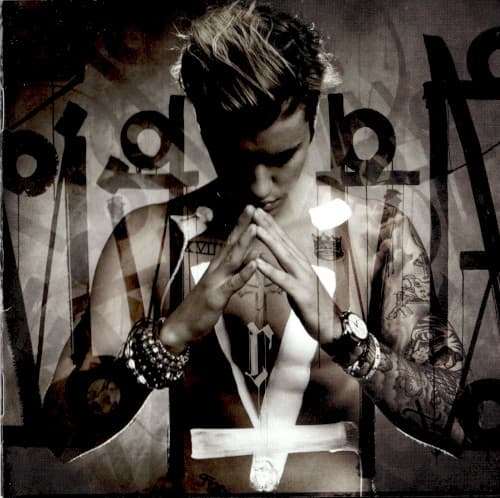
The scorecard
7.2/10 · Good
- Songwriting25%
- 7.5
- Production25%
- 8.5
- Performance15%
- 7.0
- Cohesion15%
- 5.5
- Originality10%
- 6.5
- Replay value10%
- 7.0
Strong chorus hooks on the singles carry weaker deep cuts; "Love Yourself" and "Sorry" earn their lift through melody and restraint, while late-album tracks like "Trust" and "All in It" lean on repetition.
Skrillex and BloodPop build a sound that serves the songs, from the acoustic guitar on "Love Yourself" to the trap percussion on "I'll Show You"; even the tropical house flourishes on "Sorry" feel structural, not decorative.
Bieber's falsetto on "Mark My Words" and controlled phrasing on "Life Is Worth Living" show real growth, but the performances lack character variation across twenty tracks, making Big Sean's verse on "No Pressure" stand out by contrast alone.
The first eight tracks flow naturally from plea to apology to defiance, but the album sags under its length; by track fifteen the sequencing feels like playlist assembly, with "Get Used to It" and "Been You" offering disco-pop that disrupts the arc.
The tropical house on "What Do You Mean?" and "Sorry" arrived early in the sound's pop moment, and Skrillex's production on "Where Are Ü Now" transforms a piano ballad into something genuinely new, but the R&B ballads follow Chris Brown's template closely.
The singles hold up years later because the hooks are built to last, but the deep cuts feel like 2015 artifacts; the spoken outros on "Purpose" and "All in It" that once seemed vulnerable now read as overexplanation.
Justin Bieber Purpose — Pop Stardom Finds EDM and Asks for Forgiveness
Purpose works because it gets the order right: three flawless singles, then the apologies. The album opens with "Mark My Words," a falsetto plea that promises changed behavior, but the real thesis arrives six songs later on "Love Yourself," where the apology gives way to a plainspoken brush-off over acoustic guitar. This is the narrative Justin Bieber and his team built for the comeback: the troubled star earns redemption through humility and then reclaims autonomy through craft. The album delivers on the first half of that claim more convincingly than the second, but the singles are strong enough to make the argument land.
The stakes in 2015 were real. Three years after Believe and two years after the Journals mixtape, Bieber needed a record that could reposition him as an adult pop star rather than a tabloid story. Purpose does that work by leaning into the sounds that were reshaping pop radio in 2015: tropical house, trap percussion, Skrillex's vocal processing. The result is an album where the production often outpaces the songwriting, where twenty tracks feel like the label hedging its bets, and where the apology narrative wears thin by the fifteenth profession of faith. But the singles are hard to argue with, the Skrillex collaboration is the most interesting thing Bieber has done, and the vocal performance shows a singer learning to use restraint as a tool rather than a limitation.
EDM Discipline, R&B Sprawl
The album's sonic identity comes from Skrillex and BloodPop, who take the EDM-pop template and strip it down to space and rhythm rather than bombast. "I'll Show You" builds on atmospheric synths and snapping trap percussion, with Bieber's vocal floating over the arrangement instead of fighting it. "Sorry" uses the tropical house markers—pan flute, dancehall rhythm—but the mix stays clean, the chorus hook simple enough to survive repetition. "Where Are Ü Now," the Jack Ü collaboration that predates the album, remains the most adventurous production: Skrillex and Diplo take Bieber's vocal from a piano ballad and warp it into the dolphin sound that defines the drop, turning the singer into an instrument. That track points to what Purpose could have been with more creative risk.
The acoustic and piano material works when the writing earns the arrangement. "Love Yourself," co-written by Ed Sheeran and produced by Benny Blanco, uses a single guitar and a brief trumpet flourish to frame a kiss-off whose real sentiment—the title is a polite version of something cruder—plays against the minimalism. "Life Is Worth Living" leans on piano and gospel conviction, and the vocal performance sells the redemption narrative because Bieber sounds like he believes it. But the ballads outnumber the album's capacity for them: "Purpose," the title track, ends with a lengthy voiceover about God that explains what the song should have conveyed, and "All in It" does the same. The spoken outros were meant to sound vulnerable; they read as the team not trusting the songs to make their own case.
The guest verses expose the album's range problem. Big Sean on "No Pressure" delivers lines about Yoko Ono and Street Fighter with enough personality to break the album's one-note sincerity, while Travis Scott on "No Sense" uses auto-tune and trap ad-libs to give the song a texture the rest of the record avoids. Halsey on "The Feeling" blends into Bieber's delivery instead of countering it, and Nas on "We Are" feels like a contractual obligation. The features work when they disrupt the album's tonal uniformity and fail when they match it.
The production holds across twenty tracks, but the writing does not. "Company" and "No Pressure" have strong enough hooks to justify their R&B grooves, but "Been You" and "Get Used to It" offer disco-pop without memorable melodies, and "Trust" and "Hit the Ground" feel like late-session additions that no one wanted to cut. The Audibles, Poo Bear, and the other producers deliver professional work, but professional is not the same as necessary. By the deluxe edition's final tracks, the album is running on production polish alone.
Three Singles, Then Diminishing Returns
The album's pacing is frontloaded by design. The opening stretch sets an apologetic tone that expands into vulnerability before delivering three consecutive singles that justify the album's existence. Those three tracks are sequenced to show range—tropical house to dancehall to acoustic folk—but they share an understanding of how to build a chorus that earns its lift through melody rather than volume. That run is as strong as any six-song stretch in 2010s pop.
After this peak, the album begins to sag. The next four tracks maintain momentum through their grooves at first, but two of them feel like the album marking time until the penultimate statement can arrive. The ballads are placed to provide dynamic contrast, but they also slow the record when it should be building toward its conclusion. The deluxe edition adds six more tracks, and only the Nas collaboration offers anything the standard edition did not already provide.
At eighteen songs on the standard edition and twenty on the deluxe, the album is at least four tracks too long. It would have been stronger as a twelve-track statement: the three singles, the two best R&B cuts, the two best ballads, the collaboration, and one or two risks. Instead it feels like a major label release in the streaming era, where more is assumed to be better and the artist's vision matters less than maximizing playlist placements. The length does not ruin the album, but it ensures this record is remembered for its singles rather than as a cohesive work.
The Apology Worked, the Album Half-Did
Purpose is the album that repositioned Bieber as a serious pop artist, and the singles deserve the credit. "What Do You Mean?," "Sorry," and "Love Yourself" all reached number one on the Billboard Hot 100, and they earned it: those songs are built to last, with hooks that survive repetition and production that sounds intentional rather than trendy. The Skrillex collaboration pushed Bieber toward a sound he had not tried before, and the acoustic work showed a singer learning to use space. As a commercial comeback, Purpose succeeded completely. As an album, it is half great singles and half dutiful filler.
This is a record for listeners who want the hits and can tolerate the sprawl, or for fans invested in the redemption narrative who will accept the spoken outros and the gospel professions as part of the journey. Skeptics should stream the singles and skip the deep cuts. The album has aged unevenly: the tropical house markers date it to 2015, and the apology narrative feels less urgent now that Bieber has moved on. But "Sorry" still works, "Love Yourself" still lands, and "Where Are Ü Now" remains a genuine experiment that paid off.
Purpose ranks as Bieber's most consistent album, but that is a statement about the catalog's unevenness rather than this record's heights. The production is more sophisticated than Believe, the writing more focused than Journals, but the length and the self-seriousness keep it from being essential. Start with "What Do You Mean?," "Sorry," and "Love Yourself." If those three tracks work, try "Where Are Ü Now" and "Company." If the album still holds your attention, the ballads will either deepen the narrative or confirm that the singles were enough. For the next album, listen to the Journals mixtape to hear where the R&B direction started, or seek out Skrillex and Diplo's Jack Ü project to understand the production lineage. Purpose is the album where Bieber became an adult pop star. It is not the album where he became an artist.
Track by track
Track Listing
Mark My Words
SolidA solemn falsetto plea that sets the album's apologetic tone without offering a memorable hook. The production from BloodPop is atmospheric and restrained, but the song functions as a mood-setter rather than a statement, relying on Bieber's promise to let his actions speak louder than his words. It earns its place as an intro by establishing vulnerability, but it does not demand repeat listens.
I’ll Show You
StandoutThe album's first real song, and it works. Skrillex and BloodPop build a chilled-out EDM ballad on trap percussion and cascading synths, giving Bieber space to deliver an autobiographical glimpse into the difficulty of growing up in public. The vocal performance is controlled, the hook is strong enough to carry the verses, and the production serves the lyric instead of overwhelming it. This is the sound Purpose should have chased more often.
What Do You Mean?
StandoutTropical house arrives in full force: pan flute, piano, hints of dark electropop. The song was described as a men's anthem for not understanding women, but the real achievement is the chorus, which builds tension through melody rather than volume and releases it without excess. MdL and Bieber's production is clean and precise, and the hook justifies the song's three weeks at number one on the Billboard Hot 100. This is pop craft at its most efficient.
Sorry
StandoutDancehall rhythm, tropical house polish, and the best apology on the album because it does not over-explain. Skrillex and BloodPop's production is deceptively simple—the elements are familiar, but the mix gives each sound room to breathe—and Bieber's vocal phrasing matches the rhythm without trying to dominate it. The song works as both a sincere apology and a piece of songwriting that understands how to make repetition feel earned. It has aged better than most of its tropical house peers.
Love Yourself
StandoutEd Sheeran's co-write and Benny Blanco's minimal production—acoustic guitar, a brief trumpet flourish—frame the album's sharpest lyric. The song sounds like a heartfelt ode to self-respect, but the real sentiment is cruder, and the contrast between the arrangement and the kiss-off is what makes it land. Bieber's vocal is controlled and almost conversational, which sells the deadpan delivery. This is the track that proved he could carry a song on phrasing and restraint rather than range and volume.
Company
StandoutElectropop and R&B with a solid hook about setting boundaries in a new relationship. The production from Axident, Gladius, Big Taste, and Poo Bear has groove and polish, and the song maintains momentum without trying to be a single. It fits the album's R&B lineage from Journals and offers a moment where Bieber sounds comfortable rather than penitent. Not essential, but far from filler.
No Pressure
SolidBig Sean's verse is the most interesting thing here, with lines about Yoko Ono, Street Fighter, and Empire that break the album's tonal sincerity. The Audibles and Poo Bear's production uses dreamy R&B and an elastic guitar riff to build a track about inviting an ex back without adding to the pain, but the song coasts on its groove rather than a strong hook. Sean's personality saves it from blending into the album's middle stretch.
No Sense
SolidTravis Scott's auto-tuned verse and trap influence give the track a texture the rest of the album avoids. Soundz and Mike Dean's production is bass-heavy and sharp, and Bieber's vocal phrasing was compared to Justin Timberlake, which is fair. The song talks about sharing a bed with a woman in terms vague enough to maintain the album's radio-friendly boundaries, and Scott's appearance makes the track feel less monotonous than it would have been as a solo cut. Solid but not memorable.
The Feeling
SolidSkrillex and Ian Kirkpatrick's production leans into airy, dubsteppy dark pop, and the song was compared to the sad indie pop of Ellie Goulding and Tove Lo. Halsey's feature blends into Bieber's delivery rather than countering it, and the central question—"Am I in love or am I in love with the feeling?"—is more interesting than the song built around it. The production is competent, but the track feels like a retread of a sound other artists had already claimed.
Life Is Worth Living
StandoutA piano ballad with gospel conviction where Bieber mulls redemption and forgiveness, insisting that only God can judge him. The production from The Mogul and Bieber is restrained, and the vocal performance sells the sincerity of the lyric. This is one of the album's strongest ballads because it earns its sentiment through the performance rather than relying on spoken explanations. The song works as a statement of faith without overplaying its hand.
Where Are Ü Now?
StandoutThe Jack Ü collaboration remains the album's most adventurous moment. Skrillex and Diplo took Bieber's vocal from a slow piano ballad and warped it into the dolphin sound that defines the drop, treating the singer as an instrument rather than the focus. The song talks about caring and praying for an ex who did not return the favor, but the production is the real statement: this is what happens when Bieber trusts collaborators to push him somewhere unfamiliar. The track predates the album, but its inclusion is the record's best sequencing decision.
Children
WeakEuro disco, synth-pop, and a social consciousness message about making the world better for its youngest residents. The production from BloodPop, Skrillex, Maejor, and Hartikainen is polished, but the song was unfavorably compared to Michael Jackson's "Man in the Mirror" and "Earth Song," and the comparison is accurate. The sentiment is earnest, the execution is generic, and the track feels like an attempt at importance rather than an actual statement. Filler.
Purpose
SolidThe title track is a piano ballad about finding purpose through faith, with a lengthy voiceover at the end where Bieber discusses God's perfection and his own recognition. The production from Poo Bear, Steve James, and Snyder is minimal, and the vocal performance is sincere, but the spoken outro undercuts the song by explaining what should have been conveyed through the music. The track works as a statement of belief but fails as a piece of songwriting because it does not trust itself.
Been You
WeakFunky disco-pop with production from Abraham, Oligee, Maejor, and A.C., but no memorable melody to justify the groove. The song is polished and professional, and it offers a stylistic shift from the R&B and ballads that dominate the deluxe edition, but it feels like a late-session addition that survived because the team wanted variety rather than because the track earned its place. Skip it.
Get Used to Me
WeakMore disco-pop from the same production team, with the same problem: groove without hooks. The song has euphemisms about blooming flowers and exploding fireworks, which is fine, but the writing does not give the production anything to support. This is the point in the deluxe edition where the album stops being a statement and starts being a collection of songs that happened to exist.
We Are
SolidNas appears to deliver lines about serendipity and doing yoga over production from Andre Harris, Poo Bear, and DK The Punisher. The hip-hop influence is more pronounced than on most of the album, and Nas's verse has personality, but the collaboration feels like a contractual obligation rather than a creative choice. The song has a heavy background loop and enough groove to avoid being outright filler, but it does not add anything the album needed.
Trust
WeakSharp production from The Mogul and DJ Tay James with Drake influence in the flow, but the song is about still believing in love and it offers nothing specific to make that claim interesting. By track seventeen, the album has exhausted its capacity for sincerity, and this feels like one more profession of faith in a record that has already made the point. One or two sentences is all it earns.
All in It
SolidThe Mogul, MdL, and Gudwin produce a track about trusting God to fill the emptiness inside, and it ends with another spoken outro where Bieber declares that God is perfect and never disappoints. The sentiment is earnest, the execution is over-explained, and the track functions as a closing statement that the album did not need. The song works for listeners invested in the redemption narrative and feels redundant for everyone else.
Hit the Ground
SolidA Walmart and Japanese edition bonus track with organic tempo shifts and Skrillex's imaginative drop, which was compared to chip-tune bagpipes. The production is more adventurous than most of the deluxe edition, and the song has enough personality to justify its inclusion on the expanded tracklist. Not essential, but stronger than several tracks that made the standard edition.
The Most
SolidThe original piano ballad version of "Where Are Ü Now," available on some editions. Without Skrillex and Diplo's transformation, the song is a straightforward ballad with production from Ware and Brutus, and it demonstrates what the Jack Ü collaboration added: everything. The original is fine, but hearing it makes clear that the EDM version is the real achievement.