The scorecard
8.4/10 · Great
- Songwriting25%
- 8.5
- Production25%
- 9.0
- Performance15%
- 8.0
- Cohesion15%
- 7.0
- Originality10%
- 9.5
- Replay value10%
- 8.5
Hooks that define decades: the title track's chanted refrain, the Corvette metaphor that earned Prince crossover radio, and sexually charged verses that push pop's boundaries without collapsing into shock.
The Linn LM-1 and Oberheim synths create a sleek, machine-driven sound that birthed the Minneapolis sound and influenced two decades of electronic pop, from the nine-minute synth cascade of Automatic to the sparse drum hits on Delirious.
Prince's vocal range spans the falsetto chants on the title track to the spoken seduction of International Lover, though the Revolution's backing vocals add more texture than chemistry.
Seventy minutes across eleven tracks means the album sags in the final third: Lady Cab Driver and All the Critics Love U in New York extend ideas without earning their length, and the sequencing front-loads the singles.
Synth-funk had existed before 1999, but no one had combined drum machines, sexual provocation, and apocalyptic anxiety into a coherent pop statement, creating a template that defined mid-eighties R&B and electro.
The three singles remain as sharp as anything in eighties pop, but the deeper cuts demand patience: Automatic and D.M.S.R. reward repeat listens, while the ballads and album tracks thin out over time.
Prince 1999 — The Drum Machine Meets the Apocalypse
Prince arrived at 1999 with a problem that would define the next decade of pop: how to make machines sound human and humans sound like machines. Released in October 1982 as his first double album, 1999 solves that problem by making the Linn LM-1 drum machine the album's primary instrument and treating the human voice as one texture among many. The result is a record that sounds colder and more controlled than his previous work, yet more sexually urgent, as if the approach of nuclear war and the rise of sequencing technology demanded the same response. The thesis is stated in the title track's opening chant: party through the end of the world because the machines have already won.
What makes 1999 essential is that it codes this fatalism into a sound that became unavoidable, the synth-and-drum-machine template that defined mid-eighties R&B and birthed the Minneapolis sound. This is the album where Prince stopped being a cult artist who made funk records and became a pop architect whose blueprints everyone copied. Before Purple Rain made him a stadium act and Sign o' the Times proved he could do anything, 1999 established what Prince does best: construct airtight grooves that seduce and disturb in equal measure, then stretch them across enough running time to test whether the listener is committed.
At seventy minutes, the album asks that question plainly. Three of its eleven tracks became top-twenty hits, and the rest range from essential deep cuts to experiments that show their seams. The question is whether the machine-driven sound and the apocalyptic-sex concept earn a double album, or whether Prince was already indulging length for its own sake.
Machines That Breathe and Sweat
The sound of 1999 is the sound of Prince working alone in a room full of synthesizers, programming drum machines and layering his own voice until the studio itself becomes an instrument. Prince plays nearly every part: bass, guitar, multiple Oberheim synths, the Linn LM-1 on every track except the acoustic-driven Free and the live-drum closer International Lover. The credits list band members from the Revolution, but their contributions are sparse. Lisa Coleman, Dez Dickerson and Jill Jones provide backing vocals and co-leads on the title track; Bobby Z adds electronic percussion to a few songs.
The album is essentially a solo record dressed as a band effort, and that control produces a sound that is immaculate and slightly airless. What Prince discovered on 1999 is how to use the Linn LM-1's stiff, quantized hits not as a replacement for human drumming but as a new kind of rhythm, one that locks the groove so tightly that the basslines and synth melodies have no choice but to move in exact synchronization. The production is clean to the point of sterility, mixed by Peggy McCreary and David Leonard with every element occupying its own frequency. This is not the warm, loose funk of Controversy or Dirty Mind; it is funk as engineering, where every hi-hat pattern and snare hit is placed with the precision of a blueprint.
The synthesizers dominate. Prince uses the Oberheim OB-X, OB-Xa and OB-8 for the album's melodic hooks, creating sounds that range from the clanging church-bell riff of the title track to the creamy, sustained chords of Little Red Corvette. The synths never try to mimic traditional instruments; they sound like synthesizers, and that is the point. This is pop music made by gadgets for a gadget age, and Prince leans into the coldness.
The sequencing on Let's Pretend We're Married and All the Critics Love U in New York produces a metronomic pulse that never breathes, and Automatic stretches a single synth arpeggio across nine minutes, adding layers but never varying the tempo. When Prince does pick up a guitar, as on the rockabilly burst of Delirious or the funk riff of D.M.S.R., the instrument sounds almost out of place, a reminder that this is a record built on keys and drum pads.
The songwriting is sharp on the singles and loose on the album tracks. The title track's doomsday chant works because the verse melody is minimal and the chorus is just a repeated phrase, a hook designed to sound like a crowd at the end of history. Little Red Corvette is the album's best song, a metaphor for casual sex wrapped in a verse-chorus structure so clean it could have come from Motown, with a guitar solo from Dez Dickerson that gives the track its only moment of rock abandon. Delirious strips the formula down to two minutes of handclaps, rockabilly guitar and a falsetto vocal, and it works because it does not overstay.
The deeper cuts are more uneven. Let's Pretend We're Married runs over seven minutes on a concept that exhausts itself in four, and Lady Cab Driver uses a car metaphor for sexual frustration that never sharpens into a hook. D.M.S.R., which stands for dance music sex romance, is an eight-minute groove built on a chant and a bassline, entertaining in the moment but lacking the melodic development to justify the length. These are tracks designed for the dance floor, and on vinyl they fill space; on a playlist they feel indulgent.
The album's two ballads show Prince attempting range. Free is a gospel-tinged piano piece with a message about gratitude, slight and forgettable. International Lover, which closes the album, is a slow jam built on the extended metaphor of seduction as a transatlantic flight, and it earned Prince his first Grammy nomination. The performance is controlled and the arrangement is spare, but the concept is more clever than affecting, a song that works as a demonstration for vocal phrasing but not as an emotional statement.
The weaknesses on 1999 are less about the sound than about the editing. Prince was writing faster than he could refine, and several tracks feel like grooves in search of songs. Something in the Water (Does Not Compute) is a mid-tempo complaint about a difficult lover, musically flat despite its computer-age lyric. All the Critics Love U in New York is a six-minute response to a music press that had not yet made Prince a star, and the title is more interesting than the track.
The album would have been stronger at fifty minutes, cutting two or three of the lesser tracks and tightening the sequencing. But the length is also part of the statement: this is Prince announcing that he has enough ideas to fill a double LP, whether or not all of them are essential.
A Record That Peaks Before the Midpoint
The sequencing on 1999 is front-loaded by design. The first stretch delivers the title track and Little Red Corvette, two of Prince's most enduring songs, followed by a top-ten hit that barely crosses the four-minute mark. By the end of the opening side, the album has made its case, and everything after is elaboration or detour.
The second side opens with energy but not the melodic hook to sustain seven minutes, then moves into an eight-minute groove that functions as an extended interlude. This is where the album begins to test patience: two consecutive tracks that each run past seven minutes, both built on repetition rather than development.
The third side opens with the longest track at nine and a half minutes, a synth-driven exploration that works as an experiment in texture but not as a song. The pacing recovers briefly with a shorter track, then stumbles again with the album's least essential moment.
The final side is the album's weakest stretch. Two extended pieces—one eight minutes, one nearly six—fill the space before a slow-jam finale arrives to close the record. By the time the listener reaches the closing track, seventy minutes of music have passed, and the finale feels more like relief than climax.
The issue is not that the album contains weak material; it is that the strongest songs are clustered at the beginning, and the second half never builds momentum. A tighter sequence would have placed a major hook deeper in the tracklist to give the album a second peak, or it would have cut the runtime to a single LP by removing the filler. As it stands, the album makes its argument in the first thirty minutes and then asks the listener to stay for forty more.
The Blueprint, Not the Masterpiece
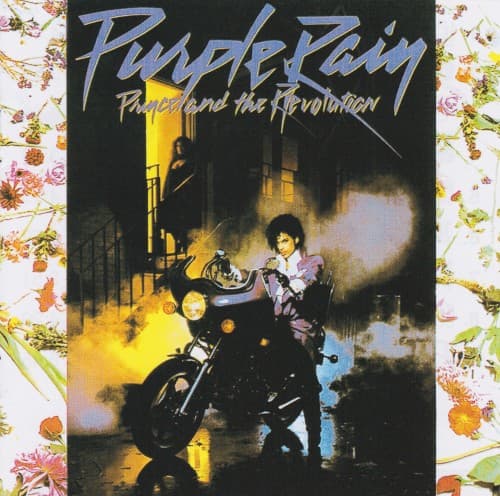
In the Prince catalog, 1999 ranks below Purple Rain and Sign o' the Times but above nearly everything else, and the ranking matters because it clarifies what the album does. Purple Rain is the consolidation, the moment where Prince took the sound he built here and turned it into stadium anthems. Sign o' the Times is the expansion, proof that Prince could work in any style without losing coherence. 1999 is the breakthrough, the album where the vision snapped into focus and the music industry had no choice but to follow.
It is the album that defines Prince before he became a symbol, when he was still figuring out how far he could push the machines and the sexual provocation without losing the groove. The synth-funk template he establishes here became so dominant that it is difficult to hear 1999 as an innovation, but the fact that it sounds like the eighties is because this album created that sound. The double-album length is both the record's ambition and its flaw, a sign that Prince was confident enough to demand space but not yet disciplined enough to use it efficiently.
For listeners new to Prince, this is the second album to hear, after Purple Rain establishes what he became. For fans working through the catalog, 1999 is essential because it shows the machinery behind the hits. Start with the first three tracks; if those convince you, move to the deeper grooves. Skip the gospel-tinged piano piece unless you are a completist, and accept that the back half requires patience.
For next steps, Purple Rain is the logical move, but Dirty Mind makes a strong case as the rawer, less-polished precursor to this sound. 1999 is the album where Prince stopped being a cult figure and became a pop architect. The blueprints are more important than the building.
Track by track
Track Listing
1999
StandoutThe title track opens the album with a chant that became a cultural marker: the world ends in a nuclear flash, so party until then. The Linn LM-1 hits are stiff and metallic, the Oberheim synth riff clangs like a church bell, and Prince's falsetto is doubled by Lisa Coleman, Dez Dickerson and Jill Jones, creating the impression of a crowd rather than a solo artist. The song is built on repetition, a single groove stretched across six minutes with minimal melodic variation, and it works because the hook is the concept. The verse about missiles in the sky and running out of time is apocalyptic without being preachy, a protest against nuclear proliferation disguised as a dance track. The production is cold and precise, every element locked to the drum machine's grid, and the coldness makes the party feel desperate. This is Prince at his most visionary, coding existential dread into a pop single that spent months on the charts and became one of his most recognizable compositions.
Little Red Corvette
StandoutThe best song on the album and one of the best songs Prince ever wrote. The Corvette is a metaphor for a woman who moves through relationships without attachment, and the verse melody is so clean and the chorus lift so earned that the metaphor never feels forced. The production is warmer than the rest of the record, with the synth chords sitting under the vocal instead of competing with it, and Dez Dickerson's guitar solo in the bridge is the only moment on the album where a live instrument takes center stage. The song peaked at number six on the Billboard Hot 100, Prince's highest-charting single at the time, and the music video received heavy rotation on MTV, making Prince one of the first Black artists to break through on the channel. The structure is verse-chorus-verse-chorus-bridge-chorus, as direct as a Motown single, and the song works because it does not try to do more than it needs to. The opening line about a body being similar to a little red Corvette is specific and visual, and the track never loses focus.
Delirious
StandoutA rockabilly burst that strips the sound down to handclaps, a two-chord guitar riff and a falsetto vocal that jumps octaves without warning. The track is barely four minutes, the shortest on the album, and it succeeds because it knows its limits. The production is thin compared to the synth-heavy tracks around it, almost lo-fi, and the simplicity is refreshing after the density of the first two songs. The song reached number eight on the Billboard Hot 100, proof that Prince could write a hit in any style. The energy is manic, the vocal performance borders on unhinged, and the track ends before it wears out its welcome. A perfect example of Prince's range and his understanding of how contrast works across an album.
Let’s Pretend We’re Married
SolidA seven-minute sex proposition built on a drum machine and a synth bass, with a chorus that repeats the title phrase until it becomes a mantra. The concept is clear in the first verse, and the remaining six minutes do not add much beyond variations on the groove. The production is sleek and the sequencing is tight, every element locked to the Linn LM-1's pattern, but the song does not develop melodically. The single release paired it with Irresistible Bitch as a double A-side, and neither track made it past number fifty-two on the charts. The track works as a dance floor groove but not as a song that demands attention over multiple listens. The length reveals a weakness that will recur on later Prince albums: the inability to recognize when a concept has run its course.
D.M.S.R.
SolidDance music sex romance, Prince chants over an eight-minute funk groove driven by bass and drum machine. The track is propulsive and the bassline is fat, but the song is all groove and no hook. The verses are minimal, the chorus is a chant, and the structure is a loop that repeats without variation. The production is clean and the rhythm is locked, but after three minutes the track becomes background music, something to move to rather than listen to. The energy is high, and on vinyl it serves as a side-ender that keeps the momentum before the flip. On a playlist or in a critical listen, it is filler that could have been cut to tighten the album.
Free
WeakA gospel-tinged piano ballad with a message about counting your blessings, slight and forgettable. Prince plays Steinway piano and sings about freedom in vague, inspirational terms, and the track never finds a melodic or lyrical hook worth remembering. The production is spare, just piano and voice with minimal embellishment, and the song functions as a palate cleanser between the sex grooves and the synth experiments. It is the weakest track on the album, adding neither musical interest nor thematic depth. Skip it.
Automatic
SolidNine and a half minutes of synth arpeggios, bondage imagery and a drum machine that never shifts tempo. The track opens side three with a prominent Oberheim melody that cascades in loops, and the production is layered and textured, adding vocal harmonies and synth pads as the groove extends. The concept is sexual and specific, with lyrics about being tied up and controlled, and the music video, which depicted Prince being whipped by Lisa Coleman and Jill Jones, was deemed too sexual for MTV. As a sonic experiment, the track succeeds: it creates a hypnotic, machine-driven atmosphere that feels both seductive and mechanical. As a song, it is repetitive, building tension without release and stretching a single idea across too much time. The track works in the context of a long album that rewards immersion, but it does not function as a standalone piece. The length is both the point and the problem.
Something in the Water (Does Not Compute)
WeakA mid-tempo complaint about a difficult lover, set to a drum machine and sparse synth chords. The title references Computer Age themes that appear throughout the album, and the lyric sketches a narrative about a relationship that has stopped making sense. The production is flat, with none of the melodic invention or rhythmic drive of the album's stronger tracks, and the song feels like a sketch that was recorded before it was finished. The track is short, just over four minutes, but it still drags. Filler.
Lady Cab Driver
SolidEight minutes of sexual frustration channeled through a metaphor about a cab ride. The drum machine is relentless, the synth bass is heavy, and Prince's vocal performance includes spoken asides and moans from Jill Jones that signal where the song is going. The track is built on repetition, with a single groove that does not develop melodically or lyrically, and the concept wears thin after the first few minutes. The production is dense, with multiple layers of synth and vocal, but the density does not add interest. The track functions as an extended vamp, something that might work in a live setting but does not hold up on record. The length is indulgent, and the song would have been stronger at half the runtime.
All the Critics Love U in New York
WeakA six-minute response to a music press that had not yet made Prince a star, built on a sequenced bassline and a drum machine. The title is more interesting than the song, which repeats the phrase and sketches a narrative about critics who love you in one city but not another. The production is sharp, with a tight groove and clean synth lines, but the song has no melodic hook and no lyrical insight beyond the title. The track was included as the B-side to Little Red Corvette, and it functions as a curio rather than an essential piece. The concept is thin, and the length is not earned.
International Lover
SolidA slow jam built on the extended metaphor of seduction as a transatlantic flight, with Prince as the pilot and the listener as the passenger. The track closes the album and earned Prince his first Grammy nomination for Best Male R&B Vocal Performance, and the performance is controlled and smooth, with Prince using his lower register instead of the falsetto that dominates the rest of the record. The production is spare, with live drums instead of the Linn LM-1, and the arrangement foregrounds the vocal. The concept is clever and the execution is professional, but the song is more impressive than affecting, a showcase for phrasing and vocal control that does not reach the emotional depth of Prince's best ballads. The track functions as a finale that offers a change of pace after seventy minutes of synth-funk and sex grooves, but it does not stick.